

Best BR Hills (Biligiriranga) Coffee in India
Forest-transition origin inside a tiger reserve: shade-grown, mostly washed, and unusually concentrated in two sources.
Explore the Terroir
About the Region
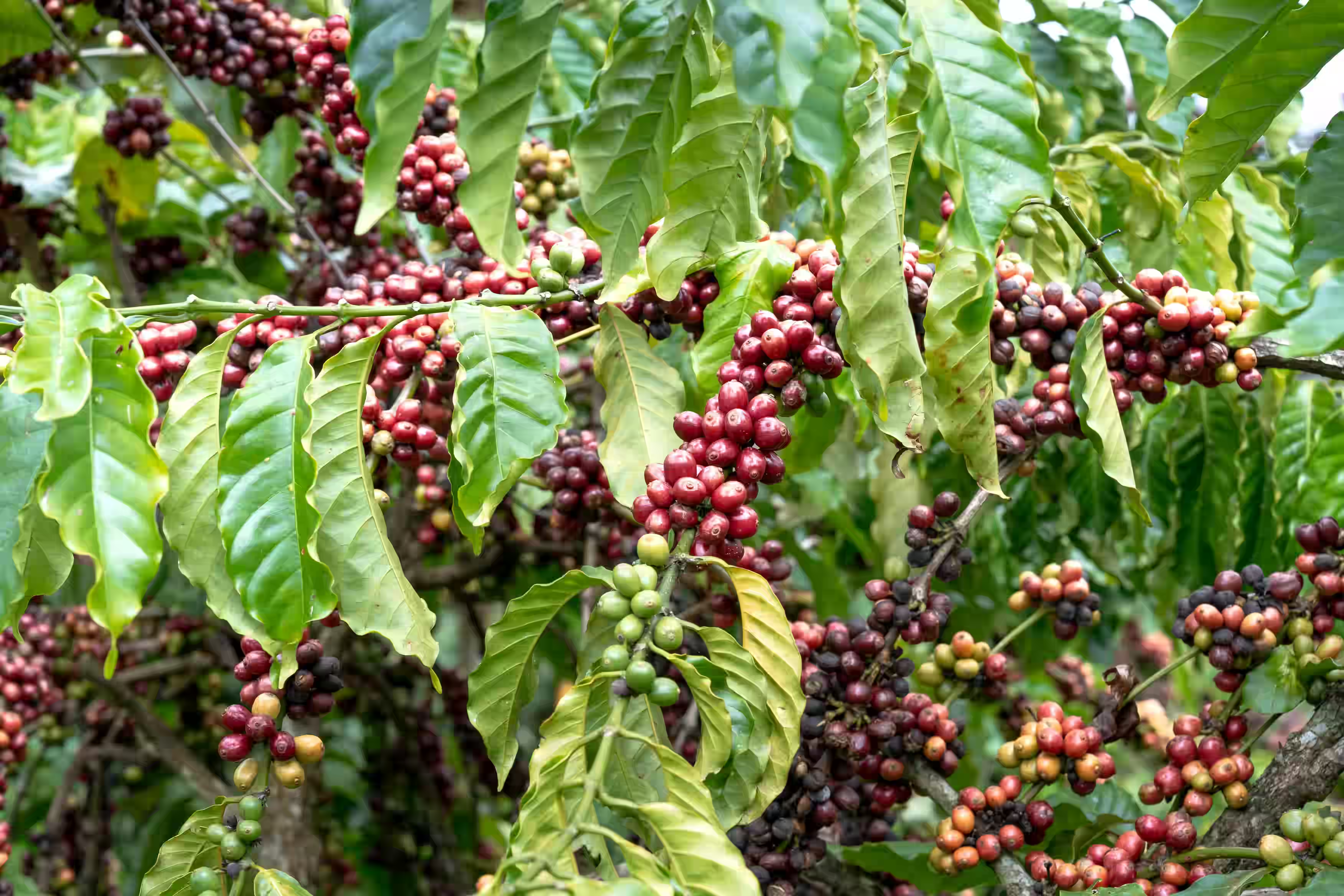
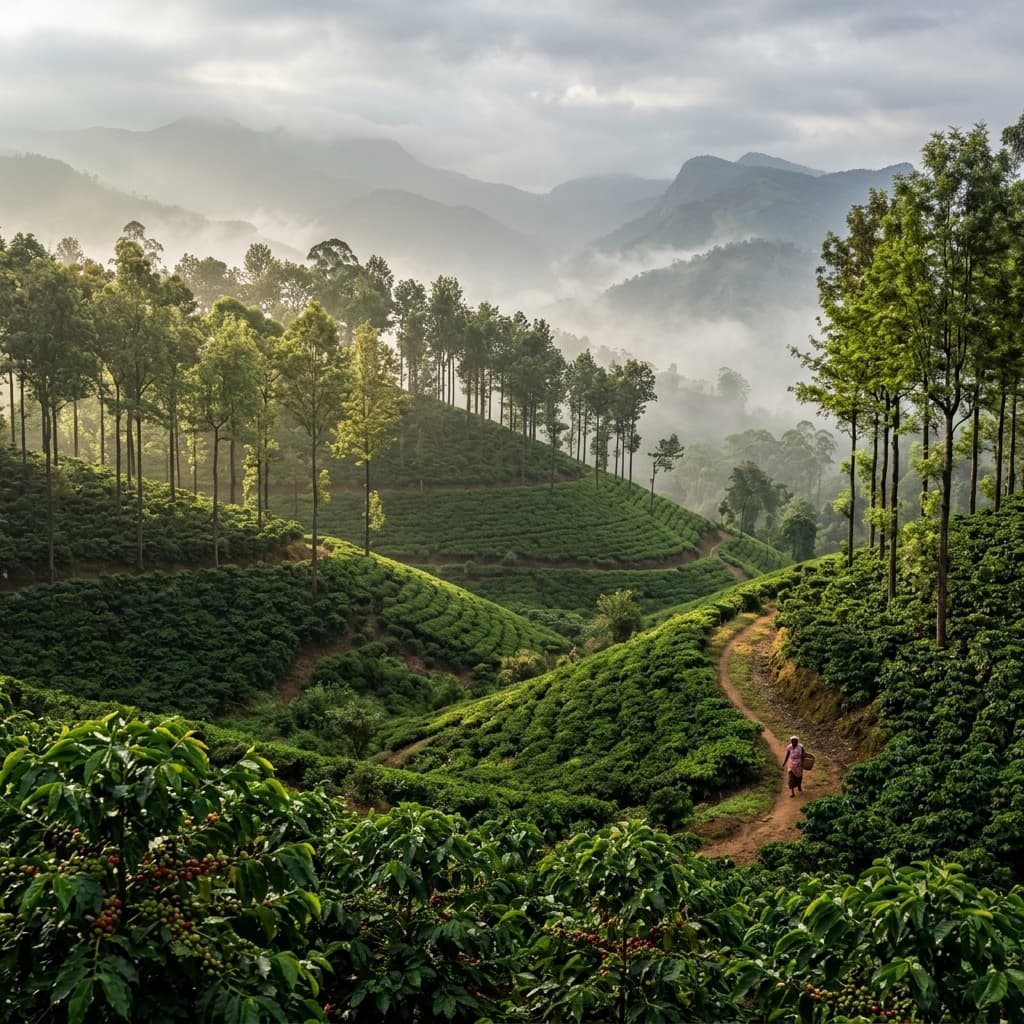
The Biligiriranga Hills, BR Hills, straddle Karnataka's border with Tamil Nadu in Chamarajanagar district, forming the corridor where the Western and Eastern Ghats meet. Most of the range is the Biligiri Rangaswamy Temple Tiger Reserve and the homeland of the Soliga, and coffee grows in pockets under dense, biodiverse canopy rather than as a contiguous plantation belt. The ISRO and Coffee Board plantation atlas maps just 635 hectares under coffee here, well under one percent of Chikmagalur's area, and the smallest figure of any region with its own page on ICB. That a range this small carries a couple of dozen specialty lots is a fact about concentration, not scale: one historic estate and one biodiversity-led roaster's smallholder network account for nearly all of it.
In the cup & on the map
Quick facts to anchor flavour expectations, paired with the coffees below.
State / area
Karnataka
Elevation
900–1,500m
Known for
Forest-grown shade coffee, one historic estate, biodiversity-led sourcing
Terroir & Growing Conditions
Climate
Forest-transition zone, tropical monsoon
Soil
Forest loam
Altitude
900–1,500m
Harvest
November–February
Intercrops
Black Pepper
Area
635 ha under coffee (NRSC 2024, Sept 2024)
BR Hills coffees
Twelve of these lots are one estate through eleven different roasters, so filter by roaster to taste the roasting and fermentation choices with the green held almost constant.


Cold Brew Blend Bold
Blue Tokai Coffee
From ₹650 / 250g


![Attikan Estate Catimor [Culture Washed] [Espresso Roast] by Quick Brown Fox Coffee Roasters](https://ik.imagekit.io/indiancoffeebeans/tr:w-400,q-70/products/quick-brown-fox-coffee-roasters/quick-brown-fox-coffee-roasters-attikan-estate-catimor-culture-washed-espresso-roast-1)

Potter Wasp
Black Baza Coffee
From ₹660 / 250g


Catalogue last refreshed .
In the Cup
Typical notes
Process Variation
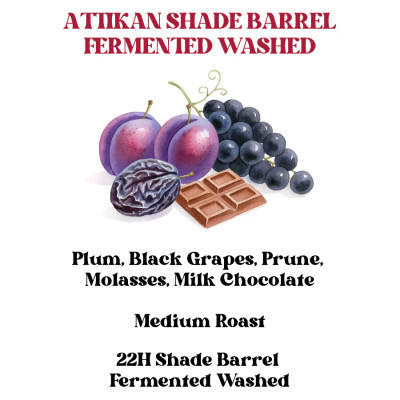
Washed is the baseline and the largest single group, twelve of twenty-nine lots, and it is the clearest window on what the forest shade actually tastes like. The rest fan out unusually wide for a region this small: double-fermented, barrel-aged and culture-washed experiments, anaerobics, honeys and a pulped natural. The split is instructive: most of the experiments are different roasters fermenting the same Attikan green in different directions, while the smallholder lots skew towards anaerobic and honey processing.
Roaster Sourcing
Two sources dominate. Black Baza Coffee, a Bangalore roaster built around biodiversity-friendly, producer-led sourcing, lists fifteen of the twenty-nine lots, named after the forest species that share the ground: Loris, Otter, Tiger Beetle, Potter Wasp, Jumping Ant, Wanderoo, Ficus. Five of those are blends pairing BR Hills with Wayanad, Chikmagalur, Sakleshpur or the Nilgiris, so they appear on more than one region page. Separately, Attikan Estate accounts for twelve lots spread across eleven roasters: Blue Tokai, Beachville, Kruti, El Bueno, Rossette, Quick Brown Fox, Naivo, Coffee Plus, Caarabi, Coffeeverse and Bean By Nation. Attikan is one of four farms in Sangameshwar Coffee Estates, founded in 1888 and bordered by the tiger reserve. The upshot is that "BR Hills" here means two very different things: a single historic estate seen through eleven roasting styles, and a network of small forest holdings sold under one roaster's label.
Indian Specialty Context
BR Hills reads chocolate-and-nut sweet far more often than fruit-forward: milk chocolate, dark chocolate, jaggery, molasses and hazelnut are the notes that repeat across the catalogue, with stone fruit and dark grape showing up on the fermented lots. It is an Arabica origin in practice: 25 of the 29 lots here are straight Arabica and the remainder are blends. Worth knowing that the altitudes don't sit still. The canon figure for the range is roughly 900 to 1,500 metres, but Sangameshwar Coffee Estates describes its own Attikan farm, the source of most single-estate lots on this page, as the highest coffee ground cultivated in South India at around 1,650 metres. Read the range band as the range, and the estate claim as the estate's.
Brew Guidance
Recommended
Roast levels split almost evenly across this catalogue, eleven light or light-medium lots, ten medium, eight medium-dark or dark, so pick the brewer to the roast rather than to the region. The washed lights and light-mediums suit V60 and AeroPress; the medium-dark and dark lots, several of them built for espresso or cold brew, take French Press and moka pot well. The double-fermented and barrel lots reward brewing a little coarser and cooler than a straight washed coffee.
Explore Nearby Regions


Sourcing from Biligiriranga Hills
Explore Indian coffee regions
Region guides and brewing tips on the learn hub.
Read the Context.
The background behind what you are tasting, from our writing on Indian coffee.
About BR Hills coffee
The forest corridor between the Western and Eastern Ghats, and the estates inside it.
Explore More.
Discover other ways to find your perfect coffee.
Nilgiris coffees
Blue Mountain highland lots from Tamil Nadu.
Coorg coffees
Kodagu-origin lots from roasters across India.
Washed process picks
Fermented and washed to remove mucilage before drying.
Anaerobic picks
Experimental lots with bold, often wine-like or tropical profiles.