

Best Nilgiris Coffee in India
Cool climate, high altitude, distinct terroir, and elegant profiles in lighter roasts.
Explore the Terroir
About the Region
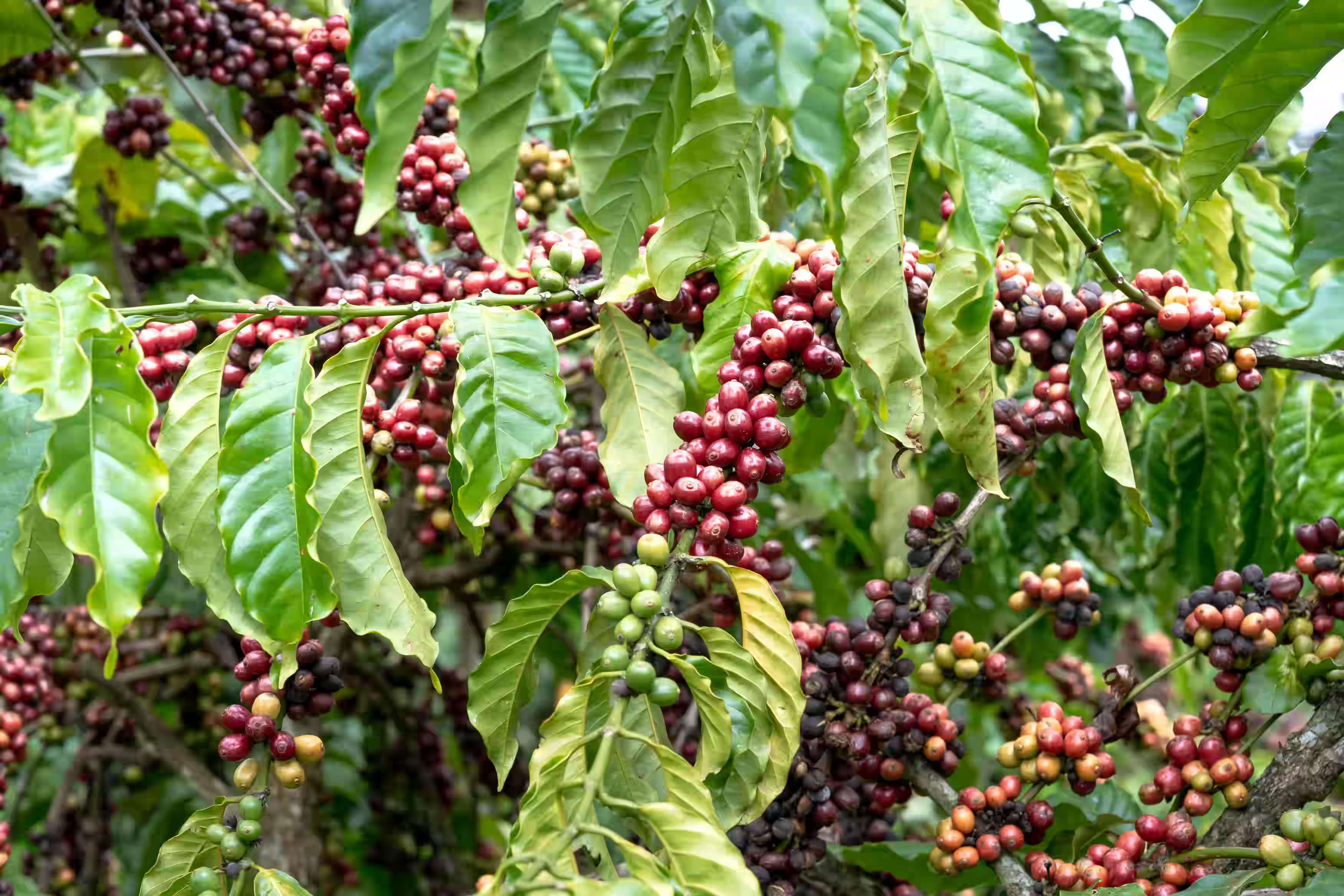
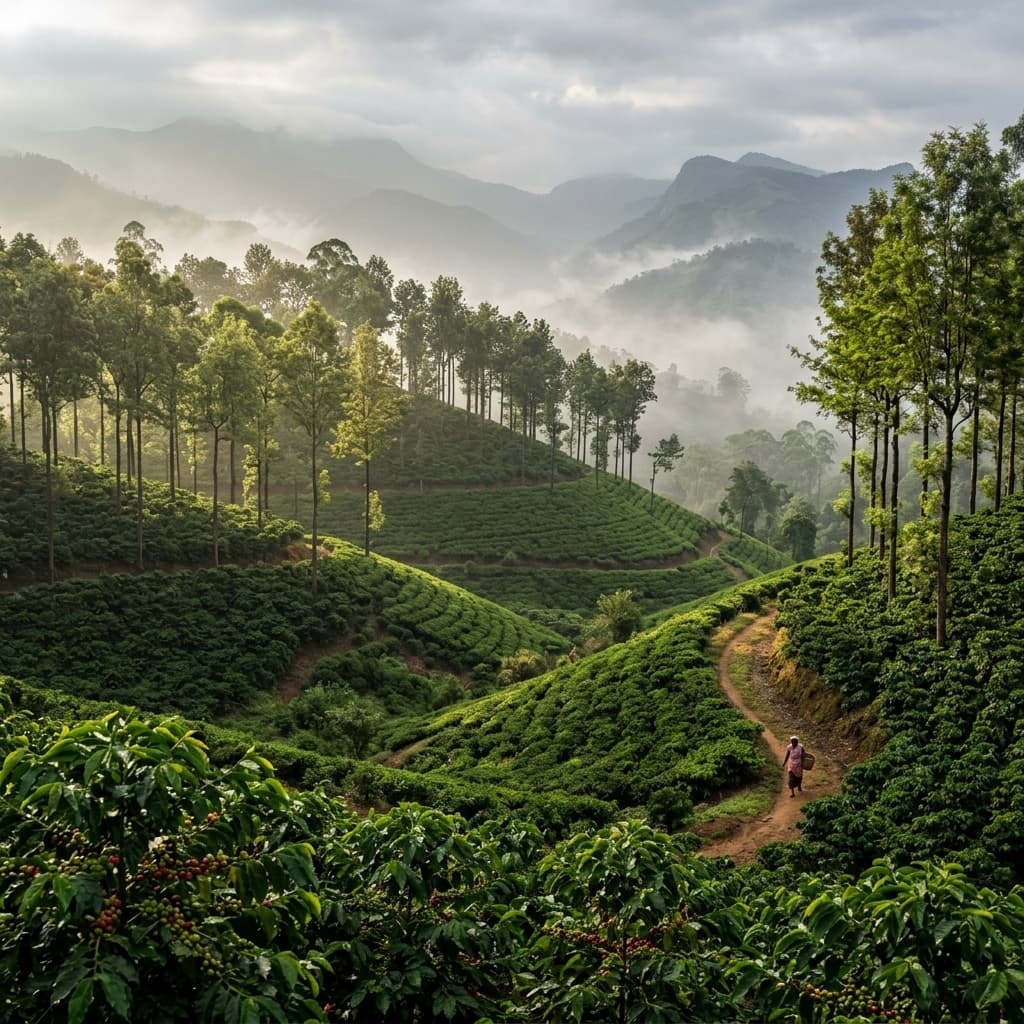
The Nilgiris, meaning Blue Mountains, straddle the borders of Tamil Nadu, Kerala, and Karnataka, rising past 2,000 metres, with coffee grown between roughly 900 and 1,800 metres. Coffee grows primarily on the Tamil Nadu side, in the Nilgiri district around Ooty and the surrounding slopes. The Nilgiris have historically been associated with tea, and the famous Nilgiri tea comes from this region, but arabica coffee has been grown here for well over a century. The cool temperatures, distinct seasons, and high altitude create growing conditions that produce slower-maturing cherries and more nuanced cup profiles than lower-altitude origins.
In the cup & on the map
Quick facts to anchor flavour expectations, paired with the coffees below.
State / area
Tamil Nadu
Elevation
900–1,800m
Known for
Cool-climate arabica with clarity and elegance in light roasts
Terroir & Growing Conditions
Climate
Cool, misty, monsoon-influenced
Soil
Sandy loam
Altitude
900–1,800m
Varieties
S.795, Cauvery
Rainfall
2,000mm a year
Harvest
November-January
Area
7,228 ha under coffee (NRSC 2024, Sept 2024)
Nilgiris coffees
Compare with Wayanad and Karnataka origins at the same roast level to understand terroir contrast.



Catalogue last refreshed .
In the Cup
Typical notes
Process Variation
Washed lots are most common and best express the region's terroir clarity. Naturals from the Nilgiris are less common, since the cool, moist climate makes drying more challenging. Washed light roasts are the recommended starting point.
Roaster Sourcing
The Nilgiris is less sourced than Karnataka origins by Indian specialty roasters, being a smaller region with fewer estates producing specialty-grade lots. Roasters who do carry Nilgiris coffee tend to be those focused on regional diversity in their catalogue. On ICB, Nilgiris lots are worth comparing against Karnataka coffees at the same roast level to understand how terroir influences cup character independently of processing.
Indian Specialty Context
Nilgiris arabica has a quieter, more restrained character than Karnataka equivalents: less fruit-forward than Chikmagalur, less full-bodied than Coorg. The cool climate produces a tea-like elegance that's distinctive in the Indian context. Light roasts from high-altitude Nilgiris estates can be genuinely delicate, almost white-tea-like in body with clean floral notes. It's India's most understated specialty region, which means it's often overlooked despite producing excellent coffee.
Brew Guidance
The Nilgiris' delicate, tea-like character is best expressed on V60 and Chemex, where clean paper-filtered pour-over preserves the restrained acidity and florals. Use standard light roast temperatures (93–96°C). AeroPress at slightly lower dose works well for a more concentrated version. The delicacy of high-altitude Nilgiris coffee is easily overwhelmed by French Press, so pour-over is the safer choice.
Explore Nearby Regions


Sourcing from Nilgiris
Explore Indian coffee regions
Region guides and brewing tips on the learn hub.
Read the Context.
The background behind what you are tasting, from our writing on Indian coffee.
About Nilgiris coffee
Tamil Nadu's Blue Mountain coffee region explained.
Explore More.
Discover other ways to find your perfect coffee.
Wayanad coffees
Kerala highland lots from Indian specialty roasters.
Chikmagalur coffees
From classic washed estate lots to experimental microlots.
The *light* end of the spectrum
Bright, acidic, and complex coffees roasted to preserve origin characteristics.
Made for the *V60*
Clarity, brightness, and origin character with nowhere to hide.