Skip to content
Roast Profile

Top Light Roast Coffee in India

Light roast is where a coffee tells you most about where it grew. SLN 9 and Chandragiri out of Chikmagalur and Baba Budangiri keep their florals and stone fruit here. Stopped not long after first crack, it is the least developed roast and the most expressive of its terroir.230 in-stock coffees · Light Roast
Bright & Expressive

Best for those who love bright, tea-like coffees with complex origin notes.

Roast profile

What this roast means

Flavour families you often taste in Indian cups, how the bean looks through the roast, and practical brew starting points.
Guide

Look & Feel

Visual Assessment

Colour

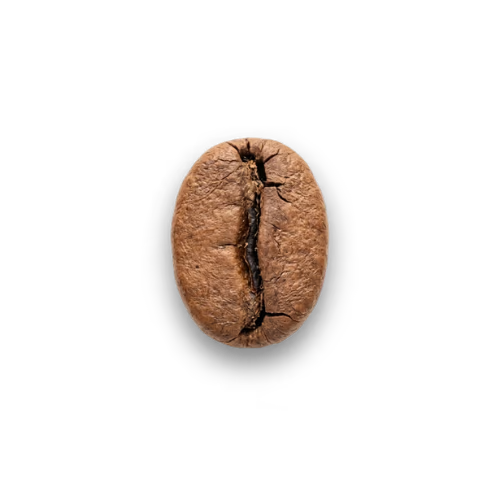
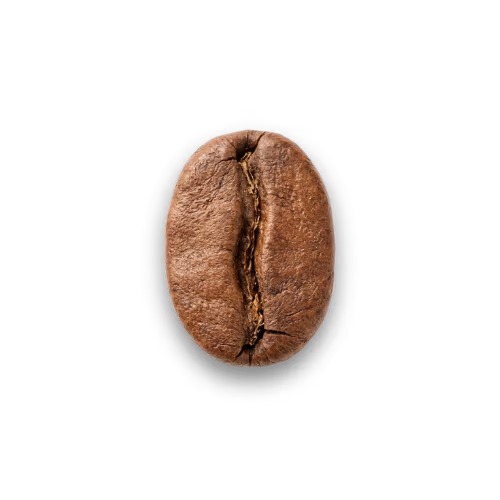
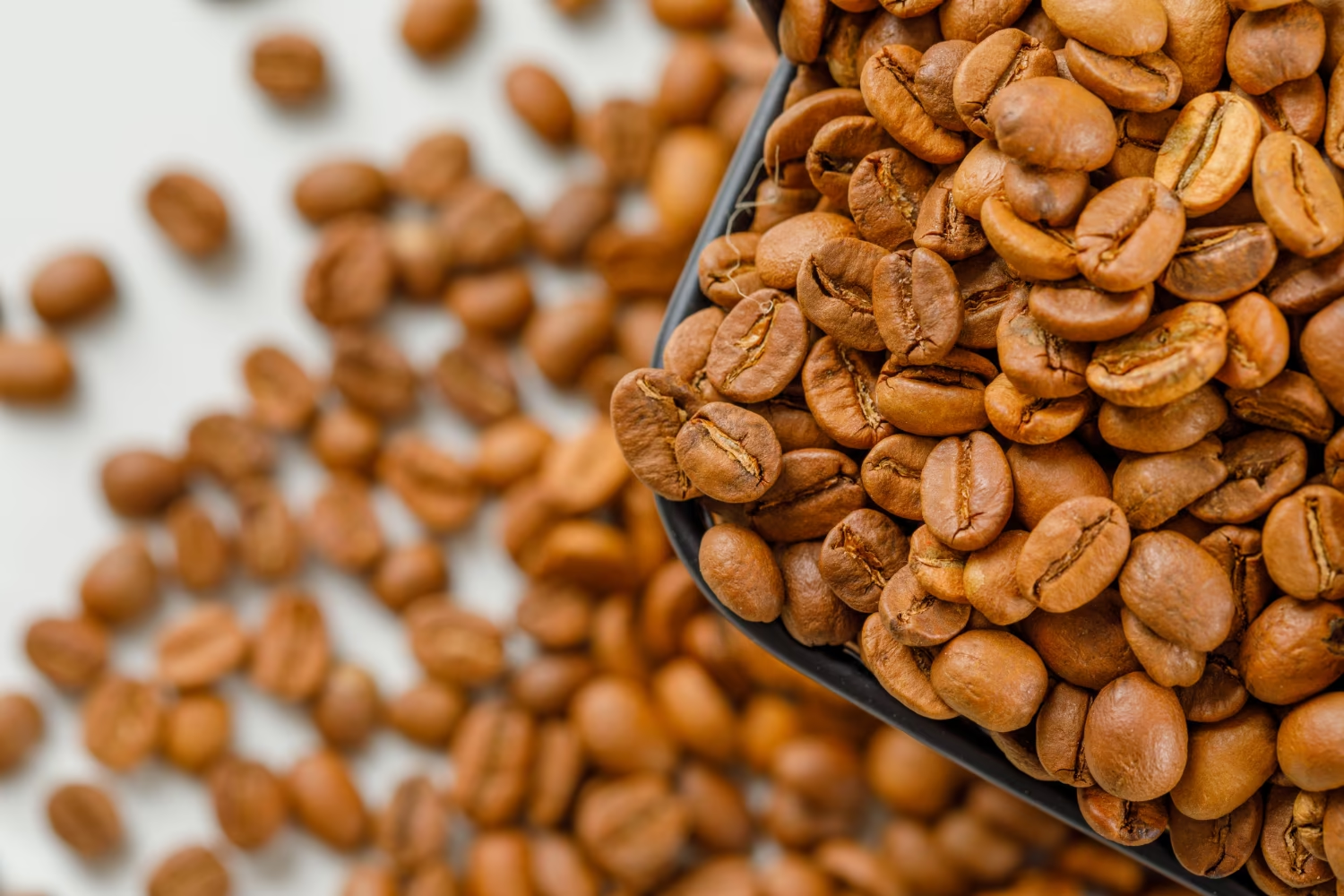
Pale to medium brown, no surface oil

Density

Denser bean, retains more moisture

On the grind

Grinds lighter in colour; fines can appear almost sandy

Agtron range

Agtron 60–75 (light end of the specialty range)

Top Rated Selection

The light end of the spectrum

Bright, acidic, and complex coffees roasted to preserve origin characteristics.
230 Available

Pour-over methods like V60 and AeroPress really make these coffees sing.

Catalogue last refreshed .

Expert Techniques

Brew like a pro

Master your coffee with these championship-winning recipes tailored for this profile.
Hario V60Intermediate

Hoffman V60 Technique

by James Hoffmann

Ratio1:16.7
Time3:30
GrindMedium-fine
Temp95°C
Key Technique

Strategic stirring and swirling to ensure even extraction and prevent channeling

6 steps
View Recipe
Hario V60Advanced

Tetsu Kasuya 4:6 Method

by Tetsu Kasuya • 2016

Ratio1:15
Time3:30
GrindCoarse
Temp92°C
Key Technique

Systematic water division - 40% for flavor balance, 60% for strength control

6 steps
View Recipe
Hario V60Advanced

Tetsu Kasuya 10-Pour Method

by Tetsu Kasuya • 2016

Ratio1:15
Time3:30
GrindVery coarse (40–45 clicks, Comandante C40)
Temp95–96°C
Key Technique

Ten rapid 30g pours every 15 seconds after bloom — shallow bed, steady drainage, high temperature

11 steps
View Recipe

Use higher water temperatures (95-100°C) to fully extract light roast complexity.

Brewing Light Roast Coffee

Learn how to extract the best flavors from light roast coffees.

Learn More
Roast range

Where you are on the scale

Each level links to a full guide for that roast.
5 levels
From the Field Guide

Read the Context.

The background behind what you are tasting, from our writing on Indian coffee.

Light roast

Understanding Light Roast Coffee

What light roast tastes like, and how to brew it without sourness.

Roast level

Light roasts are stopped at or just after first crack, preserving origin flavors, bright acidity, and complex aromatics. The bean retains more density and moisture than darker roasts, and the surface is dry with no visible oil.

Pour-over methods like V60, Chemex, and AeroPress excel with light roasts, highlighting clarity and delicate flavors. Use higher water temperatures (95–100°C) for full extraction. Espresso is possible but requires careful dialling in.

Yes. Light roasts retain more of the bean's natural acids, which express as brightness rather than sourness when properly extracted. If a light roast tastes sour, it's under-extracted: try a finer grind or higher temperature.

Marginally. Caffeine degrades slightly with heat, so lighter roasts retain fractionally more. In practice the difference is negligible. What matters more is your dose and brew ratio.

While tricky, light roast espresso pulls out brilliant vibrant fruit notes. It requires very fine grinding, high temperatures, and longer yield ratios (like 1:2.5 or 1:3) to effectively extract sweetness and avoid tasting overly sour.

Sourness usually indicates under-extraction. Light roasts are very dense and harder to extract. If it tastes sour, try grinding finer, using hotter water (near boiling), or increasing your brew time to pull out more balancing sweetness.
Further Exploration

Explore More.

Discover other ways to find your perfect coffee.