

Clean, balanced, highlighting origin characteristics
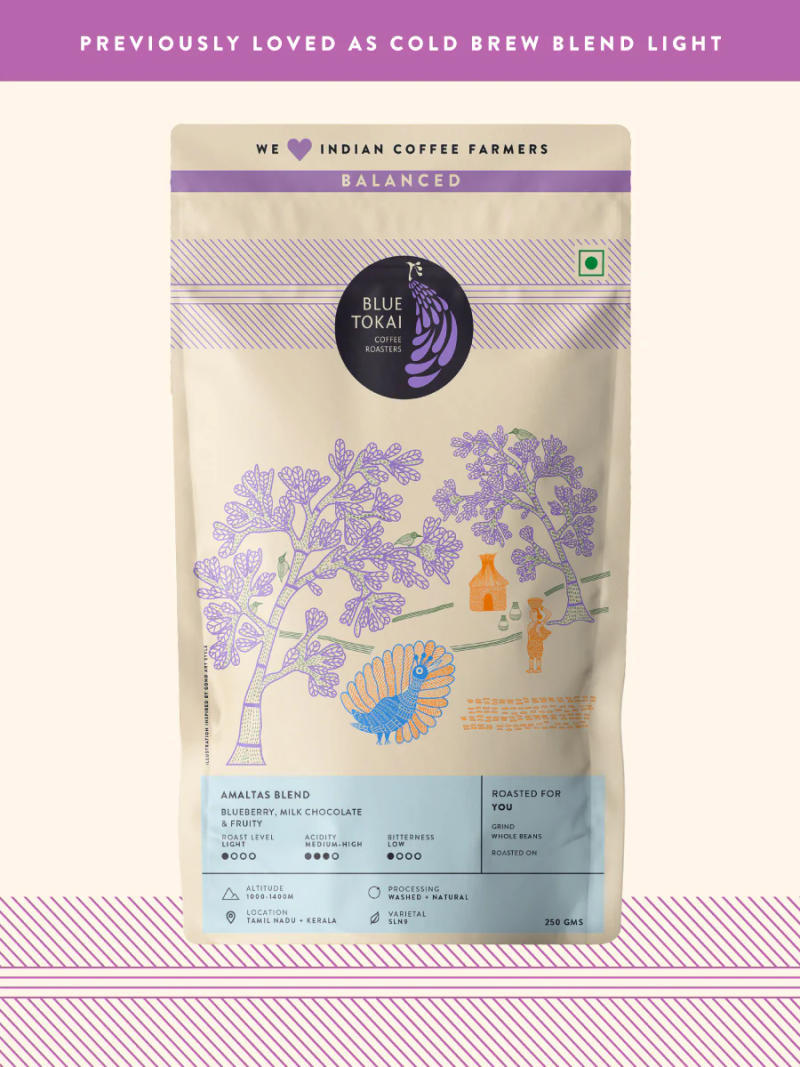


light roast · washed and natural processed · Nelliyampathy
Flavour
Origin and production
- Nelliyampathy, Shevaroy Hills
- washed and natural processed
As described by Blue Tokai Coffee
An ode to the vibrant burst of yellow that marks the beginning of Indian summers, this blend is our go-to choice for crafting a refreshing batch of coffee including cold brews. In fact, this was originally called the Cold Bold Blend but owing to its diversity (its flavours shine through in a Pour Over or Aeropress), we decided to rename it after one of our favourite neighbourhood trees. A blend of washed and natural processed coffees, we’ve roasted it light to accentuate fruity and refreshing citrus notes. The result? Balanced cups with notes of blueberry and milk chocolate, with each sip concluding with a chocolatey finish. This light and fruity favourite is best enjoyed black.
Brewing
Pack sizes and price
Ratings
What drinkers say
3.8
With milk?
- Rated 4 out of 5
“Sweet, Fruity and Acidic. Perfect starter for light roast v60s”
- Rated 4 out of 5
- Rated 5 out of 5
More from Blue Tokai Coffee


Read about this

Origins & Estates
Where Is Coffee Grown in India: 13 Regions, Flavors & Altitude Data
Coffee is grown in India across three distinct geographic zones — the Western Ghats, the Eastern Ghats, and the northeastern hills. Each zone, and each region within it, has a measurably different altitude, soil, harvest window, and flavor signature. This guide maps all of them using ICB's catalog and the Coffee Board's own regional specs as the data layer.

Origins & Estates
How Altitude Affects Flavor in Indian Coffee Estates
Two bags of Indian arabica sit side by side — both washed, both medium-roasted, both from Karnataka. One is bright, with a citrus-edged acidity. The other is dense, earthy, noticeably heavier. The labels say roughly the same thing. The difference, in most cases, is altitude — and reading that difference requires more context than the bag provides.

Origins & Estates
Coffee GI Tags in India: What They Certify (and What They Don't)
A GI tag on an Indian coffee bag is a geographic authenticity claim, not a quality grade. Seven Indian coffees hold GI registration — two Monsooned Malabar varieties since 2007, and five regional coffees since 2019. Understanding what that mark certifies changes how you read a label.
Questions about this coffee
Blue Tokai Coffee's tasting notes for Amaltas Blend lean toward Blueberry, Fruit and Milk Chocolate. Flavor is subjective and shifts with roast freshness, grind size, and brew method, so your cup may vary.
Amaltas Blend is a blend, combining beans from more than one origin. Blends are built for a consistent, balanced cup across seasons.
Amaltas Blend is suggested for Aeropress, Cold Brew and Pour Over. As a rule of thumb: espresso needs a fine grind, pour-over and drip a medium grind, and French press or cold brew a coarse grind. Dial in from there to taste.