

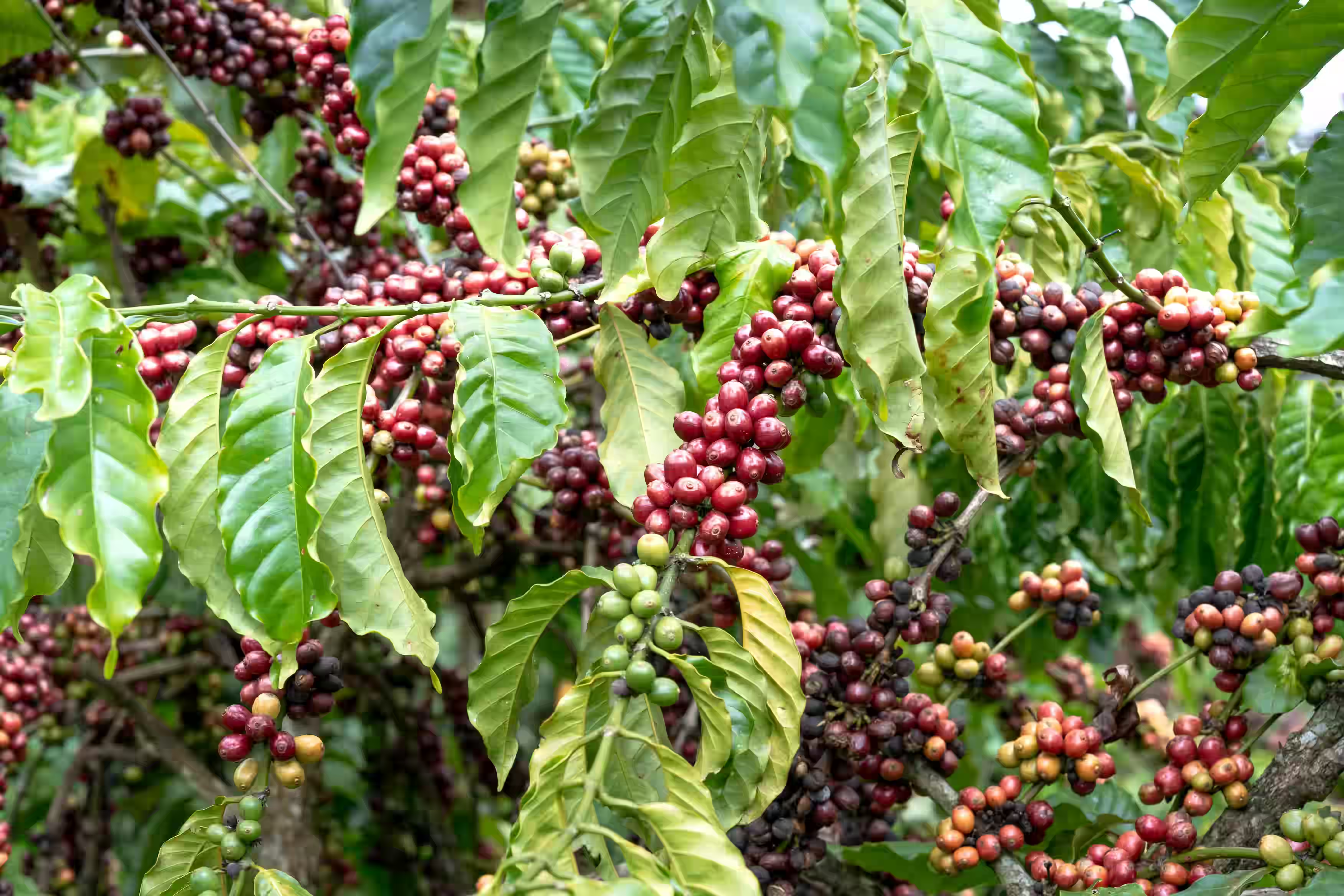
Best Sakleshpur & Manjarabad Coffee in India
Wet-zone Western Ghats origin: full-bodied, and unusually deep in anaerobic and experimental lots.
Explore the Terroir
About the Region
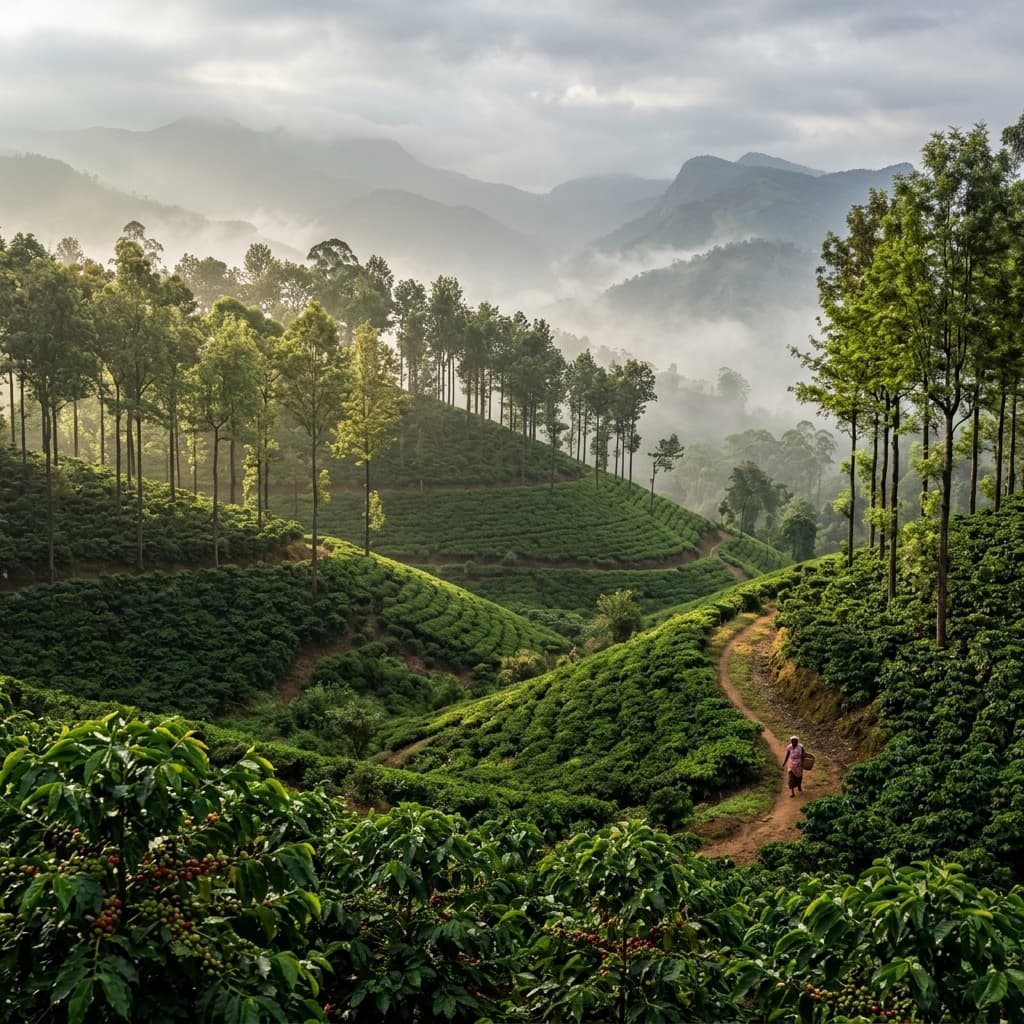
Sakleshpur is a taluk on the Western Ghats escarpment in Hassan district, and one of Karnataka's wettest coffee tracts: dense forest shade, heavy monsoon rainfall, red clay soils with high organic content. The plantation atlas maps 35,620 hectares under coffee here, in large patches running north to south across the taluk's eastern half, interleaved with areca nut, cardamom and pepper. Manjarabad, named for the star-shaped fort Tipu Sultan built above it, is the tract within Sakleshpur that carries most of the district's better-known estate names. Smallholders and family-run estates predominate over large plantation companies. Hassan is less internationally marketed than neighbouring Chikmagalur and Kodagu, which is exactly why its lots are worth attention.
In the cup & on the map
Quick facts to anchor flavour expectations, paired with the coffees below.
State / area
Karnataka
Elevation
900–1,500m
Known for
Wet-zone full body, family estates, experimental fermentation
Terroir & Growing Conditions
Climate
Tropical, heavy monsoon
Soil
Red clay, high organic content
Altitude
900–1,500m
Varieties
S.795, Robusta
Rainfall
2,500mm a year
Harvest
November-February
Intercrops
Pepper, Areca nut
Area
35,620 ha under coffee (NRSC 2024, Sept 2024)
Sakleshpur & Manjarabad coffees
Nearly half these lots are anaerobic, honey or experimental, so filter by process to see how one wet-zone terroir reads across fermentation styles.


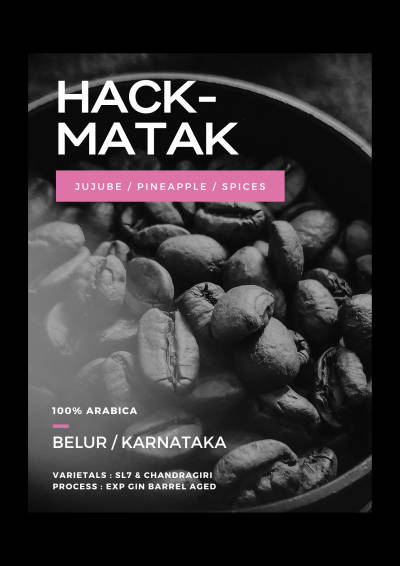

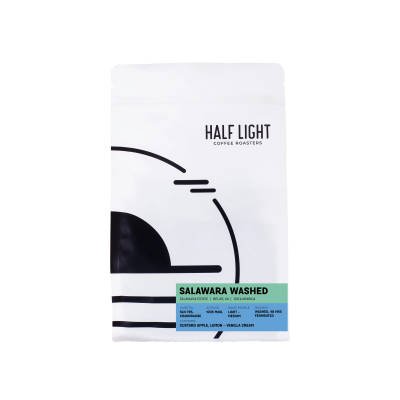


Catalogue last refreshed .
In the Cup
Typical notes
Process Variation
This is the most process-forward region in the catalogue: anaerobic, honey and explicitly experimental lots together outnumber the washed and natural ones. That's a specialty-market inversion, since the district historically processed naturals, with washing added for specialty Arabica. Producers here now treat fermentation as the variable, so two coffees from the same estate can taste nothing alike. Washed lots are the honest baseline for the terroir; the experimental lots are where the region is making its name.
Roaster Sourcing
One estate dominates: 35 of the 71 Sakleshpur lots on ICB come from Harley Estate in Manjarabad, a farm known internationally for washed Robusta and, more recently, for Arabica microlots. Classic Coffees carries by far the deepest range of them, with KOHI Roasters, Hill Groove, Naivo, Half Light and Bloom each listing a handful. That concentration is useful, since a single estate's spread across processes makes it easy to isolate what fermentation is doing versus what the terroir is doing, but it does mean "Sakleshpur" in this catalogue is largely one farm's interpretation of it.
Indian Specialty Context
The wet-zone terroir gives Sakleshpur a fuller, heavier cup than the brighter high-altitude lots from Chikmagalur, with moderate acidity and a sweetness that reads as caramel, jaggery and dried fruit more often than as citrus. Worth knowing what you're drinking a slice of: the ISRO and Coffee Board plantation atlas maps Sakleshpur as a Robusta taluk, Robusta under mixed shade across most of its 35,620 hectares, while the specialty lots listed here run 53 Arabica to 4 Robusta. What gets roasted for specialty is not what the belt mostly grows. The catalogue also shows real species diversity: alongside the two mainstays there are Liberica and Excelsa lots, which almost no other Indian region surfaces at all.
Brew Guidance
Recommended
Most of these lots are roasted light-medium, which suits V60 and AeroPress. The full-bodied washed and natural lots take well to French Press. Anaerobic and experimental lots are worth brewing slightly coarser and cooler than you would a washed coffee, because the fermentation character can turn sharp when over-extracted.
Explore Nearby Regions


Sourcing from Sakleshpur
Explore Indian coffee regions
Region guides and brewing tips on the learn hub.
Read the Context.
The background behind what you are tasting, from our writing on Indian coffee.
About Sakleshpur coffee
Hassan district's wet-zone belt, and the Manjarabad estates within it.
Explore More.
Discover other ways to find your perfect coffee.
Chikmagalur coffees
From classic washed estate lots to experimental microlots.
Coorg coffees
Kodagu-origin lots from roasters across India.
Anaerobic picks
Experimental lots with bold, often wine-like or tropical profiles.
Honey process picks
Profiles between washed and natural with signature sweetness.