

Best Honey Process in India
Mucilage left on the bean during drying adds sweetness and mouthfeel.
How this process works
From Cherry to Cup
- 01
Harvest and pulp
Cherries are picked and pulped to remove the outer skin, same as washed processing. The difference starts here: instead of washing off the mucilage, it's left on.
- 02
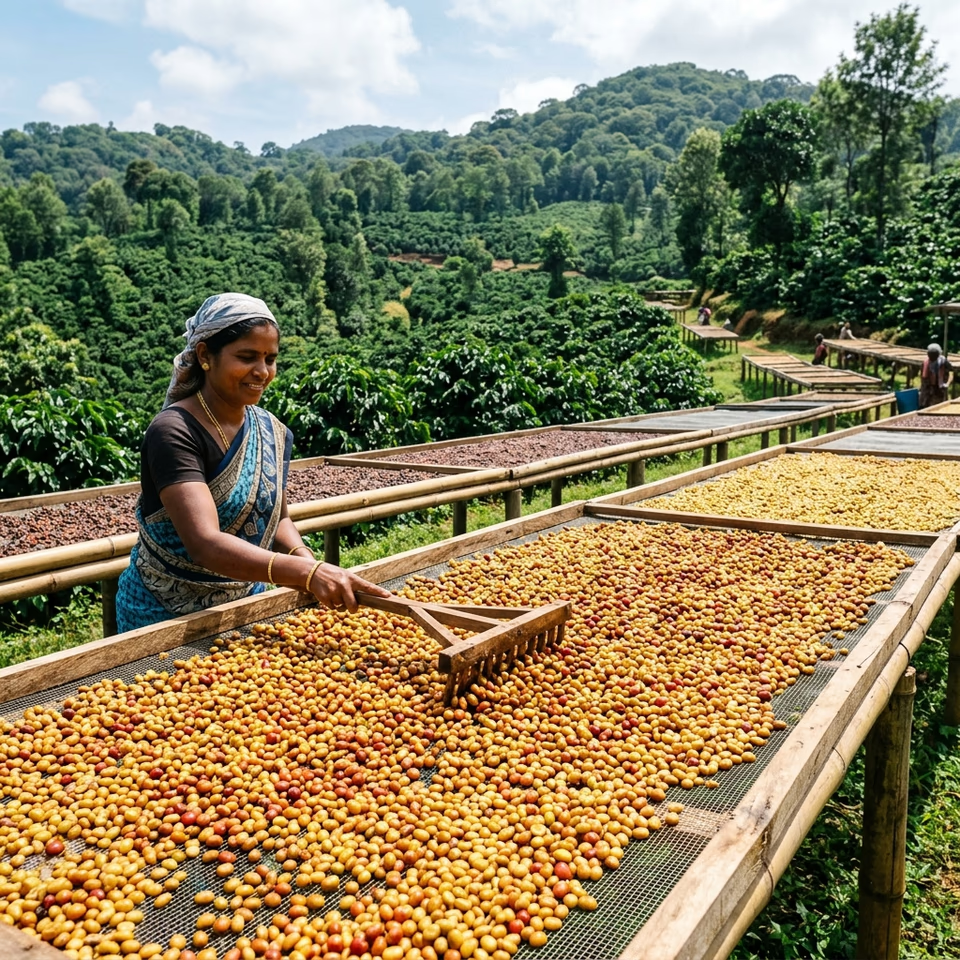
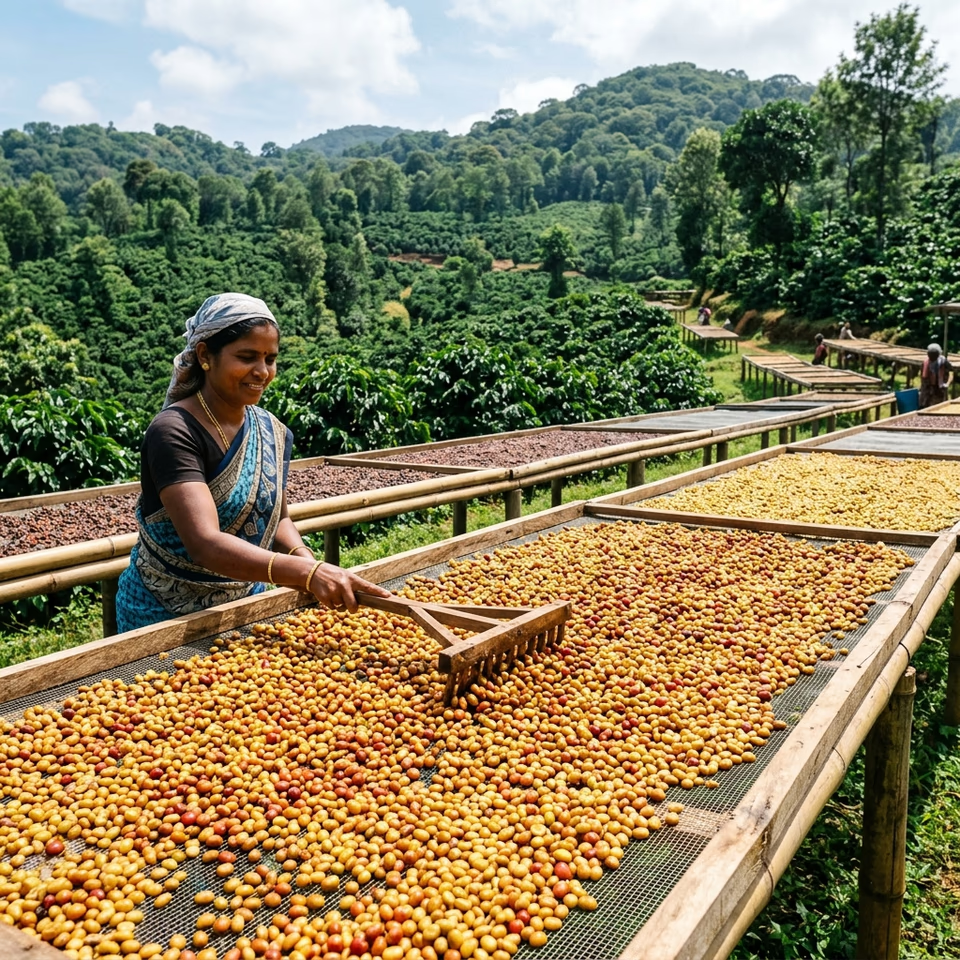
Dry with mucilage intact
The pulped bean, still coated in sticky, honey-like mucilage, is dried on raised beds. The amount of mucilage left on determines the honey classification: black honey (most) → red → yellow → white honey (least). More mucilage means more sweetness and risk.
- 03
Mill
Once dried, the parchment and any remaining dried mucilage is milled off to reveal the green bean. The result sits between washed (clean) and natural (fruit-heavy) in character.
In the cup
Flavour Profile
Typical notes
Honey process is where Indian specialty coffees often surprise, since the sweetness and body work particularly well with Indian arabica varieties that can sometimes taste thin on washed processing. Coorg and Chikmagalur honey lots tend toward caramel, apricot, and brown sugar. Yellow and red honeys are most common in India; black honey is rarer but produces richer, more complex cups when done well. Honey-processed Cauvery and Chandragiri varieties from Karnataka are especially good: the varieties' inherent sweetness amplifies beautifully with the mucilage contact.
Process comparison
Honey vs washed: more body, more sweetness, less acidity and clarity. Honey vs natural: less fruit intensity and fermentation character, more control and consistency. Honey is the bridge, the most approachable of the three for new specialty drinkers.
Indian Specialty Context
Honey processing has grown significantly in Indian specialty over the last 5 years. Producers discovered it as a way to add sweetness and complexity to lots that weren't quite exciting enough for specialty on washed processing. It's now common enough across the Karnataka belt that most established roasters carry at least one honey lot a season, and the estates doing it do it every year rather than as a one-off. The classification system (black/red/yellow/white honey) isn't always labelled clearly by Indian roasters, and the terms 'pulped natural' and 'honey' are often used interchangeably.
Brew Guidance
Recommended
Honey coffees are forgiving and versatile, working well across pour-over and immersion methods. On V60, use 91–94°C and a standard ratio (1:15–1:16). The sweetness balances well with medium water temperatures. For AeroPress, honey process lots are excellent, since the slight pressure amplifies the caramel and brown sugar notes. French Press suits black and red honeys particularly well, and the body comes through fully with the metal filter. Espresso and Moka Pot highlight body and sweetness on medium honeys, classic single-origin choices.
Honey process picks
Try a slightly lower temperature if you taste roasty sharpness on pour over.




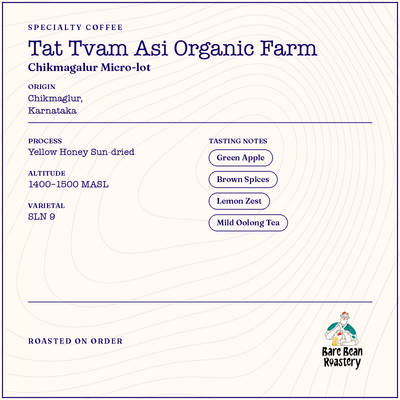


Catalogue last refreshed .
Indian coffee processing guide
How natural, washed, honey, and anaerobic processing affects flavour in Indian specialty coffees.
Read the Context.
The background behind what you are tasting, from our writing on Indian coffee.
About honey coffee
What honey process means in specialty coffee.
Explore More.
Discover other ways to find your perfect coffee.

Natural process picks
Lots where the fruit stayed on the bean longer for intense sweetness and complexity.
Washed process picks
Fermented and washed to remove mucilage before drying.
The reliable *all-rounder*
Balanced chocolate, caramel, and mild acidity: the everyday sweet spot for most brew methods.