

Best Arabica in India
Start with 15g coffee to 250ml water at 93°C on a V60. Indian Arabica's florals open up with a medium-fine grind and 3-minute brew.
What this bean type is
At a Glance
- Caffeine
- Lower (~1.2–1.5%)
- Body
- Light to medium
- Acidity
- Bright, complex
- Best for
- Filter, pour-over, single origin
Typical notes
Indian Arabica is grown almost entirely under shade at 1,000–1,700m across Karnataka (Chikmagalur, Coorg, Baba Budangiri), Tamil Nadu (Shevaroy Hills, Nilgiris), and Andhra Pradesh (Araku Valley). The dominant varieties are SLN 795, Cauvery (Catimor), Chandragiri, and Kent. Together they give Indian Arabica a recognisable profile: medium body, restrained acidity, and chocolate-and-spice sweetness rather than the sharp brightness of African or Central American washed lots. SLN 795 is the variety to watch: high-altitude SLN 795 from Chikmagalur and Araku reaches genuine competition quality: jasmine, peach, and clean citrus when washed; ripe stone fruit and berry when natural. Cauvery is hardier and more widely planted, producing a rounder, nuttier cup. Kent, one of India's oldest cultivated varieties, gives gentle citrus and tea-like lightness at its best.
Bean types at a glance
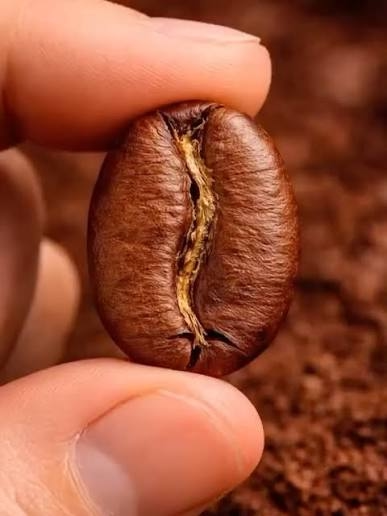
Arabica
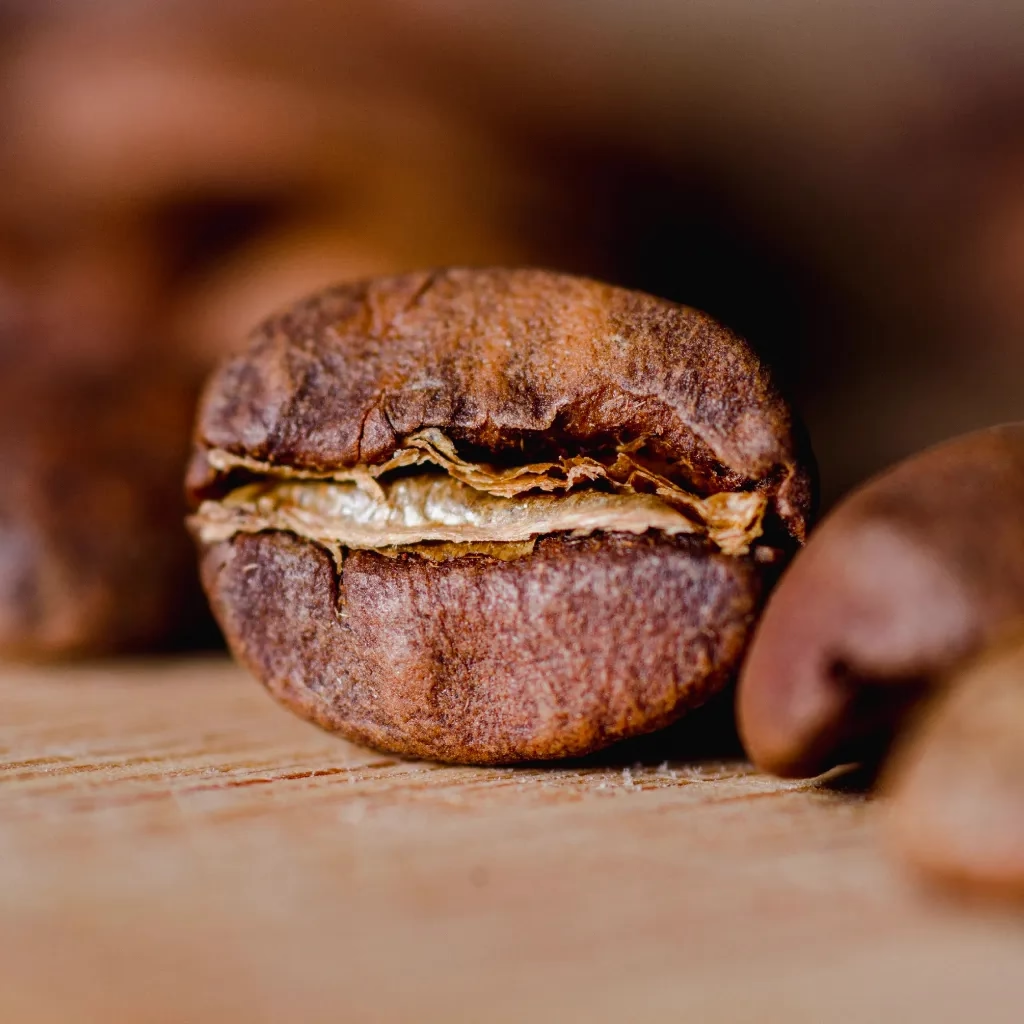
Flatter, oval bean with a curved center crease.
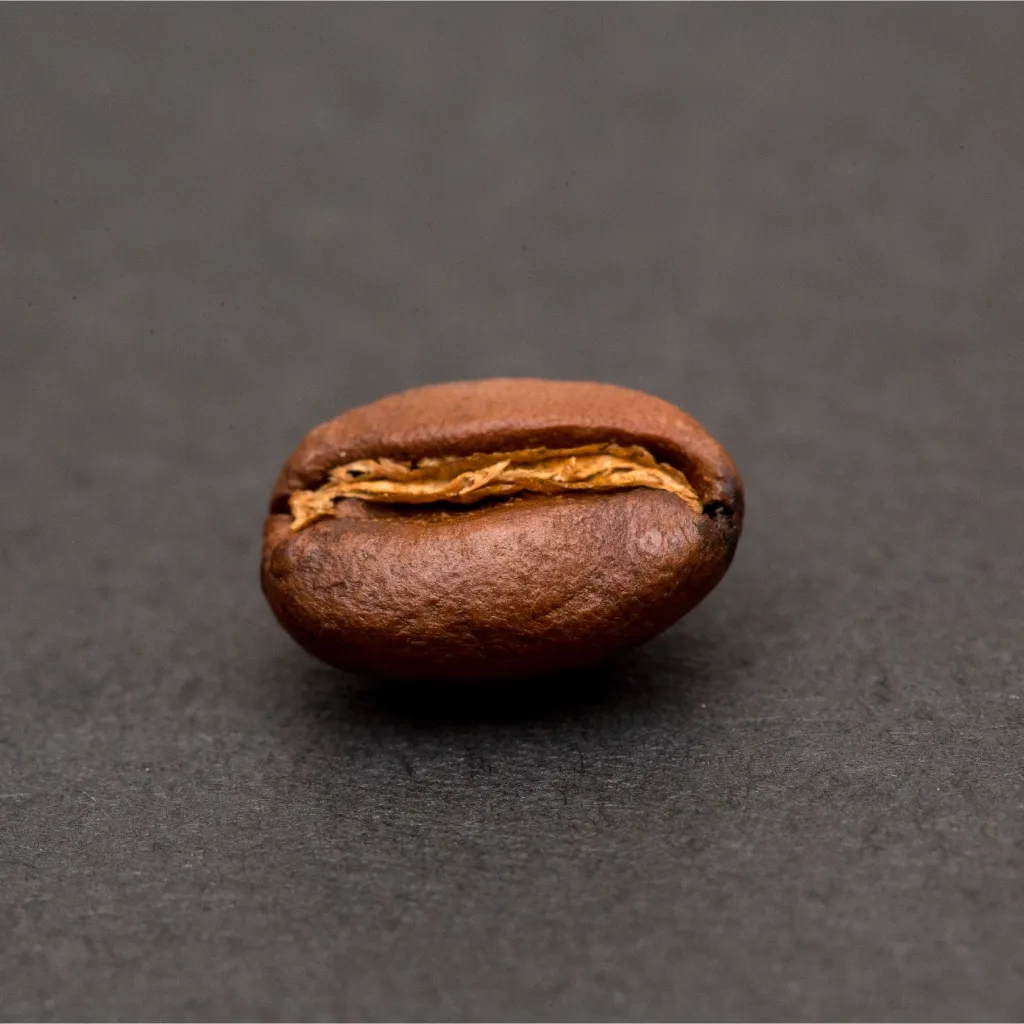
Robusta
Rounder, smaller bean with a straight crease.
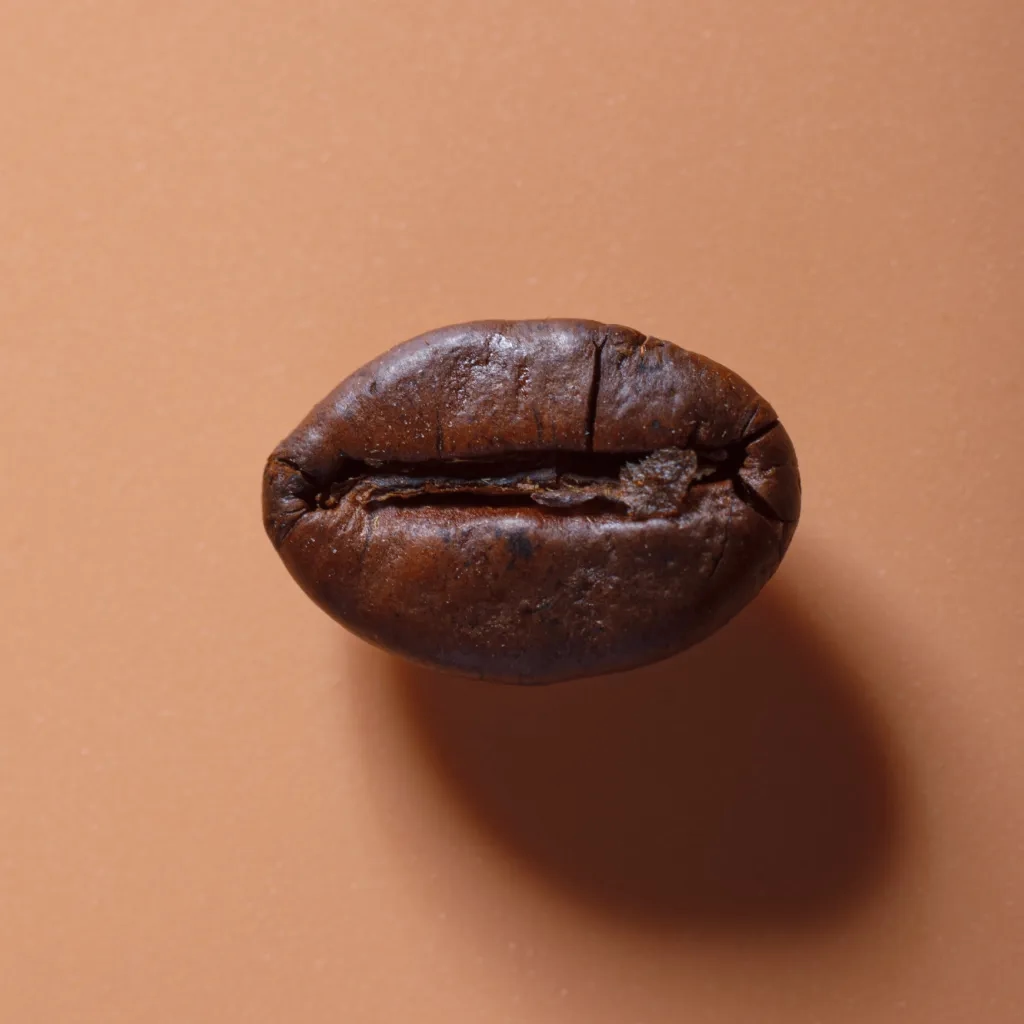
Liberica
Large, asymmetric almond-shaped bean.
Excelsa
Smaller Liberica-family bean, teardrop shaped.
Also browse
Key Varieties
SLN 795
Jasmine, peach, clean citrus. India's competition variety. At altitude, the most aromatic and complex Indian Arabica.
High-altitude Chikmagalur, Baba Budangiri, Araku Valley. Susceptible to leaf rust but produces the best lots.
Cauvery (Catimor)
Round, nutty, chocolate with mild sweetness. Less aromatic complexity than SLN 795 but consistently solid.
Widely planted across Karnataka. Hardy, disease-resistant, higher yield: the reliable workhorse of Indian estates.
Chandragiri
Similar to Cauvery with slightly more delicacy and brightness. A newer variety gaining favour.
Developed as a Cauvery successor with better rust resistance. Increasingly planted to replace ageing Kent trees.
Kent
Gentle citrus, tea-like lightness, delicate body. One of India's heritage Arabica varieties.
Heritage variety with lower yields and higher rust susceptibility. Being replaced by Chandragiri on many estates.
Indian Coffee Context
Arabica is the foundation of Indian specialty coffee. While India grows more Robusta by volume, almost every coffee positioned as 'specialty' (estate lots, single origins, competition coffees) is Arabica. Shade-grown under native canopy alongside pepper and cardamom, Indian Arabica has a distinct terroir signature that international cuppers describe as 'soft, sweet, and spice-forward'. The challenge is altitude: most Indian growing regions sit lower than the prime Arabica belts of East Africa or Central America (1,800–2,200m), so the best lots come from the highest estates, above 1,200m, with careful processing. This is why washed SLN 795 from Baba Budangiri and high-altitude Chikmagalur estates consistently score highest in cupping competitions.
Brew Guidance
Recommended
Arabica is most rewarding on pour-over. V60 and Chemex let the aromatics and acidity show without added body. Start with 15g to 250ml (1:16.7 ratio), medium-fine grind, and 92–96°C water for light roasts. Brew time should land around 2:45–3:15 on a V60. Drop to 90–93°C for light-medium roasts to avoid sharpness. For Chemex, go slightly coarser and extend to 3:30–4:00. Indian Arabica also suits the traditional South Indian filter when you want a cleaner, brighter decoction than a Robusta-heavy blend; use the same coffee but grind finer for the metal filter. AeroPress at 85°C with a 1:14 ratio and 2-minute steep is a forgiving everyday option that brings out Arabica's sweetness without demanding precision.
Roast Pairing
Best Match
Also Works
Avoid: Dark roast buries Arabica's aromatics and acidity, the qualities that make it worth choosing over Robusta. If you want a dark, heavy cup, Robusta or a blend is a better fit.
Common Mistakes
Compare Bean Types
Arabica vs Robusta is the fundamental choice in Indian coffee. Where Arabica gives you aromatic complexity, bright acidity, and lighter body, Robusta delivers thick crema, heavy body, and nearly double the caffeine, but less nuance. If Arabica feels too delicate or you miss the body in milk drinks, try an Arabica–Robusta blend (70:30 is a good starting point). For the purest expression of what one estate can produce, see single-origin lots, which are almost always Arabica.
Top Arabica picks
Light and light-medium roasts reveal the most variety character, so try SLN 795 lots on pour-over before reaching for milk.


Raxidi Lobo Estate
Blue Tokai Coffee
From ₹900 / 250g

Ratnagiri Estate - Naturals, Dark Room - Medium-Light Roast
Kafeido
From ₹1,582 / 250g
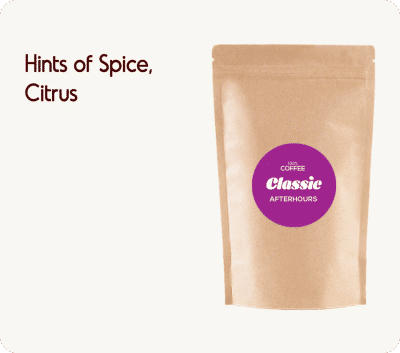

Kalledevarapura Estate
Bili Hu
From ₹849 / 250g

Monsooned Malabar
GB Roasters
From ₹500 / 250g
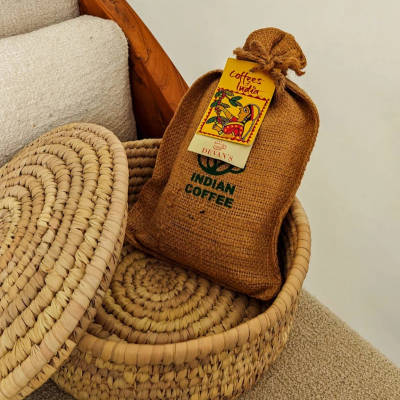
Arabica Plantation - AA Coffee
Devan's
From ₹500 / 250g


Catalogue last refreshed .
Indian coffee varieties explained
SLN 795, Cauvery, Chandragiri, Kent: what each variety brings to the cup.
Read the Context.
The background behind what you are tasting, from our writing on Indian coffee.
About Arabica coffee
Why Arabica dominates Indian specialty coffee.
Explore More.
Discover other ways to find your perfect coffee.

Top Robusta picks
Indian Robusta lots, from washed fine robusta to filter staples.
Top blend picks
Arabica–Robusta and house blends, sorted by community rating.
Top single-origin picks
Traceable single-estate and single-region lots, by rating.
Washed process picks
Fermented and washed to remove mucilage before drying.