

Best Chicory Coffee Mixes in India
Use a fine grind, boiled water, and let the decoction drip slowly through the metal filter, 10–15 minutes for full extraction. Always serve with hot milk.
What this bean type is
At a Glance
- Make-up
- Coffee + roasted chicory root
- Typical chicory
- 10–30%
- Body
- Full, syrupy
- Best for
- South Indian filter coffee, milk
Typical notes
Chicory, the roasted, ground root of the Cichorium intybus plant, has been blended into South Indian coffee for generations. It's caffeine-free but adds body, a dark caramel bittersweetness, and a syrupy texture that holds up to milk and sugar in the classic filter coffee preparation. Typical mixes run 10–30% chicory with an Arabica–Robusta coffee base; at 10–15% the chicory adds smoothness without dominating, at 20% the bittersweetness becomes prominent, and at 30% the chicory character is front and centre: dark, earthy, and heavily bodied. The combination is inseparable from the South Indian filter coffee ritual: a slow-drip decoction served frothy with hot milk in a tumbler and dabarah, the pouring between the two vessels aerating the coffee into a smooth, frothy layer.
Bean types at a glance
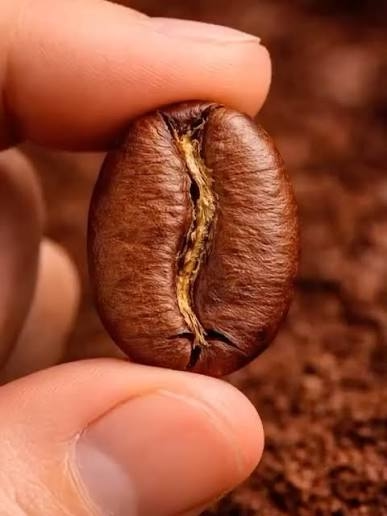
Arabica
Flatter, oval bean with a curved center crease.
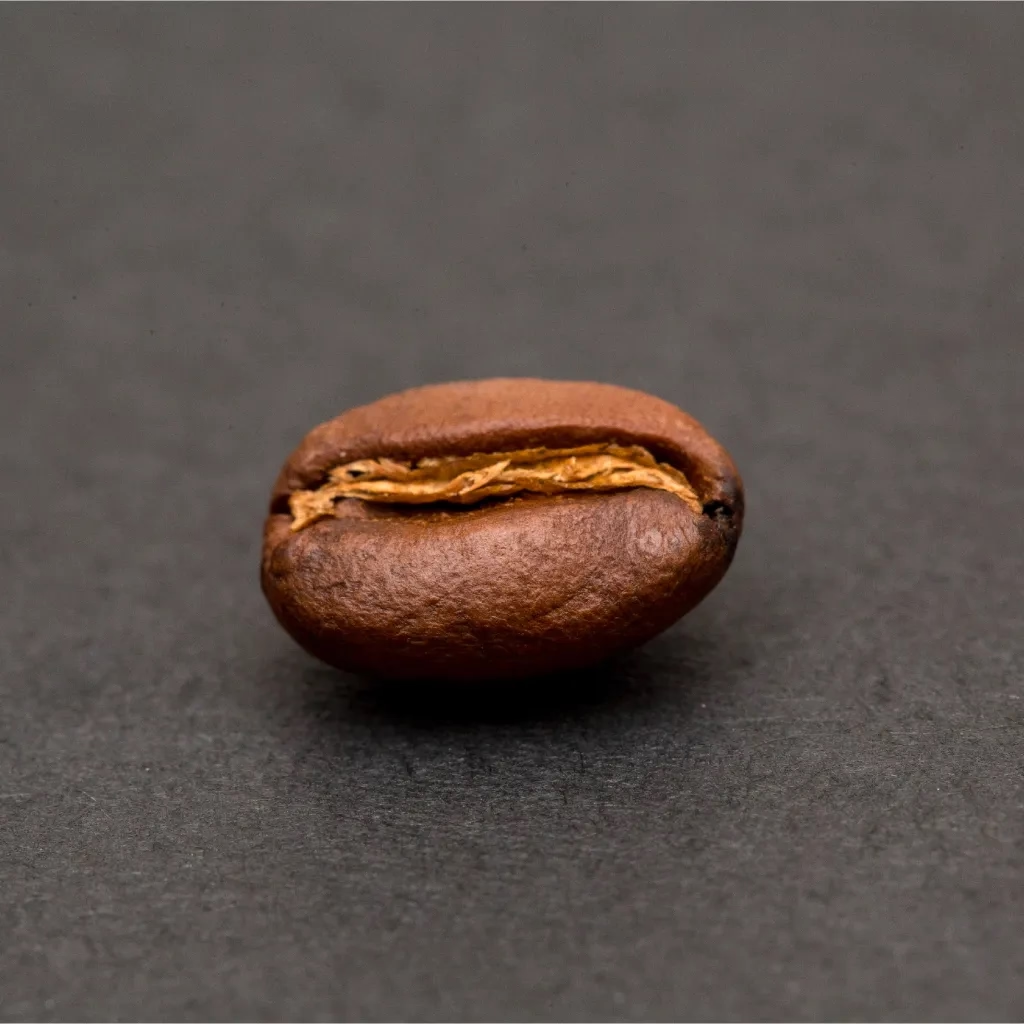
Robusta
Rounder, smaller bean with a straight crease.
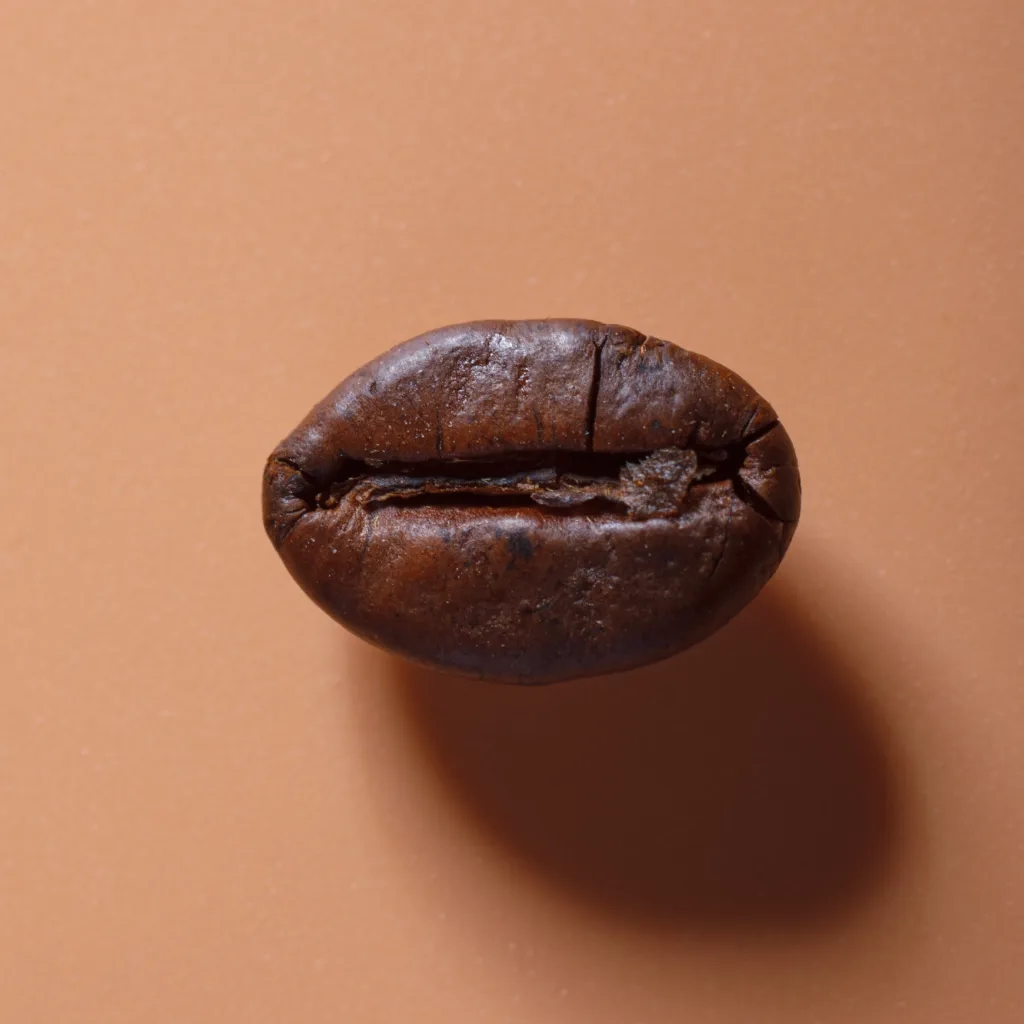
Liberica
Large, asymmetric almond-shaped bean.
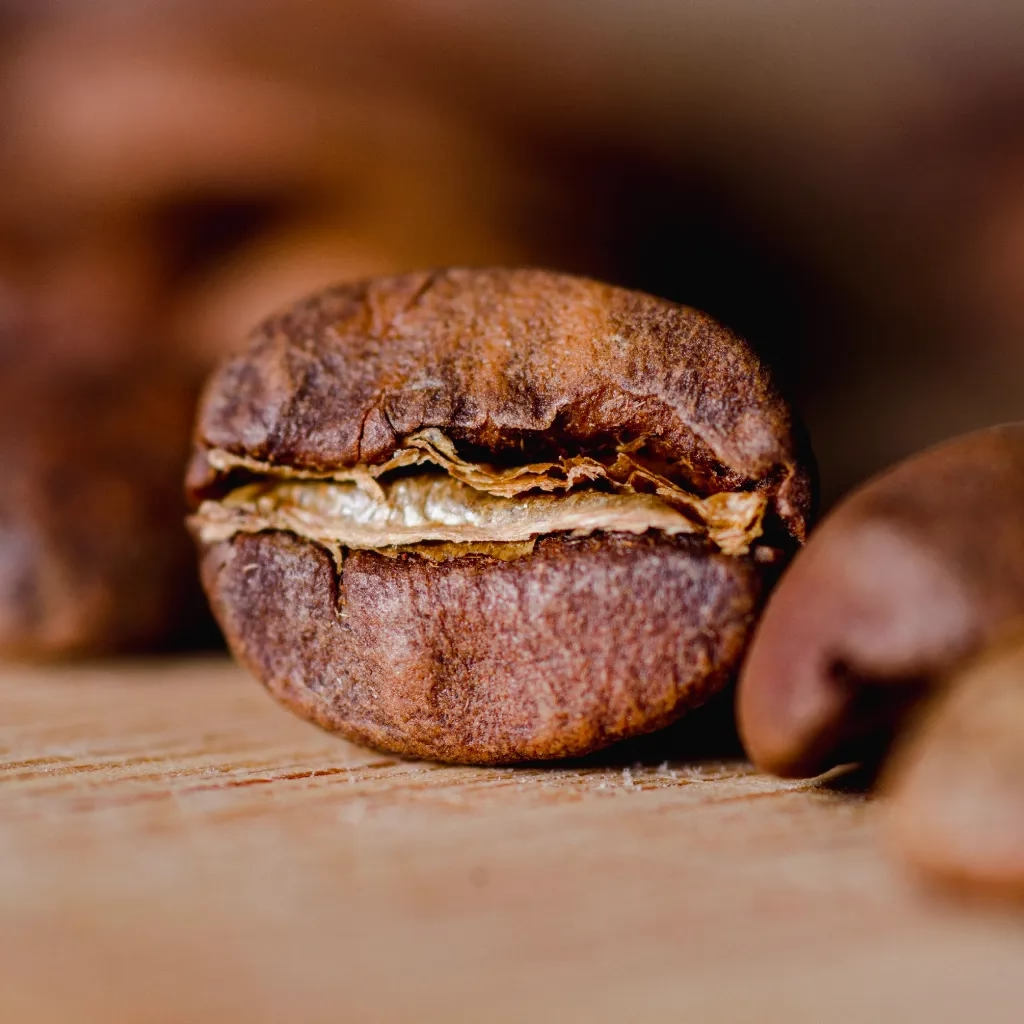
Excelsa
Smaller Liberica-family bean, teardrop shaped.
Also browse
Indian Coffee Context
Chicory coffee is a cultural institution in South India. The tradition traces to the colonial era, some attribute it to wartime rationing and others to French influence via Pondicherry, but regardless of origin, the coffee–chicory blend became the defining taste of filter coffee in Tamil Nadu, Karnataka, Andhra Pradesh, and Kerala. Far from being a cheap substitute (as critics sometimes claim), the chicory character is now what millions of people specifically love about the cup. It's the flavour of home, of railway station coffee, of hotel breakfast, and of the tumbler-and-dabarah ritual that defines South Indian hospitality. Brands like Narasu's, Cothas, Leo, and Bru built their reputations on precisely calibrated chicory-blend formulas.
Brew Guidance
Recommended
Chicory mixes are made for the South Indian filter, a stainless steel two-chamber drip device. Pack the upper chamber loosely with fine-ground mix (about 3 tablespoons for one serving), pour freshly boiled water, cover, and let it drip for 10–15 minutes. The resulting decoction is concentrated and potent, so mix it 1:1 or 1:2 with hot milk, add sugar to taste, and pour between tumbler and dabarah to froth. Moka Pot produces a similar concentrated result with a medium-fine grind, and it works well if you don't have a traditional filter. French Press at a coarse grind and 4-minute steep works in a pinch but loses some of the concentration. These mixes are not designed for black pour-over; the earthy bittersweetness needs milk to balance and round out.
Common Mistakes
Compare Bean Types
Chicory mixes are essentially an Arabica–Robusta blend with roasted chicory added. Remove the chicory and you have a standard coffee blend. The chicory adds body, bittersweetness, and that distinctive earthy-caramel character but contributes no caffeine. For the same coffee base without chicory, see blends; for a cleaner, black filter experience, choose a pure Arabica single origin. If you enjoy chicory's character, you'll also like Robusta-heavy blends: similar body and strength, minus the chicory earthiness.
Top chicory mix picks
Higher chicory percentages (20–30%) give a stronger, more bittersweet decoction, so start at 15% if you're new to the tradition.


![Desi Magic [Bold] – 80/20 by Karma Kaapi](https://ik.imagekit.io/indiancoffeebeans/tr:w-400,q-70/products/karma-kaapi/karma-kaapi-desi-magic-bold-80-20-1)





Catalogue last refreshed .
South Indian filter coffee guide
The traditional preparation: decoction, milk ratios, frothing, and the tumbler-and-dabarah ritual.
Read the Context.
The background behind what you are tasting, from our writing on Indian coffee.
About chicory coffee
The South Indian filter coffee tradition.
Explore More.
Discover other ways to find your perfect coffee.
Top blend picks
Arabica–Robusta and house blends, sorted by community rating.
Top Robusta picks
Indian Robusta lots, from washed fine robusta to filter staples.
Top Arabica picks
High-grown Indian Arabica lots, sorted by community rating.
Decoction-ready *filter* blends
Robusta-arabica blends and traditional dark roasts for a proper decoction.