


How to Brew South Indian Filter Coffee
South Indian filter coffee is made in a two-chambered metal device that produces a concentrated decoction, diluted with hot milk before serving. The method is more precise than it looks — grind size, water temperature, plunger pressure, and chicory ratio all affect the outcome. This guide covers the full process, from device mechanics to serving, including how single-origin specialty beans behave in the same setup.

The South Indian filter is a gravity percolation device. Hot water passes through a bed of ground coffee, collecting as a concentrated liquid — called decoction — in a lower chamber. That decoction is then diluted with milk and served. Four variables determine whether the decoction turns out well: grind size, dose, water temperature, and contact time. This guide documents each one, along with how the method responds when you swap a traditional chicory blend for a single-origin specialty bean.
How the South Indian filter device works
The device has two cylindrical metal chambers, one stacked on top of the other. The upper chamber holds the coffee grounds and has a perforated disc at its base — a flat plate with small holes that allows water to pass through slowly. Below it, the lower chamber collects the decoction as it drips through. A lid sits on top of the upper chamber to retain heat. The plunger, sometimes called the umbrella disc, is a flat plate with a central rod that rests on top of the grounds inside the upper chamber.
Most devices are made from stainless steel. Brass versions are also common — brass retains heat longer, which can be useful in cooler climates, but it requires more cleaning attention than stainless steel.
The brewing mechanism is gravity alone. No pressure is involved. Water poured into the upper chamber moves downward through the coffee bed and perforated disc, dripping slowly into the lower chamber over 10–25 minutes. The result is a concentrated liquid, not a finished drink — it needs dilution with milk or water before serving.
Note: The South Indian filter is not a pressure device. Decoction strength is determined by the coffee-to-water ratio and contact time, not by mechanical pressure. Users sometimes assume it works like an espresso machine — it does not. A higher dose or finer grind increases concentration; pressing harder on the plunger does not.
The plunger's function is to compact the coffee bed slightly. Resting the disc flat on the grounds is sufficient — it slows the drip rate just enough to extend contact time. Over-pressing is a common and counterproductive mistake. Pressing the plunger firmly can compact the bed so tightly that water cannot pass through, stalling the brew. The correct pressure is minimal: lower the disc until it sits level on the surface of the grounds, then leave it.
Coffee-to-chicory ratios
Chicory is roasted chicory root, ground and mixed with coffee before brewing. In South Indian filter coffee, it is added at 10–40% of the total blend weight. Chicory is caffeine-free. It extracts quickly and contributes body, a mellow bitterness, and an earthy character to the cup. Its higher solubility compared to coffee is part of why it increases the perceived density of the decoction.
Clarification: More chicory does not mean stronger coffee. Caffeine content and intensity come from the coffee-to-water ratio, not from chicory percentage. A 60:40 coffee-to-chicory blend brewed at the same ratio as an 80:20 blend will produce a cup with heavier body and more bitterness — but less caffeine, not more.
Most pre-ground South Indian filter blends are sold at one of three standard ratios:
80:20 (coffee:chicory) — The most widely used ratio. Associated with Madras-style kaapi. Produces a full-bodied, bittersweet cup with a darkly aromatic profile. This is the default for most households and commercial brands.
70:30 — Associated with degree coffee as served at darshini stalls. Heavier body, more earthy bitterness, and stronger perceived density. The coffee character is present but less prominent than in an 80:20 blend.
60:40 — The highest chicory proportion commonly found in commercial blends. Very thick body, significant bitterness, and reduced coffee character. Less common in home brewing; more often encountered at high-volume food stalls where cost is a consideration.
The 80:20 ratio's near-universal presence in household and commercial pre-ground blends means most South Indian filter drinkers have built their flavor expectations around that profile — worth knowing when switching brands or trying a no-chicory specialty option for the first time.
Pre-ground blends are sold at a fixed ratio. If you grind your own coffee from whole beans, there is no chicory in the mix unless you add it separately — roasted chicory root is available from some specialty and traditional grocery stores and can be mixed with ground coffee before brewing.
Key brewing variables
Four variables interact to determine decoction quality: grind size, dose, water temperature, and contact time. Changing one affects the others. Understanding how they interact allows you to adjust the brew when something is off.
South Indian Filter — Traditional Blend Parameters
| Method | Grind | Ratio | Time | Notes |
|---|---|---|---|---|
| South Indian Filter — Traditional Blend Parameters | Medium-fine (like table salt) | 1:5 to 1:6 | 10–15 minutes | water temperature: 91–93°C; bloom: 30–45 seconds; yield: Concentrated decoction (not a finished drink) |
Grind size is the variable most often overlooked when using pre-ground commercial blends, because those blends are already milled to an appropriate size. If you are grinding fresh at home, aim for medium-fine — roughly the texture of fine sand or table salt. At this size, water moves through the grounds steadily without rushing or stalling. Too coarse, and water passes through too quickly, producing pale, thin decoction. Too fine, and the grounds compact under the perforated disc, blocking flow and producing a harsh, over-extracted result.
Water temperature should be 91–93°C. Boiling water (100°C) extracts bitterness compounds from chicory more aggressively and tends to produce a sharp, flat cup. The upper chamber of the filter insulates well, so a small drop from boiling is acceptable.
Temperature is usually the culprit when home filter coffee tastes sharp or bitter. Most people pour from a just-boiled kettle — 90 seconds of rest addresses that without changing anything else.
Without a thermometer: Bring water to a full boil, remove from heat, and wait 90 seconds before pouring. This typically brings the temperature to approximately 91–93°C. Stainless steel and thin-walled kettles drop temperature faster than insulated or ceramic vessels.
Dose for a standard home filter is 25–35g of coffee powder per 150ml of water (a 1:5 ratio). A lighter dose produces thinner decoction. A heavier dose increases concentration but can also increase bitterness if the grind is on the finer side. Start at 30g and adjust based on the decoction quality you observe.
Contact time of 10–15 minutes is standard for a traditional blend at medium-fine grind with light plunger pressure. Extending brew time beyond 20 minutes at the same grind and temperature typically increases bitterness without meaningful flavor gain.
The brewing process, step by step
Add grounds to the upper chamber
Dose 25–35g of coffee powder (or your pre-ground blend) into the upper chamber. Level the surface gently with a finger or small utensil. Do not pack the grounds.
Place the plunger disc on top of the grounds
Lower the disc flat onto the surface. Do not press down. The disc should rest on the grounds under its own weight — this provides enough contact to ensure even water distribution without restricting flow.
Bloom
Pour 40–50ml of water at 91–93°C in a slow circular motion over the grounds. Wait 30–45 seconds. This initial pour saturates the coffee bed evenly and allows dissolved gases to escape, which improves extraction consistency in the subsequent pour.
Add the remaining water
For a 1:5 ratio using 30g of coffee, your total water volume is 150ml. Subtract the bloom water (approximately 45ml) and add the remaining 105ml slowly, in a circular motion. Do not stir. Stirring dislodges the grounds and can clog the perforated disc.
Cover and wait
Place the lid on the upper chamber. Do not move the device. Let the decoction drip into the lower chamber. The drip rate will vary based on grind size and plunger pressure — a steady, slow drip is normal. If nothing is flowing, the plunger has been pressed too firmly or the grind is too fine.
Allow 10–15 minutes for full collection
The decoction is ready when dripping slows to near-stop. Full collection time depends on grind size and plunger pressure. A medium-fine grind with light plunger contact typically finishes in 10–12 minutes.
Check the decoction before serving
A well-brewed decoction is deep dark brown with a slight reddish tinge when tilted, opaque, and has the consistency of light maple syrup. The aroma should show chocolate, caramel, or roasted grain notes. If the decoction is pale or watery, the dose was too low or the grind too coarse. If it is sharp and bitter, water temperature was too high or grind too fine.
Reading the decoction
Evaluating the decoction before diluting tells you whether the parameters worked. Three things are worth checking visually.
Color: A well-brewed decoction is deep dark brown. When you tilt the lower chamber slightly, it should show a slight reddish or amber tinge — this is characteristic of properly extracted coffee oils. A pale brown or yellowish color indicates under-extraction (grind too coarse, dose too low, or water too cool).
Opacity and consistency: The decoction should be fully opaque and have some viscosity — not as thick as molasses, but noticeably more substantial than water. A watery, translucent decoction points to under-extraction. An almost-syrupy, very dark result with strong bitterness points to over-extraction (grind too fine, water too hot, or brew time too long).
Aroma: Chocolate, caramel, or roasted grain notes indicate a balanced extraction. A sharp, acrid smell suggests over-extraction. A flat or faint aroma suggests under-extraction.
Quick density check: After collection is complete, tilt the lower chamber and observe how the decoction moves along the inner wall. A well-brewed decoction leaves a thin, slow-moving film rather than running off immediately like water. This is a practical field check without measuring tools.
Serving: decoction-to-milk ratio and the dabarah tumbler
The decoction produced by the filter is concentrated — it is not drunk straight. It must be diluted before serving. The standard ratio is 1 part decoction to 3–4 parts hot milk. Adjust to preference: 1:2 for a stronger cup, 1:5 for a lighter one. Sugar is added to taste, typically to the milk or to the combined drink.
The traditional serving set consists of two pieces: the dabarah, a wide shallow metal bowl, and the tumbler, a narrow cylindrical cup. Both are made from stainless steel or brass. To serve, combine the decoction and hot milk in one vessel, then pour the mixture back and forth between the dabarah and tumbler — lifting one high enough to create a thin, falling stream. Repeat 4–6 times.
Pulling isn't just ritual. Metal transfers heat fast, so the coffee cools to a drinkable temperature within a few passes. The falling stream aerates the mixture slightly, which softens sharp edges. And because decoction is denser than milk, it layers at the bottom if simply poured in and stirred — the back-and-forth actually mixes them.
Degree coffee: The term "degree coffee" refers to decoction density measured with a lactometer — a practice used at traditional darshini stalls in Karnataka and Tamil Nadu to ensure consistency. A lactometer reading confirms the decoction meets a set concentration standard before it is served. The term is sometimes used informally to mean simply "strong coffee," but its original meaning is specifically about measured decoction density.
Using specialty single-origin beans in a South Indian filter
The South Indian filter handles single-origin specialty beans without modification to the device. What changes is the approach to the brew parameters — and, optionally, whether chicory is used at all.
Chicory: Optional when using specialty beans. Without chicory, the cup is lighter in body and the coffee's individual flavor characteristics are more prominent. Reducing chicory to 10% or eliminating it gives cleaner flavor expression. Adding chicory at the standard 20% is still a valid choice — it changes the profile toward heavier body but does not mask quality beans. Neither approach is inherently better; they produce different cups.
Grind: Medium-fine remains appropriate. Medium-roast single-origins may work slightly better toward the medium end of the range — slightly coarser than a traditional dark blend — particularly if they have lower density from lighter roasting.
Dose: 20–30g per 150ml water. Specialty beans often carry more soluble material than heavily roasted commercial blends and can be dosed lighter without producing thin decoction.
Ratio: Extending to 1:6–1:8 produces a lighter decoction suited to drinking with less milk or diluted with hot water instead of milk.
Roast level: Medium to medium-dark single-origins work most predictably in this device. Light roasts can work but require slightly lower water temperature (90–92°C) and a slightly coarser grind to avoid over-extracting acidity in the long contact time.
Serving: With specialty beans, many brewers serve the decoction with less milk, or skip milk entirely and dilute with hot water, to preserve the flavor clarity that single-origin beans offer.
These adjustments collapse into a simple traditional-to-specialty shift:
| Parameter | Traditional blend | Specialty starting point |
|---|---|---|
| Grind | Fine (powder-like) | Medium-fine (table salt) |
| Water temperature | 100°C (boiling) | 90–96°C (30–60s off boil) |
| Dose per 150ml | 20–25g (with chicory) | 15–17g black / 20g with milk |
| Tamp | Firm press | Gentle placement |
| Bloom | None | 30s with 30–40ml |
| Chicory | 20–30% | 0–10% |
Gentle tamp matters more with specialty beans: lighter roasts are denser and compact easily, and a firm press channels the bed and turns the cup astringent.
Which specialty coffees work best
The filter's long contact time and metal filtration suit some beans better than others.
- Most compatible — medium-roast naturals and classic washed coffees. Naturals from Chikmagalur, Coorg, or Araku bring body and fruit sweetness that complement full extraction; chocolate, nut, and caramel notes survive milk dilution. Monsooned Malabar is the natural fit — its low acidity and heavy body produce decoction close to traditional kaapi in mouthfeel even without chicory.
- Works with adjustment — medium-light washed and honey coffees. Grind slightly finer and serve with less milk or black; honey-process Karnataka coffees translate well at a 1:1 to 1:2 decoction-to-milk ratio.
- Challenging — light-roast, high-acidity washed coffees. The long contact time and metal filter can flatten bright acidity. Grind as fine as the filter allows without stalling, use 90°C water, and serve black or lightly diluted with hot water.
Common mistakes with specialty beans
- Espresso-fine grind on a light roast — clogs the perforated disc and over-extracts. Go medium-fine.
- Boiling water on a light roast — the extended contact extracts harsh compounds past the sweet spot. Rest 30–60s off the boil.
- Heavy-milk serve with no chicory — without chicory's body, a 1:3–1:4 milk dilution masks origin character. Try black or 1:1 first.
- Not pre-warming the filter — the steel body drops slurry temperature. Rinse with hot water before adding coffee.
- Expecting pour-over clarity — the metal filter passes oils by design; specialty decoction is closer to a concentrated French press than a clean V60.
The ICB catalog tracks coffees tagged for South Indian filter brewing across South Indian roasters. The examples below represent a range of approaches — from traditional Robusta-chicory blends to single-estate Arabica options.
Coffees for South Indian Filter
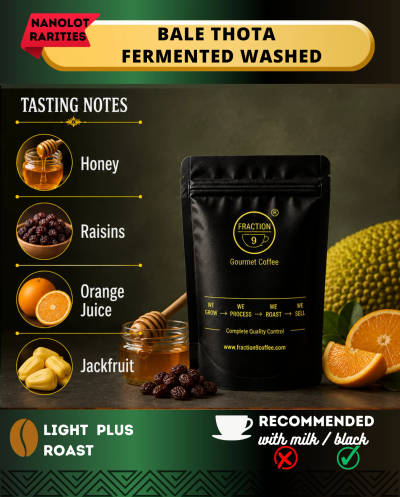
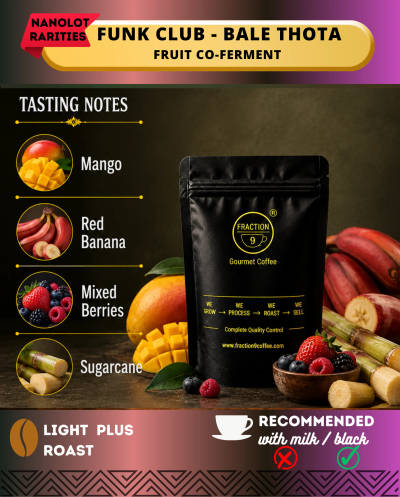
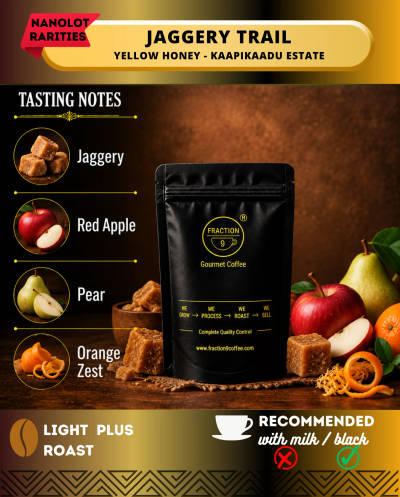



That catalog range — commodity blends and single-estate Arabica both tagged for filter use — is a signal. Specialty roasters are now treating the device as a general-purpose brew method, not something assumed to be the exclusive home of commercial blends.
Regional variations
How filter coffee is served varies by region, and the differences are worth noting as reference rather than rules. Madras kaapi — the Tamil Nadu style — typically uses an 80:20 coffee-to-chicory blend, is served very hot, and is pulled from height before drinking. Degree coffee, common at Karnataka and Tamil Nadu darshini stalls, refers to decoction tested by lactometer for density; blends are often 70:30. Udupi-style filter coffee, associated with the restaurant tradition of the Karnataka coast, tends toward a lighter body with less milk and sometimes a lower chicory percentage. These are general patterns — household and stall practices vary considerably within each region.
References
- Naivo Coffee — South Indian Filter Brew Guide
- The Kaapi Project — Complete Guide to Indian Filter Brewing
- ByteChef — The Science Behind South Indian Filter Coffee
- Leo Coffee — Coffee & Chicory: The Ratio Guide
- CoffeePlusThree — How to Make South Indian Filter Coffee