

Best Liberica in India
Liberica is a curiosity, not an everyday cup. Brew it darker, use immersion methods, and expect a bold, polarising, unconventional profile.
What this bean type is
At a Glance
- Caffeine
- Low (~1.2%)
- Body
- Heavy, syrupy
- Acidity
- Low
- Best for
- Curiosity, immersion brewing, milk
Typical notes
Liberica (Coffea liberica) is the rarest of the three commercial coffee species and accounts for less than 2% of global production, concentrated in the Philippines (where it's called 'Barako'), Malaysia, and parts of West Africa. The beans are distinctive: large, irregular, and almond-shaped, noticeably bigger than Arabica or Robusta. The cup is divisive: smoky, woody, jackfruit-like, with a heavy syrupy body, unusual savoury-floral aromatics, and a lingering finish that some describe as tobacco-like. Indian Liberica, where it exists, is grown experimentally and almost never reaches the specialty market in volume. It's a curiosity for adventurous drinkers: rewarding for those who enjoy bold, unconventional flavours, but genuinely polarising for anyone expecting Arabica-like clarity.
Bean types at a glance
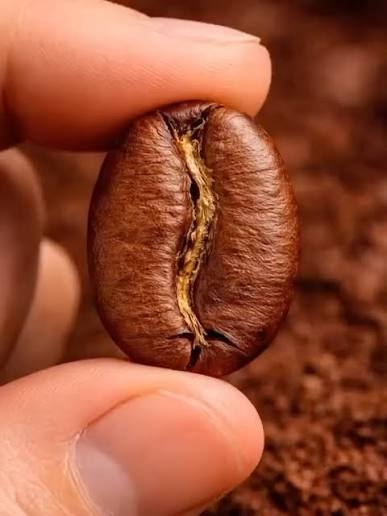
Arabica
Flatter, oval bean with a curved center crease.
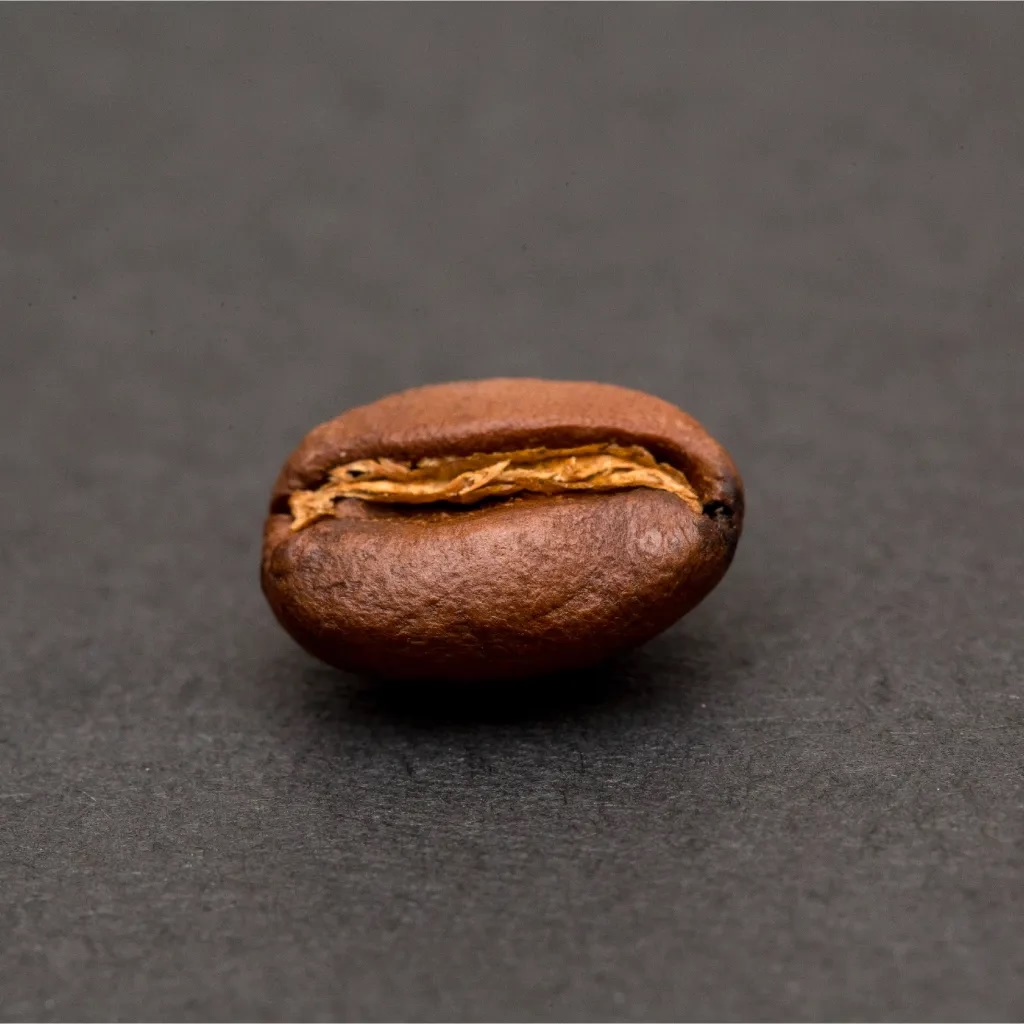
Robusta
Rounder, smaller bean with a straight crease.
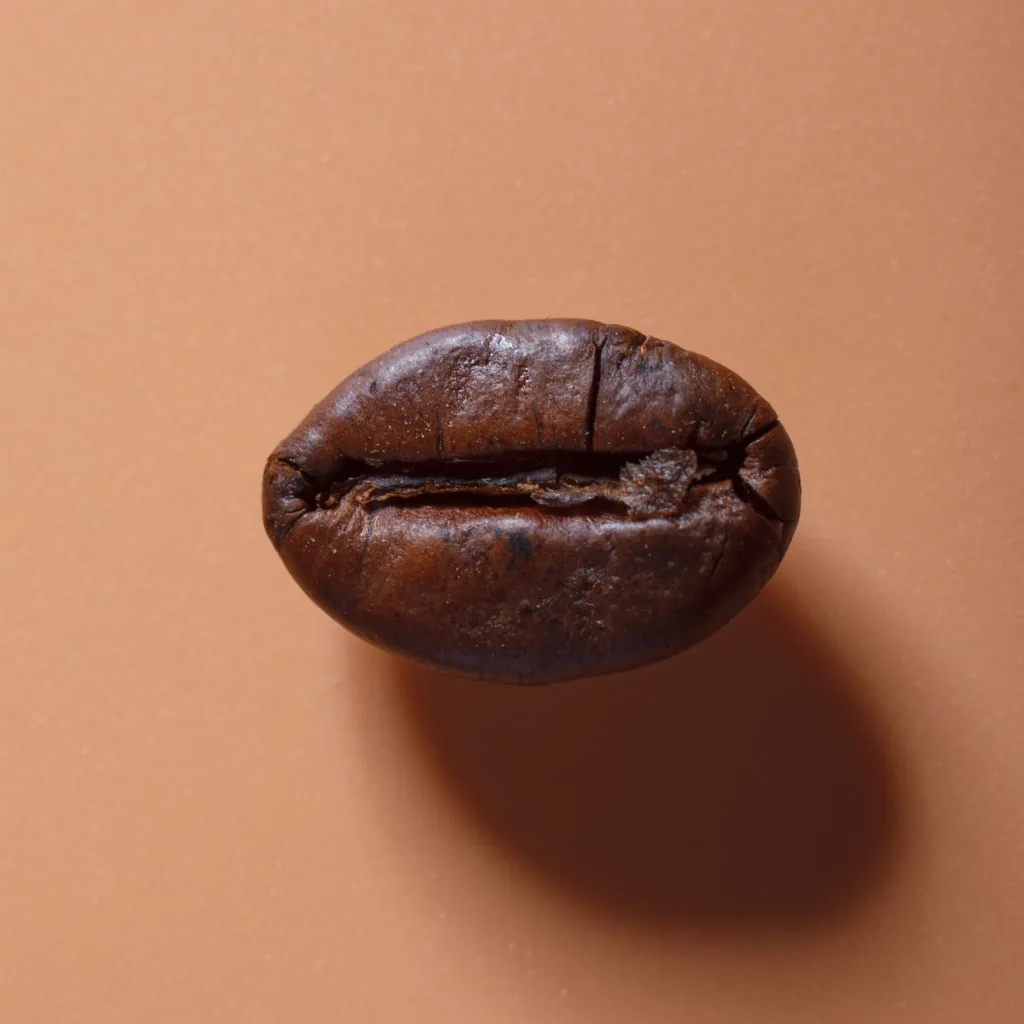
Liberica
Large, asymmetric almond-shaped bean.
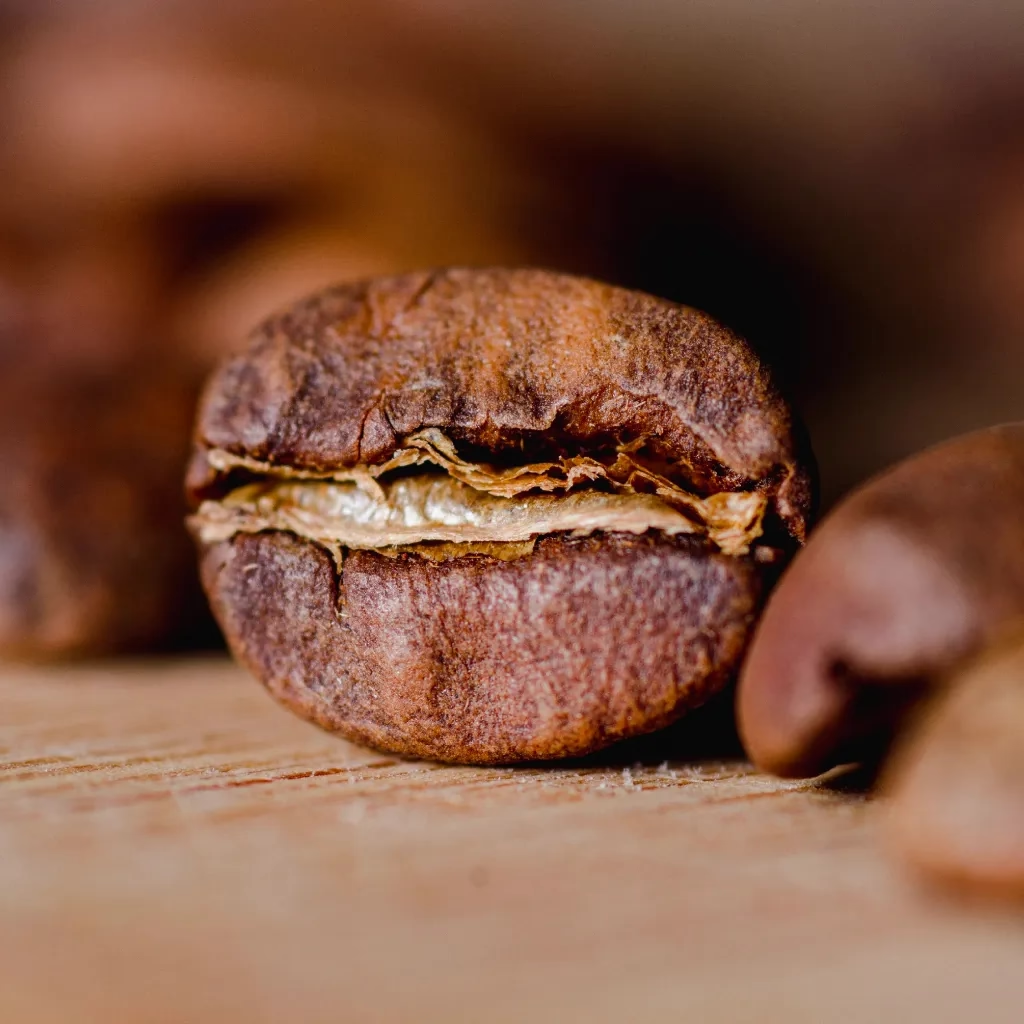
Excelsa
Smaller Liberica-family bean, teardrop shaped.
Also browse
Indian Coffee Context
Liberica has almost no commercial footprint in India. Coffee here is overwhelmingly Arabica and Robusta; Liberica appears, if at all, in tiny experimental plantings or heritage trees maintained for genetic diversity on a handful of Karnataka and Kerala estates. India's Coffee Board doesn't track Liberica as a separate category in production statistics. It's that marginal. If you find an Indian Liberica lot, treat it as a genuine rarity. In Southeast Asia, particularly the Philippines, Liberica ('Barako') is culturally important and commands premium prices. India could theoretically grow it in its lower-altitude, humid coastal regions, but there's no established supply chain or processing infrastructure.
Brew Guidance
Recommended
Liberica's heavy body and bold, smoky character suit immersion and pressure methods; pour-over clarity works against it. French Press with a coarse grind, 88–92°C water, and a 4–5 minute steep lets the syrupy body and dark fruit come through without amplifying bitterness. AeroPress with a metal filter, 1:12 ratio, and 2-minute inverted steep gives more control over intensity. Moka Pot produces a concentrated, espresso-like Liberica that's excellent with steamed milk. In Southeast Asia, Liberica is traditionally dark-roasted and served with condensed milk or sugar, and these preparations suit its character well. As a delicate light-roast pour-over it rarely works; the profile is too heavy and unconventional for a paper filter to flatter.
Common Mistakes
Compare Bean Types
Liberica and Excelsa are the two rare species beyond the Arabica–Robusta mainstream. Excelsa (botanically a Liberica variety) is tarter and fruitier with more acidity, closer to an intense natural-process Arabica in character. Liberica proper is smokier, heavier, and more savoury, closer to the 'dark and bold' end of the spectrum. Neither tastes like Arabica or Robusta; they're their own category entirely.
Liberica picks
Grind coarser than Arabica, brew at 88–92°C, and lean into milk or sugar. Liberica's funk rewards bold preparation.




Catalogue last refreshed .
Coffee species explained
Arabica, Robusta, Liberica, Excelsa: the four commercial coffee species and how they differ.
Read the Context.
The background behind what you are tasting, from our writing on Indian coffee.
About Liberica coffee
The rare third species and its place in Indian coffee.
Explore More.
Discover other ways to find your perfect coffee.
Excelsa picks
Rare Excelsa lots, uncommon offerings from Indian roasters.
Top Arabica picks
High-grown Indian Arabica lots, sorted by community rating.
Top Robusta picks
Indian Robusta lots, from washed fine robusta to filter staples.
Full-bodied for the *French Press*
Heavy-bodied, oily, low-acid lots built for a long immersion.