

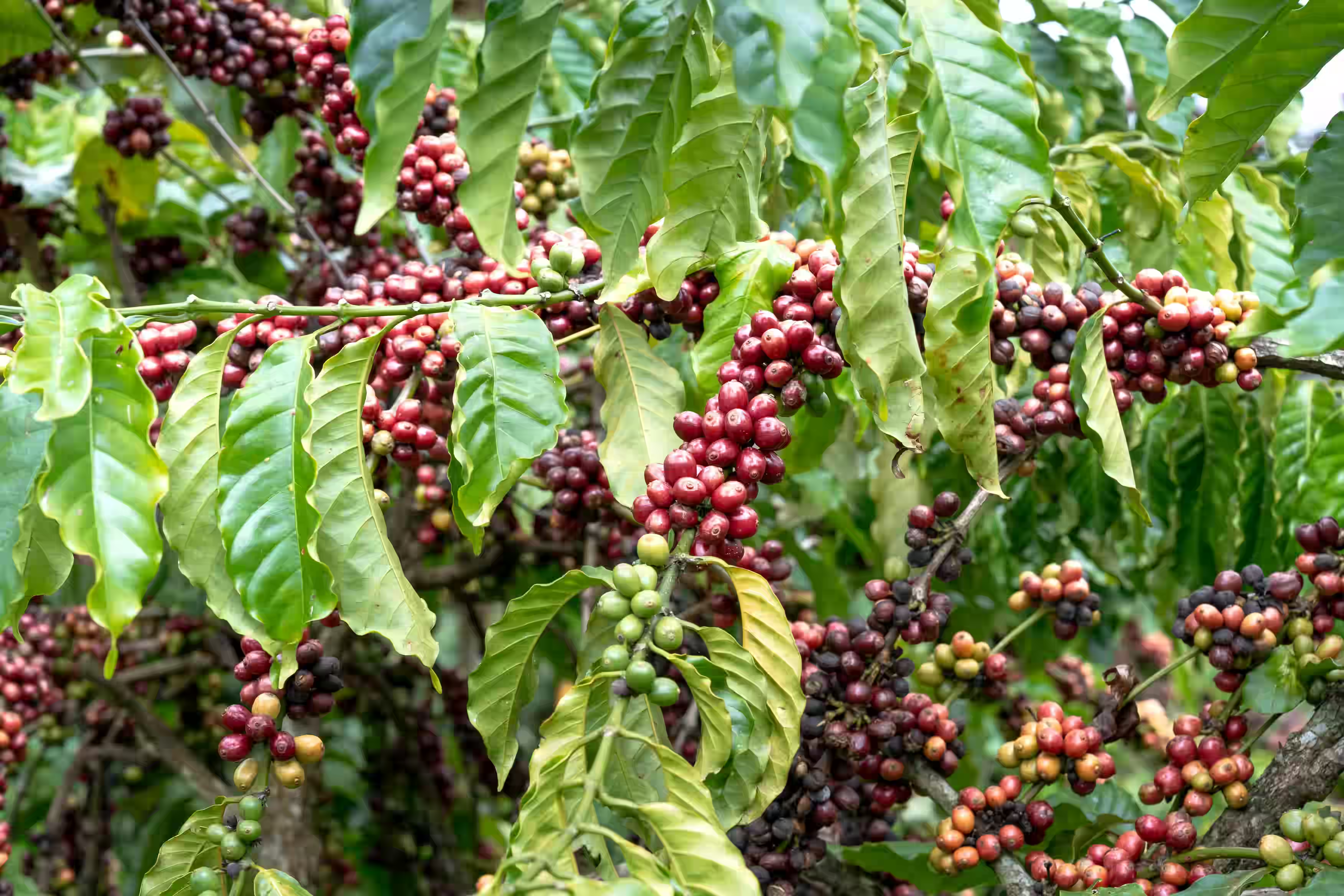
Best Palani Hills (Pulneys) Coffee in India
Tamil Nadu's southern range: Arabica in mixed spice gardens, mostly washed and mostly roasted for filter.
Explore the Terroir
About the Region
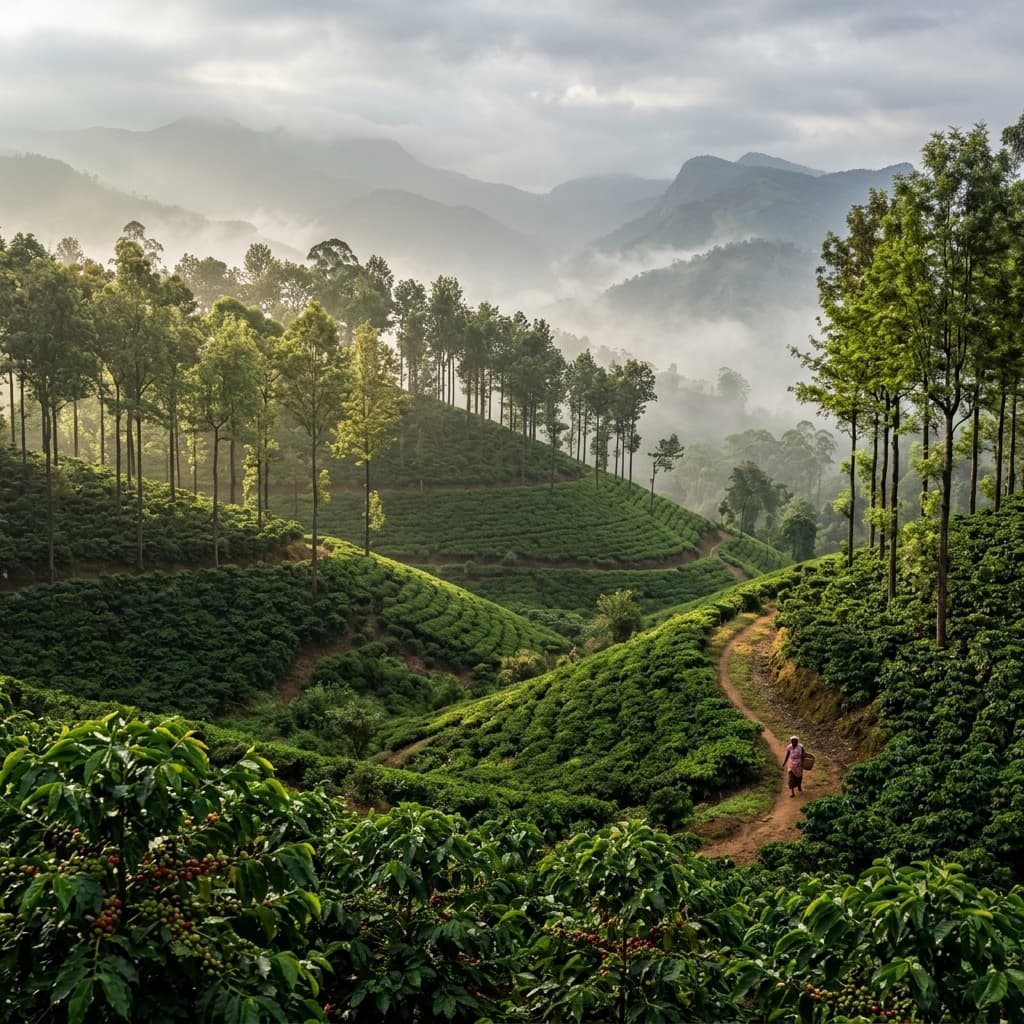
The Palani Hills, the Pulneys, are a range in Tamil Nadu's southern Western Ghats, running west from Madurai toward Kerala and overlapping the hill station of Kodaikanal. The peaks climb past 2,000 metres, but the coffee sits lower, on the middle and lower slopes, in mixed gardens with pepper, orange, banana and cardamom rather than on dedicated plantations. The plantation atlas maps 8,358 hectares under coffee in Kodaikanal taluk alone: Arabica, under silver oak mono-shade, natural mixed shade and banana. What genuinely sets the region apart is its calendar: rainfall comes mostly from the northeast monsoon between October and December, so flowering and harvest run on a different clock from the Karnataka districts. Holdings are small and family-run, and the range is better known in the wider market for spices and tea than for coffee.
In the cup & on the map
Quick facts to anchor flavour expectations, paired with the coffees below.
State / area
Tamil Nadu
Elevation
800–1,500m
Known for
Mixed spice-garden Arabica, northeast-monsoon harvest
Terroir & Growing Conditions
Climate
Cool, high-elevation, monsoon-influenced
Soil
Forest loam
Altitude
800–1,500m
Harvest
November-January
Area
13,862 ha under coffee (NRSC 2024, Sept 2024)
Palani Hills coffees
Compare against Shevaroy Hills and the Nilgiris for a full read on Tamil Nadu terroir: three ranges, three different elevations.

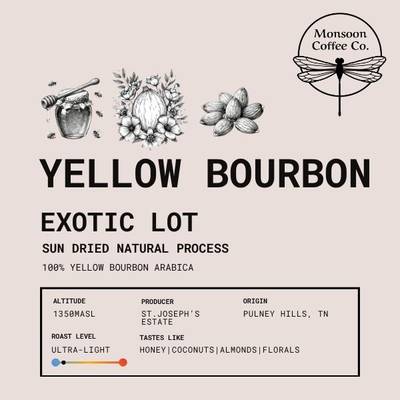
St. Joseph Estate
Blue Tokai Coffee
From ₹700 / 250g



Royale Medium-Dark Roast
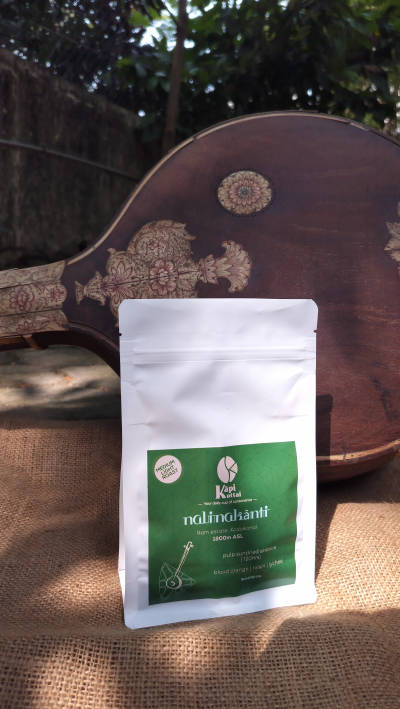
Nandan Coffee
From ₹650 / 250g


Catalogue last refreshed .
In the Cup
Typical notes
Process Variation
Washed processing dominates the ICB catalogue here, with a strong showing of washed-natural lots and a handful of naturals and anaerobics, a specialty-skewed picture, since natural processing is still the norm on smaller holdings and washing is what the larger estates do for the specialty market. The washed lots are the clearest window on the terroir; the naturals lean heavier and sweeter.
Roaster Sourcing
Nandan Coffee carries the deepest Palani Hills range in the catalogue by some distance, with Kat and Kin, Kapi Kottai, Blue Tokai and a few others listing single lots. Sourcing is thinner than for the Karnataka regions, so the range you can actually taste is narrower, but it also means less overlap, and less chance you're comparing two roasts of the same green.
Indian Specialty Context
The Coffee Board's own description of Pulney coffee is unusually plain-spoken: some of the best S.795 Arabica in the country, medium body, slight flavour, little aroma. Read that as a coffee that doesn't shout. Its appeal is balance and sweetness rather than a dramatic cup. The ICB catalogue matches: two thirds of these lots are roasted medium or darker, and the dominant notes are caramel, dark chocolate and roasted nuts. If you want more brightness from the region, the light-roast washed lots are where to look.
Brew Guidance
Recommended
The medium and medium-dark lots that dominate here are built for South Indian filter coffee and take milk well. A balanced, medium-bodied cup is what this origin does. For the brightest expression, look for the light-roast washed lots and brew them on V60.
Explore Nearby Regions


Sourcing from Palani Hills
Explore Indian coffee regions
Region guides and brewing tips on the learn hub.
Read the Context.
The background behind what you are tasting, from our writing on Indian coffee.
About Palani Hills coffee
Tamil Nadu's highest coffee country, above Kodaikanal.
Explore More.
Discover other ways to find your perfect coffee.
Nilgiris coffees
Blue Mountain highland lots from Tamil Nadu.
Shevaroy Hills coffees
Tamil Nadu highland lots from India's most underrated coffee region.
Washed process picks
Fermented and washed to remove mucilage before drying.
The *light* end of the spectrum
Bright, acidic, and complex coffees roasted to preserve origin characteristics.