



Full-bodied, clean, minimal sediment
Flavour
Origin and production
- Bababudangiri Range In Chikkamagaluru, Karnataka
As described by Vui Coffee Roasters
This is a fruit-forward coffee that feels alive in the cup. Sweet and bright, it bursts with ripe, fruity flavors and finishes with a winey pop that lingers on your palate. If you love coffee that surprises and excites, this one is for you.
Brewing
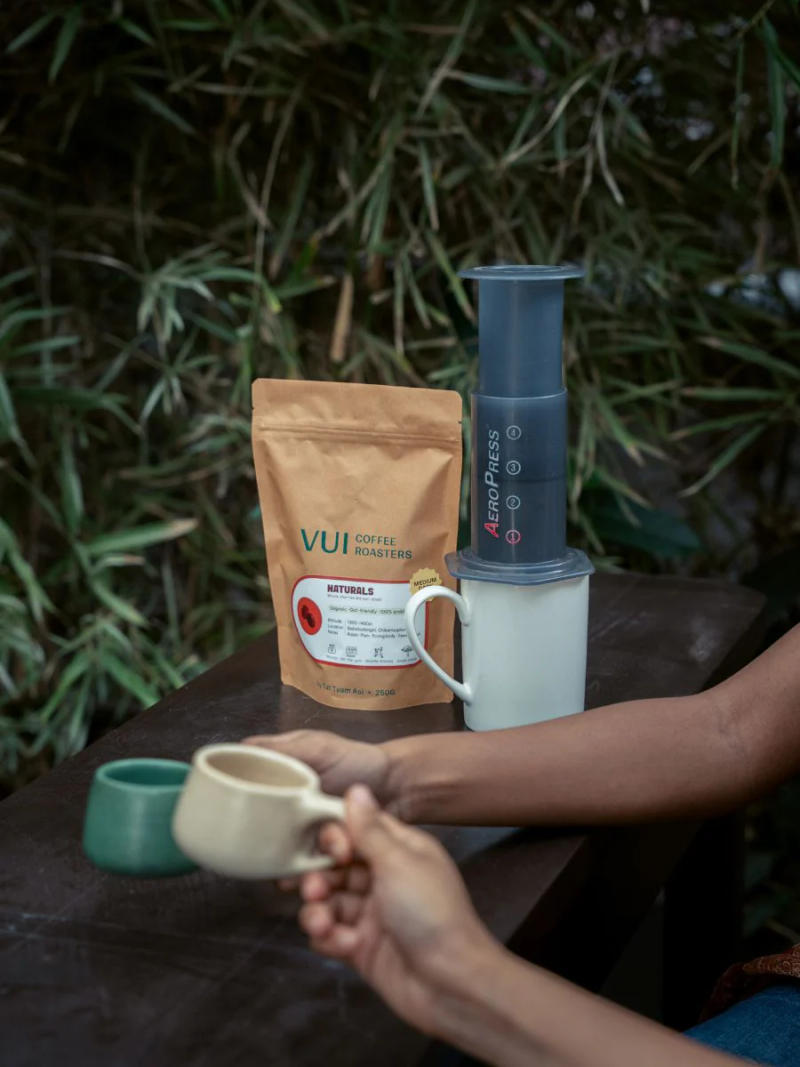
Suggested for Aeropress, French Press, Moka Pot, Pour Over. Works with milk (ICB's reading).
Full-bodied, smooth, well-rounded
Intense, rich, syrupy, pseudo-espresso
Pack sizes and price
Ratings
What drinkers say
With milk?
More from Vui Coffee Roasters

Black Honey (Medium - Dark)
Unrated

Carbonic Maceration (Medium)
Unrated
Double Ferment (Light - Medium)
Unrated
Espresso Blend (Dark)
Unrated
Read about this

Processing & Flavors
Washed vs Natural vs Honey: What Processing Means for Flavor
Coffee bags list 'washed' or 'natural' processing, but what do these terms actually mean for flavor? Processing method—how the fruit is removed from the seed—creates more flavor variation than origin alone. Here's what each method does, and what ICB's data shows about Indian coffees.

Processing & Flavors
How Fermentation Shapes Coffee Flavour
Every coffee ferments — the variable is how. Understanding the microbial chemistry behind washed, natural, and anaerobic processing explains why the same estate can produce a clean chocolate cup and a grape-forward lot from the same harvest. This article maps the mechanism to the label, with data from ICB's catalog of 1,238 Indian coffees.

Brewing Behaviour
Pour Over for Indian Naturals: Parameters, Drippers, and Regional Differences
Natural-process coffees extract faster and carry more residual CO₂ than washed beans — but most pour over guides are written for washed. This guide covers the four parameter adjustments that correct for natural-process behavior, how to choose between a V60 and Kalita Wave, and how Chikmagalur, Araku, and Coorg naturals differ on the same recipe.
Questions about this coffee
Vui Coffee Roasters's tasting notes for Naturals (Medium-Dark) lean toward Raisin and Winey. Flavor is subjective and shifts with roast freshness, grind size, and brew method, so your cup may vary.
Naturals (Medium-Dark) is a single-origin coffee, sourced from one origin rather than blended, so it reflects the character of that specific place.
Naturals (Medium-Dark) is suggested for Aeropress, French Press, Moka Pot and Pour Over. As a rule of thumb: espresso needs a fine grind, pour-over and drip a medium grind, and French press or cold brew a coarse grind. Dial in from there to taste.