


Washed vs Natural vs Honey: What Processing Means for Flavor
Coffee bags list 'washed' or 'natural' processing, but what do these terms actually mean for flavor? Processing method—how the fruit is removed from the seed—creates more flavor variation than origin alone. Here's what each method does, and what ICB's data shows about Indian coffees.

Coffee bags show processing labels—washed, natural, honey—but most buyers move past them without stopping. That's a significant skip. Processing method shapes flavor more than origin in many cases. A coffee from the same Chikmagalur estate can taste completely different as washed versus natural. The method used to separate the coffee seed from its cherry determines flavor before roasting even starts.
This article explains what these methods actually do mechanically, shows flavor outcomes using ICB's catalog data from 878 Indian coffees with processing information, and documents how processing choices affect final cup characteristics. This is reference knowledge about how processing works, not a preference ranking.
What coffee processing actually does
Processing is how the coffee seed (bean) gets separated from the cherry fruit after harvest. The cherry has five layers: skin (exocarp), fruit pulp (mesocarp), sticky mucilage layer (pectin), parchment (endocarp), and seed. Different methods remove these layers at different stages, creating different fermentation environments—and that affects chemical composition before roasting begins.
Washed processing removes fruit layers early. Cherries are depulped within 24 hours of harvest—skin and pulp stripped by machine, leaving beans still coated in sticky mucilage. Those beans ferment in water for 8-72 hours to break down the mucilage layer, then get washed clean and dried for 10-14 days on raised beds or patios. With minimal fruit contact, the bean's inherent characteristics dominate the cup. The tradeoff: significant water use (40-50 liters per kilogram of coffee), though controlled fermentation keeps defect risk low and outcomes consistent.
Natural processing does the opposite. Whole cherries dry intact with all fruit layers on the seed—3-6 weeks in sun, turned regularly to prevent mold. Fermentation happens inside the cherry as it dries, and sugars from the fruit migrate into the bean over that extended period. After drying, the dried fruit hull gets mechanically removed. Lower water usage makes this viable in water-scarce regions, but defect risk is higher if drying conditions aren't carefully managed.
Honey processing is the hybrid. Skin and some pulp are removed by depulping, but the mucilage layer stays on the bean during drying—no washing, no water fermentation. How much mucilage remains determines the color designation: yellow (minimal), red (moderate), black (maximum). Drying takes 1-3 weeks. Less water than washed, less risk than natural.
Note: Honey processing does not involve adding honey. The name refers to the sticky, honey-like mucilage that naturally exists as part of the cherry structure.
How processing changes flavor
The flavor differences across processing methods aren't subtle. ICB's catalog data, covering 878 coffees with processing information, shows what Indian estates and roasters actually produce rather than theoretical flavor descriptions.
Washed coffees show concentrated patterns. Among 218 washed coffees in the catalog, dark chocolate appears in 17%, caramel in 13%, citrus in 12%, chocolate in 12%, and milk chocolate in 9%. The chocolate family—dark chocolate, chocolate, milk chocolate—accounts for 38% of flavor descriptors combined. That concentration across a 218-coffee sample suggests washed processing produces predictable flavor bands in Indian arabica: a narrower, more repeatable outcome range than either natural or honey processing achieves at comparable catalog scale. Citrus at 12% reflects the bright acidity typical of washed processing. Washed processing creates clarity—origin character and roast development come through without fruit obscuring the base.
Top flavor notes for washed process coffees: Dark chocolate (17%), Caramel (13%), Citrus (12%), Chocolate (12%), Milk chocolate (9%), Sweet (7%), Cocoa (7%), Nutty (6%). Clean, chocolate-forward profiles with bright acidity characterize Indian washed coffees.
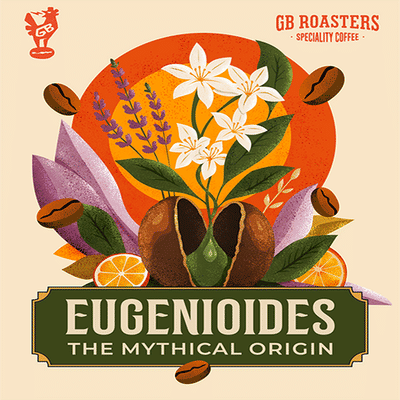
This washed coffee from KOHI shows the clean, chocolate-forward profile typical of washed processing — clarity and origin character without fruit interference.
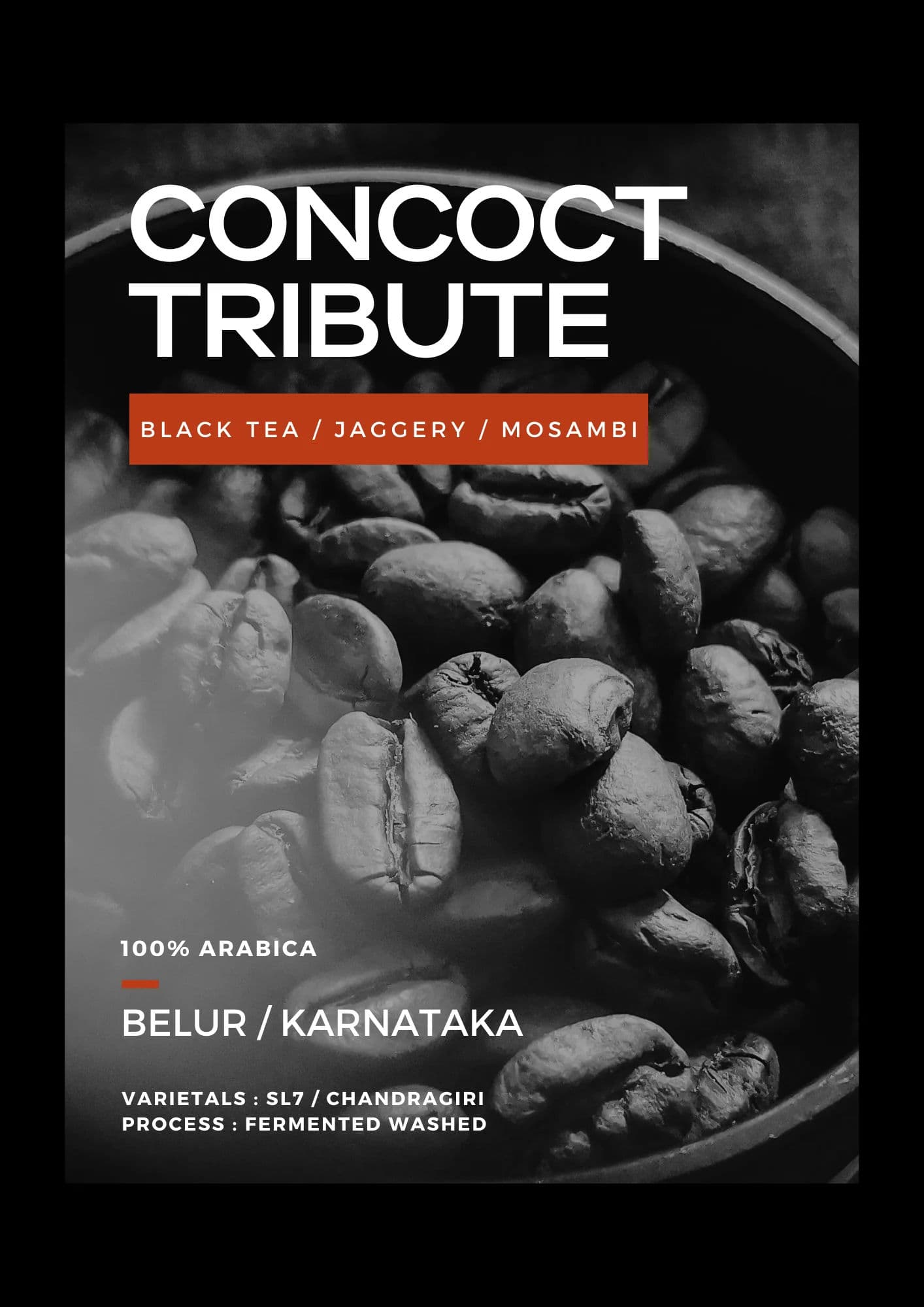
Natural coffees show more distributed patterns. Among 133 natural coffees analyzed, caramel and dark chocolate each appear in 7%, chocolate and cocoa in 6%, with citrus, honey, nutty, raisin, plum, and orange each appearing in 5%. No single note clears 8%, compared to washed processing's 17% peak. That flatter distribution reflects how natural processing's extended fermentation introduces more variables into the final cup—producer execution becomes a larger factor in outcomes. Fruit notes (plum, orange, raisin) appear alongside chocolate notes at comparable frequencies. Natural processing creates complexity and diversity, but outcomes vary more across producers than washed processing does.
Top flavor notes for natural process coffees: Caramel (7%), Dark chocolate (7%), Chocolate (6%), Cocoa (6%), Citrus (5%), Honey (5%), Nutty (5%), Raisin (5%), Plum (5%), Orange (5%). More diverse and evenly distributed than washed — fruit notes appear alongside chocolate at comparable frequencies.
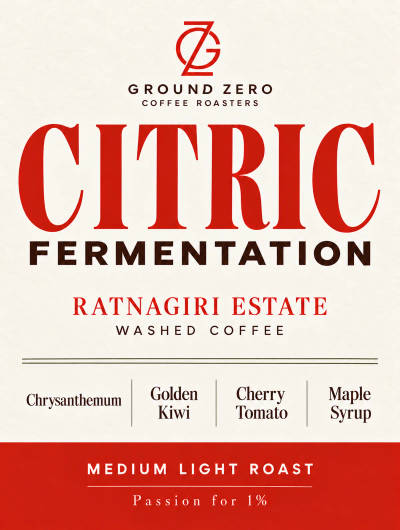
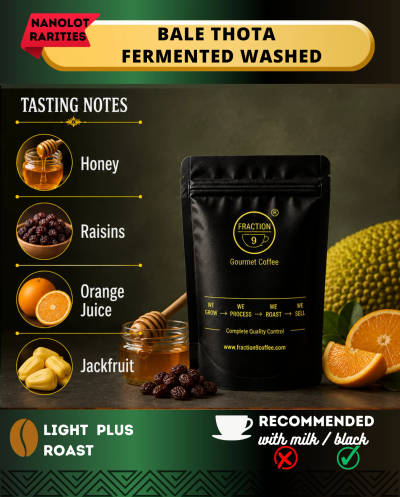
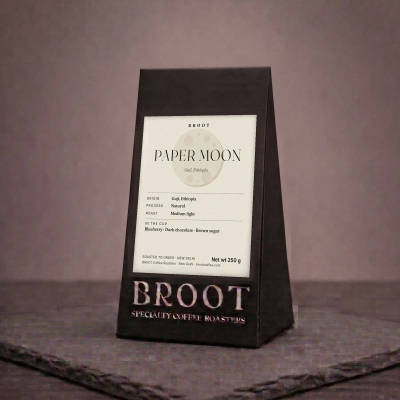
This natural processed coffee from Ikkis illustrates the fruit-forward complexity that natural processing produces — broader flavor range with heavier body.

Honey coffees sit between those two patterns. Among 59 honey processed coffees, milk chocolate leads at 15%, caramel at 10%, sweet and orange each at 8%, dark chocolate at 8%. Milk chocolate and caramel combined account for 25% of flavor descriptors—the sweet character from mucilage sugars staying on beans during drying. "Sweet" appearing as a distinct descriptor (8%) reinforces that sugar influence. Orange at 8% maintains some brightness typical of cleaner processing. The profile genuinely sits between washed and natural, as expected from a hybrid method.
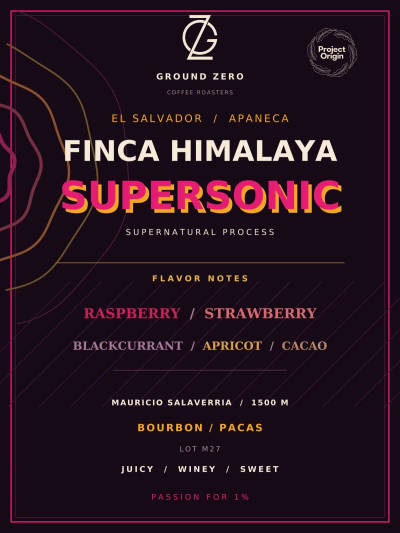
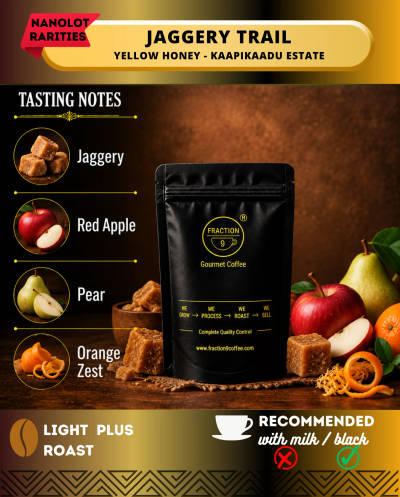
This honey processed coffee from Ikkis demonstrates the balanced sweetness and maintained brightness that honey processing typically delivers.

Key insight: Processing method creates directional flavor patterns. Washed processing concentrates on clean chocolate-caramel profiles with brightness. Natural processing creates diverse, complex profiles with varied fruit notes and heavier body. Honey processing balances sweetness with maintained acidity. Understanding these patterns helps match processing method to flavor preference.
Processing methods in Indian coffee
Of 878 coffees with processing data in ICB's catalog, washed accounts for 21.3%, natural 10.7%, honey 6.7%, and experimental methods including anaerobic and carbonic maceration 7.6%. Monsooned processing is 2.7%. The "other" category sits at 37.4%—not a platform gap, but a reflection of how processing terminology is still inconsistently recorded across Indian specialty coffee. Many estates and roasters don't specify method in catalog listings. The labeled 62.6% is sufficient for pattern analysis, but that unlabeled portion is itself a signal about how recently processing became a deliberate marketing variable.
Washed processing's dominance goes back further than specialty coffee. India's industry historically used washed processing for export-grade arabica from the colonial era onward. European markets preferred the clean, bright profiles washed processing reliably delivers, and modern Indian specialty roasters continue that tradition while expanding into other methods. The method also suits the Western Ghats: abundant water availability, humid conditions that require quick cherry processing to prevent spoilage, and established infrastructure at most estates.
Natural and honey processing are more recent arrivals in Indian specialty coffee. Natural (10.7%) and honey (6.7%) reflect growing but still minority adoption, driven by specialty market interest in fruit-forward profiles after 2015. Some Coorg estates have traditional natural processing heritage for robusta, now adapting those techniques for specialty arabica with more careful drying protocols. Honey processing is harder in India's humid climate—precise mucilage control and specific drying conditions are difficult to maintain during monsoon season.
Regional patterns from ICB data show variation. Chikmagalur's 151 catalog coffees split roughly as: 27% washed, 15% natural, 12% honey, with anaerobic and carbonic maceration accounting for another 16%. Coorg's 30 coffees tell a different story: 20% washed, 17% honey, 13% natural, and 13% carbonic maceration. That 13% carbonic maceration share from Coorg is proportionally higher than any other Karnataka region in ICB's data—roasters are treating Coorg as an experimental origin rather than defaulting to its traditional profile. Large estates with established infrastructure favor washed for consistency and lower risk. Smaller estates and cooperatives often use natural processing, since whole-cherry drying requires space and labor for turning but not depulping equipment or water access.
Browse coffees by processing method:
Washed Process Coffees
Clean, bright profiles with chocolate-caramel character — the most common processing method in Indian specialty coffee.

Natural Process Coffees
Fruit-forward complexity with heavier body — growing adoption in Indian specialty.
Honey Process Coffees
Balanced sweetness between washed clarity and natural fruitiness.


Choosing by flavor preference
Processing method is a flavor choice, not a quality ranking. Here's how to match it to what you actually want in the cup.
Washed processing is the natural starting point if your baseline is traditional filter coffee. Clean, chocolate-forward, with enough acidity to feel bright without being sharp. Origin characteristics—estate, region, altitude—come through clearly because there's no fruit character layered on top. Works well in pour-over and drip, especially light roasts consumed black. For Indian coffee drinkers moving into specialty, it's the familiar entry point.
Natural processing is the other end of the dial: fruit-forward, heavier body, sometimes wine-like or fermented in character. Exactly how fruity depends on the estate's drying protocol and ambient conditions, which is why natural coffees vary more across producers than washed. If you're coming from washed processing, the difference can be startling. Better suited to immersion brewing—French press, AeroPress, cold brew—than pour-over. This is for palates comfortable with unconventional coffee flavor that differs from traditional expectations.
Honey processing sits in the middle, which makes it the most versatile of the three. Sweetness from mucilage sugars, moderate acidity, enough body to hold up with milk or without. It works across brewing methods without demanding much adjustment, and it's a reasonable next step for anyone who wants more sweetness than washed processing gives but isn't ready for full natural fruit intensity.
For first-time natural coffee buyers: Natural processing creates different flavor expectations than washed. The fruity, wine-like character may taste unfamiliar if you're used to traditional filter coffee or chocolate-forward washed profiles. This is normal—it reflects extended fruit contact, not a processing defect. Natural coffees often perform better in immersion brewing (French press, AeroPress) rather than pour-over, as the heavier body benefits from fuller extraction.
A note on monsooned coffee: India's unique processing
Monsooning is India's own processing method, accounting for 2.7% of ICB's catalog. The method developed accidentally during British colonial shipping: coffee exposed to monsoon winds during months-long sea transport underwent chemical changes, and European buyers preferred the resulting flavor. So the method was deliberately recreated on India's Malabar coast. Monsooned Malabar coffee now has protected geographical indication status.
The process stores parchment coffee in open-sided warehouses and exposes it to monsoon winds from June through September—12-16 weeks total. Beans are repeatedly raked and turned for even exposure to humid air. They swell to nearly double their original size, lose most of their acidity, and turn pale gold. The chemical and biological changes during prolonged exposure create a flavor profile completely separate from washed, natural, or honey outcomes.
ICB data shows concentrated patterns among 24 monsooned coffees: earthy notes appear in 50%, nutty in 38%, dark chocolate in 13%. Heavy body, very low acidity, earthy-chocolatey-nutty profile. Monsooned coffees work well in espresso blends where low acidity and heavy body contribute balance, and they appeal to traditional filter coffee drinkers who prefer low acidity and weight over brightness.
Monsooned coffee occupies a specific niche rather than mainstream specialty positioning. Often used in blends for body contribution and acidity reduction, it isn't typically showcased as single-origin specialty despite being uniquely Indian. It represents processing heritage separate from the washed/natural/honey framework that dominates contemporary specialty coffee.
Monsooned Coffees
India's unique processing method — heavy body, low acidity, earthy-nutty character.


Processing method and brewing
How a coffee was processed affects how it extracts. Washed coffees extract cleanly and evenly—they're well-suited to pour-over and drip where clarity is the goal. The clean bean surface and lower residual sugars produce transparent extraction. Natural coffees have higher dissolved solids from fruit sugar absorption and benefit from immersion brewing (French press, AeroPress) that extracts fuller body without over-emphasizing brightness. Honey coffees work across most brewing methods: enough sweetness for body without the heavy fruit character that pushes toward immersion extraction.
South Indian filter coffee is worth noting here. The decoction method—grounds steep in the upper chamber for several minutes before slowly filtering—was historically paired with washed and monsooned coffees for their ability to handle prolonged contact time without over-extraction or excessive acidity. Natural process coffees can work in South Indian filter but produce a different result than traditional expectations: fruity character and heavier body instead of clean, chocolate-forward profile.
Roast level and processing often get paired intentionally. Indian roasters tend to take washed coffees lighter to showcase clarity and acidity, naturals at light-medium to preserve fruit characteristics while developing some sweetness, and honey processing at medium for balanced caramelization that complements mucilage sugars. Common practice, not a fixed rule—but worth knowing when you're buying.
Related Content
- Browse all washed process coffees for clean, bright profiles
- Explore natural process coffees for fruit-forward complexity
- Find honey process coffees for balanced sweetness
- Discover monsooned coffees unique to India
- See Chikmagalur coffees showing diverse processing adoption
- Learn about Understanding Roast Levels and how roast interacts with processing
Coffee spotlights: 3 (CONCOCT TRIBUTE / KOHI, GOLDEN GLOW / Ikkis, CITRUS CLOAK / Ikkis)
Schema blocks used: callout (×5), coffeeSpotlight (×3), coffeeCollection (×4)