


Pour Over for Indian Naturals: Parameters, Drippers, and Regional Differences
Natural-process coffees extract faster and carry more residual CO₂ than washed beans — but most pour over guides are written for washed. This guide covers the four parameter adjustments that correct for natural-process behavior, how to choose between a V60 and Kalita Wave, and how Chikmagalur, Araku, and Coorg naturals differ on the same recipe.

Indian specialty naturals are showing up in more pour over-oriented bags. Of the natural-process coffees suited for pour over tracked in the ICB catalog, 48 are tagged pour-over suitable — most of them light to medium-light roasts from Chikmagalur, Araku Valley, and Coorg. Every pour over guide most Indian home brewers reach for — the Hoffmann V60 method, roaster brew cards — was written for washed beans. Natural-process coffees extract differently. The same recipe that produces a clean, balanced cup on a washed Chikmagalur tends to produce muddy, boozy, or flat results on a natural from the same region. This guide covers the four parameter adjustments that correct for that difference, which dripper handles naturals more reliably, and where the recipe shifts by region and roast level.
Why natural-process coffees extract differently
Three physical properties separate natural-process beans from washed on the pour over bed.
Density. Natural processing dries the whole cherry around the bean, leaving the dried fruit layer in contact with the bean for weeks. This creates a more porous cell structure in the roasted bean. Lower-density beans let water flow through the grounds bed faster — faster flow means more extraction per unit time, raising the risk of over-extraction if other variables aren't adjusted.
CO₂ retention. Natural coffees trap more CO₂ from fermentation and roasting. A 30-second bloom, adequate for most washed beans, often isn't enough for naturals. If CO₂ is still off-gassing when main extraction starts, it pushes water away from grounds unevenly, creating channelling. The result is a cup that combines over-extracted and under-extracted zones.
Sugar solubility. Residual fruit sugars absorbed from the mucilage during drying are highly soluble. They extract early and aggressively. High water temperature or strong agitation pulls them too fast, producing the heavy, boozy notes that brewers sometimes mistake for the natural's character. These are a sign of over-extraction, not the coffee's inherent profile.
Catalog context: Among pour-over-tagged natural coffees in the ICB catalog, the leading flavor notes are fruity (25% of coffees), citrus (15%), berry (13%), and grape (13%). Among washed pour-over coffees, it's chocolate, nuts, and caramel. The extraction mistake that produces muddy chocolate on a washed bean produces boozy ferment on a natural — different manifestation, same root cause.
The four adjustments
These adjustments slow extraction rate and protect the fruit aromatics in Indian naturals.
| Parameter | Washed Reference | Natural Adjustment |
|---|---|---|
| Grind | Medium-fine | 1–2 steps coarser |
| Temperature | 93–96°C | 90–92°C |
| Bloom water | 2× coffee weight | 2–3× coffee weight |
| Bloom time | 30 seconds | 40–45 seconds |
| Pour style | Moderate agitation | Gentle, low height |
| Ratio | 1:15 | 1:16 starting point |
| Total brew time | 3:00–3:30 | Same target window |
Grind. Going 1–2 steps coarser than your washed reference increases flow rate through the lower-density bed, reduces fines generation, and shortens total contact time. Over-compensating with a very coarse grind produces sour, under-extracted cups — the correction is a modest step, not a major shift.
Temperature. 90–92°C slows the extraction rate and gives more control over sugar solubility. Lower temperature also emphasizes fruit and acid expression over heavy sweetness, which matters for coffees whose appeal lies in their fruit character. The standard 93–96°C range accelerates extraction of the soluble sugars too fast.
Bloom. 40–45 seconds (vs 30 seconds for most washed beans) ensures CO₂ finishes purging before extraction begins. Pour 2–3 times the coffee weight in water and look for an even, mushroom-like rise across the bed before proceeding. A flat, slow bloom on a fresh natural is a sign the bloom water is insufficient.
Pour style. Lower pour height and slow circular motion reduce agitation. High-agitation pours accelerate extraction throughout the brew, but the risk is highest in the final stage when the coffee bed is most exposed and the heaviest soluble compounds are closest to extracting. Gentle final pours protect against the muddy finish of an over-extracted natural.
These parameters are documented in specialty brewing literature — the gap is that Indian roaster brew cards rarely distinguish between washed and natural starting points.
Ratio starting point: Begin at 1:16 for Indian naturals. If the cup is heavy or ferment-forward, move to 1:17 next brew. If it tastes thin or sour, check bloom completeness and grind evenness before adjusting ratio — ratio is rarely the root cause.
V60 or Kalita Wave for naturals
Dripper geometry matters more with naturals than with most washed coffees.
A conical dripper (V60) funnels water toward a single open drain at the base. Fines from lower-density natural beans migrate downward during brewing and accumulate at the cone bottom. This slows or stalls flow mid-brew, a common frustration when brewing naturals on a V60 with a standard recipe. A flat-bottom dripper (Kalita Wave) distributes flow through three small holes across the base, making it less sensitive to fines concentration. Naturals extract more consistently on flat-bottom drippers for this reason.
For brewers using a V60, three compensations reduce the stalling problem: use fewer total pours (less disturbance of the coffee bed), pour more slowly over the center rather than in wide spirals, and go one step coarser than the natural starting point above. These adjustments don't eliminate fines migration entirely, but they make it manageable across most lots.
If stalling on a V60 becomes persistent with naturals, an AeroPress is a reliable alternative. Immersion brewing bypasses fines migration entirely and is considerably more forgiving for dialling in new lots. See the AeroPress guide for Indian coffees for starting parameters.
Regional differences on the same recipe
The four adjustments are a starting point, not a fixed recipe. Indian naturals from different growing regions extract differently, and the calibration shifts at the margins.
Chikmagalur naturals account for the largest group of pour-over naturals in the ICB catalog — 10 coffees across multiple roasters. Grown at 1,200–1,800m with typically dense cherry development, these coffees tend toward rich, jammy profiles: grape, plum, berry, raisin. The body is heavier than most Indian washed coffees. They respond clearly to the full natural adjustment — 90–91°C, coarser grind, slow pours. These are also the coffees most likely to show over-extraction as boozy or winey notes if temperature or agitation is too high. As the most numerically represented natural-process origin in the Indian specialty catalog, Chikmagalur is where most Indian home brewers will first encounter these extraction challenges.
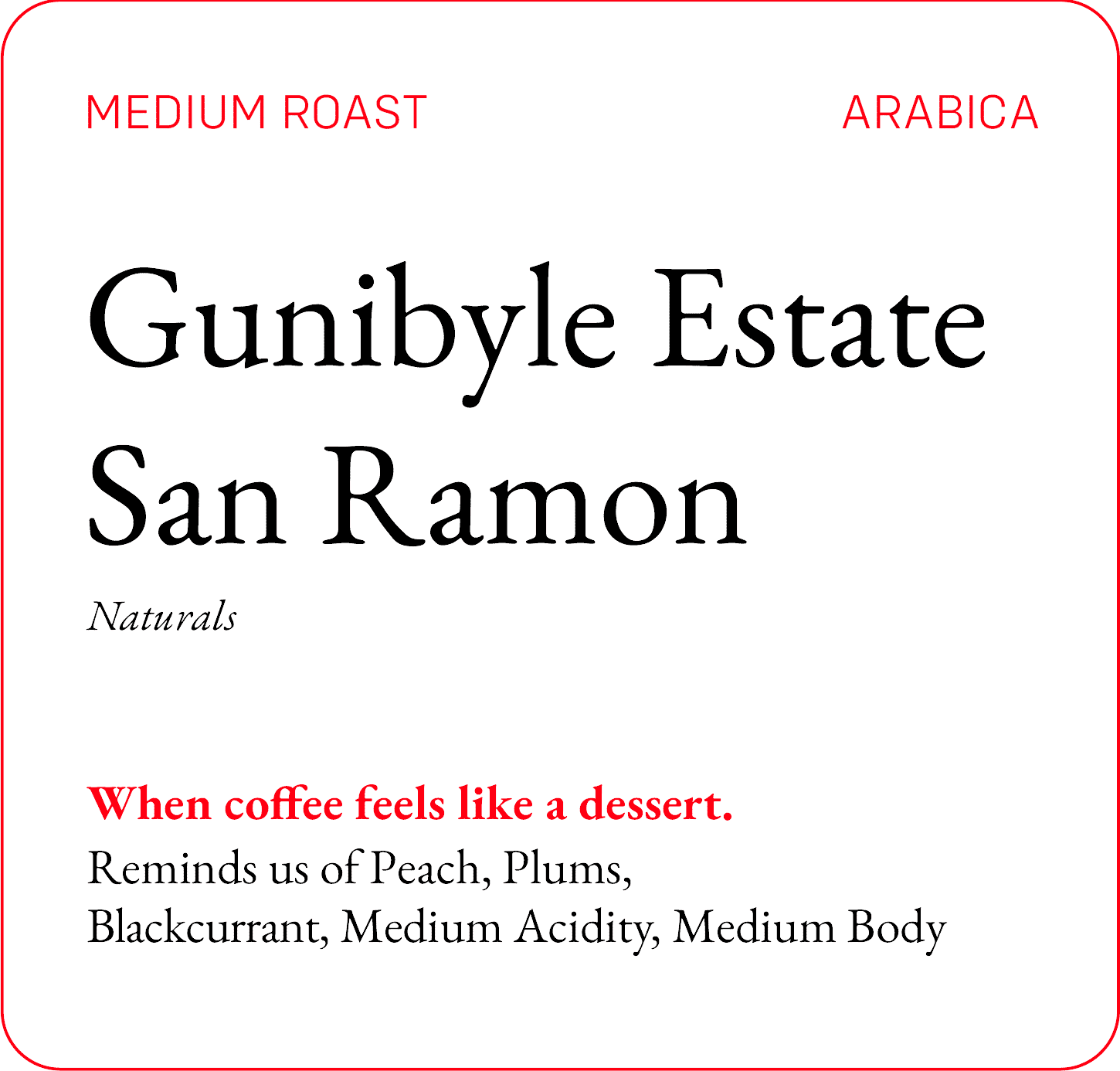
Araku Valley naturals come from shade-grown, high-elevation farms in Andhra Pradesh. The profile is more delicate than Chikmagalur: stone fruit, jasmine, lighter body, shorter finish. On a pour over, this means a narrower extraction window — go too coarse and the aromatic compounds don't extract fully, producing a thin or grassy cup. A starting temperature of 91–92°C (the upper end of the natural adjustment) works better than 90°C for most Araku lots.

Kodagu (Coorg) naturals sit between the two in profile — earthier, with mellow fruit and occasionally chocolate-and-citrus characteristics rather than pure berry. Their extraction behavior is closer to a honey-process coffee: more forgiving than Chikmagalur naturals on standard parameters, though extended bloom still matters. The 91–92°C temperature range and a moderate grind adjustment typically suffice.
Explore Chikmagalur naturals in the ICB catalog or Araku Valley natural coffees for the current range of options across these regions.
Light vs medium roast naturals on pour over
Roast level compounds the extraction challenge.
Half the pour-over naturals in the ICB catalog are light roast — 24 of 48. That reflects how roasters are positioning them: as premium filter coffees, light-roasted to preserve fruit expression. It also means the most demanding processing method is being paired with the most demanding roast level for dialling in. Light-roasted Indian naturals carry both natural processing's fast-extraction tendency and the higher volatile acidity of light roasts, giving them the narrowest extraction window of any category: grind too coarse or temperature too low risks sour under-extraction; grind too fine or agitation too high risks pushing the fermented sugars too far.
Medium-roast naturals are more forgiving — more developed sugars, lower volatile acidity, a wider range of parameters that produce acceptable cups. For brewers new to Indian naturals, a medium-roast lot from Chikmagalur is a better starting point than a light-roasted experimental or anaerobic lot.
A note on water
Water quality varies enough across Indian cities to affect how naturals extract.
Municipal tap water TDS ranges roughly as follows: Bangalore (100–200 ppm), Mumbai (50–100 ppm), Delhi and Chennai (200–400 ppm). The SCA target for brewing water is around 150 ppm. Many Indian homes use reverse osmosis filters, which produce very soft water — typically 20–40 ppm — that lacks the dissolved minerals needed for full extraction. With RO water, naturals on pour over often taste flat or sour even when grind and temperature are correct. Bumping temperature to 92–93°C partially compensates; remineralizing with a small mineral mix (Third Wave Water packets, or a pinch of Epsom salt and baking soda per litre) is more reliable. At the other end, hard tap water in Delhi or Chennai can mute delicate fruit notes in light-roasted naturals — a simple carbon filter is sufficient for most brewing without stripping minerals below the useful range.
Troubleshooting reference
These are the most common failure modes when brewing natural-process coffees on pour over. Most trace back to the three extraction mechanisms above.
Symptom → Likely Cause → Adjustment
Boozy or winey finish → over-extraction of fruit sugars → grind 1 step coarser, reduce temperature by 1–2°C, pour more gently with lower height
Muddy or flat cup → over-agitation or over-extraction late in brew → reduce pour height, use fewer pours, extend bloom to 45 seconds
Sour or thin → under-extraction (grind too coarse or temperature too low) → go 1 step finer on grind; if that's not enough, bump temperature to 92°C
Brew stalls mid-pour on V60 → fines accumulating at cone bottom → grind 1 step coarser on next brew; consider fewer, gentler pours
No bloom activity (flat, no rise) → coffee is past its useful freshness window (typically >4 weeks post-roast) → freshness issue, not a recipe problem
Related coffees
- Natural-process coffees suited for pour over
- Chikmagalur naturals in the ICB catalog
- Araku Valley natural coffees
Humanizer notes
Patterns removed:
- "The problem is that every pour over guide" → "Every pour over guide" (AI preamble construction)
- "These adjustments work together to... that define Indian naturals at their best" → dropped the "at their best" superlative, simplified framing
- "meaningfully different extraction behavior" → "extract differently"
- "The dripper geometry matters more with naturals than with washed coffees" → "Dripper geometry matters more with naturals than with most washed coffees" (minor, removed tidy parallelism)
- "This slows or stalls flow mid-brew — a common frustration when..." → removed em dash, converted to comma (reduced em dash density)
- "The four adjustments above are a starting point, not a fixed recipe. Indian naturals from different growing regions produce cups with meaningfully different extraction behavior, and the calibration shifts slightly." → "The four adjustments are a starting point, not a fixed recipe. Indian naturals from different growing regions extract differently, and the calibration shifts at the margins."
- "Roast level affects extraction risk in ways that compound the natural-process challenge." → "Roast level compounds the extraction challenge." (cut padding)
- "Roasters are overwhelmingly treating Indian naturals as light-roast, filter-grade coffees — pairing the processing method that carries the most extraction complexity with the roast level that demands the most dialling-in." → Restructured as two sentences, removed "overwhelmingly" intensifier, grounded in the 24/48 stat
- "Water quality varies significantly across Indian cities and affects extraction behavior in ways that matter for naturals specifically." → "Water quality varies enough across Indian cities to affect how naturals extract."
- "These failure modes are patterns common to pour over brewing of natural-process coffees. Most trace back to one of the three extraction mechanisms described above." → "These are the most common failure modes when brewing natural-process coffees on pour over. Most trace back to the three extraction mechanisms above." (removed "described" — redundant)
- "These parameters are well-established in specialty brewing literature globally — the gap is their application to Indian naturals specifically, where roaster brew cards don't distinguish..." → "These parameters are documented in specialty brewing literature — the gap is that Indian roaster brew cards rarely distinguish..." (removed "globally", removed "well-established", tightened)
- "The profile is more delicate than Chikmagalur — stone fruit, jasmine, lighter body, shorter finish. On a pour over, this translates to a narrower extraction window: go too coarse..." → replaced "translates to" with "means" (cleaner), converted em dash to colon for cleaner list
- Section headings: converted from Title Case to sentence case throughout ("The Four Adjustments" → "The four adjustments", etc.)
- "These three factors account for every adjustment in the next section." → removed (mechanical connector; transition is implicit in the callout that follows)
- Removed one instance of "— a common frustration when brewing naturals on a V60 with a standard recipe" em dash → converted to comma construction
- "moderate coarser grind adjustment" → "moderate grind adjustment" (redundant modifier)
What still reads slightly AI-generated:
- The troubleshooting callout's bold-header format is still mechanical, but it's a schema component and should not be changed
- The coffeeSpotlight blocks use bold-labeled fields, also a schema component
- The parameter table is inherently parallel, which is expected for reference content