



Balanced, sweet, syrupy body with clear acidity
Flavour
Origin and production
As described by Kapi Kottai
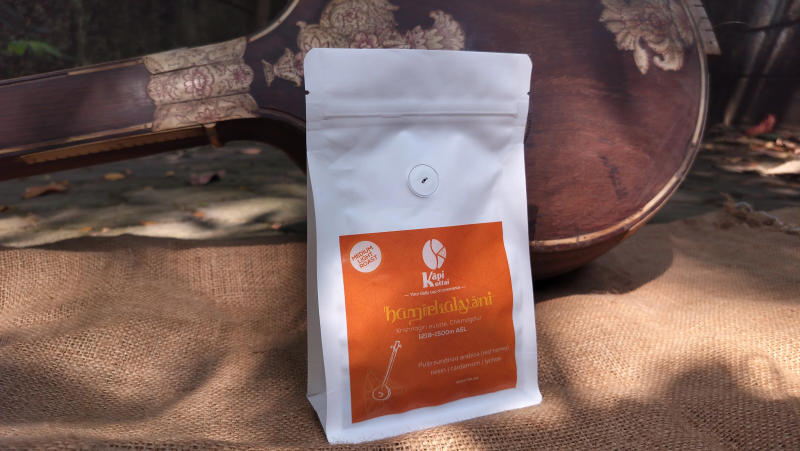
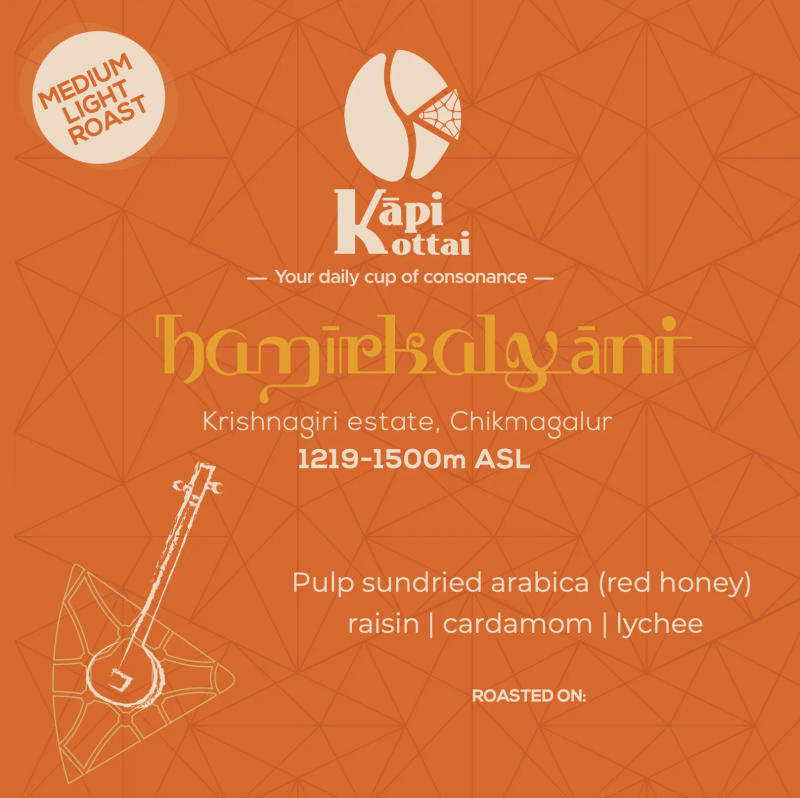
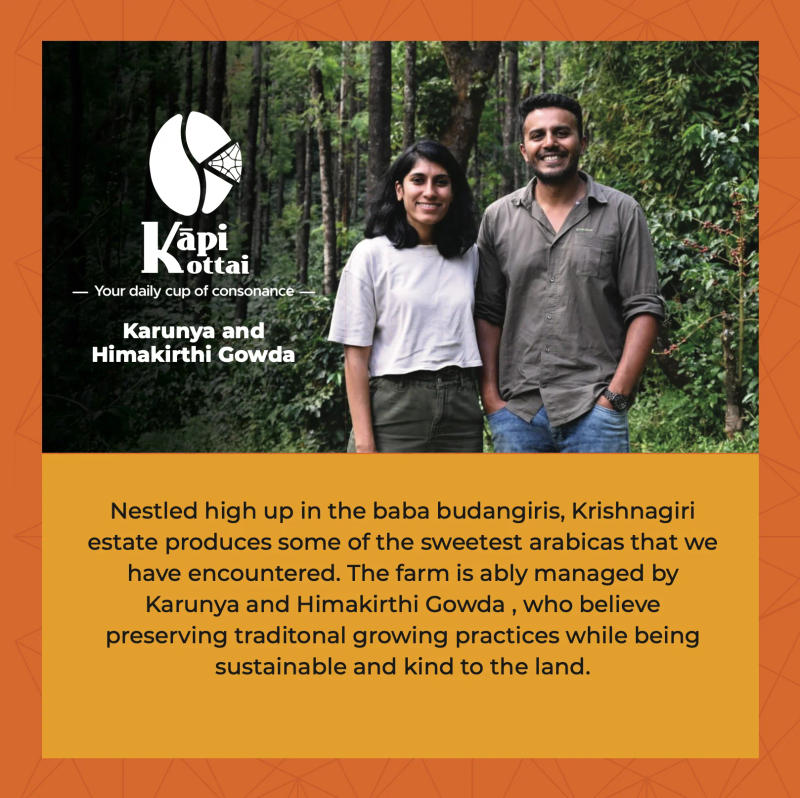
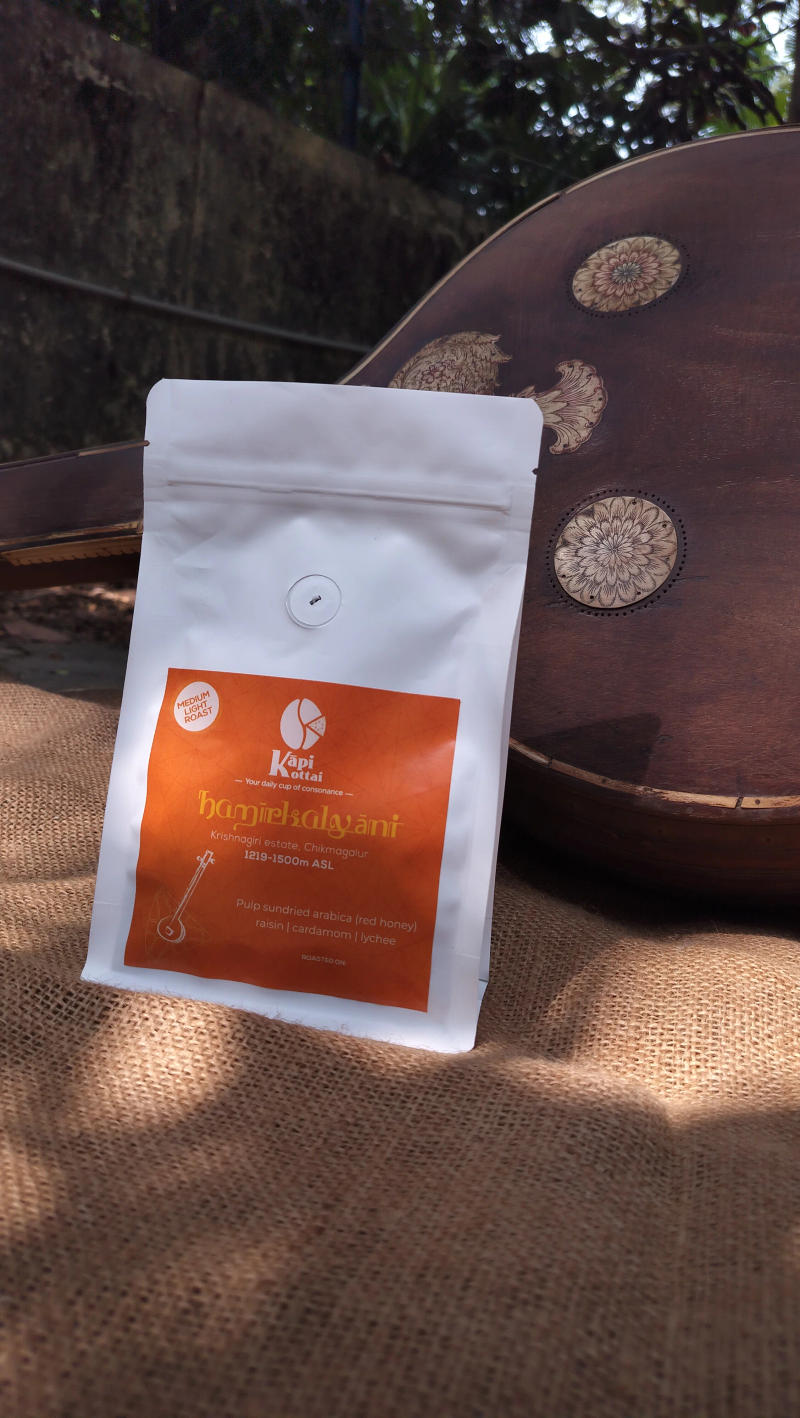
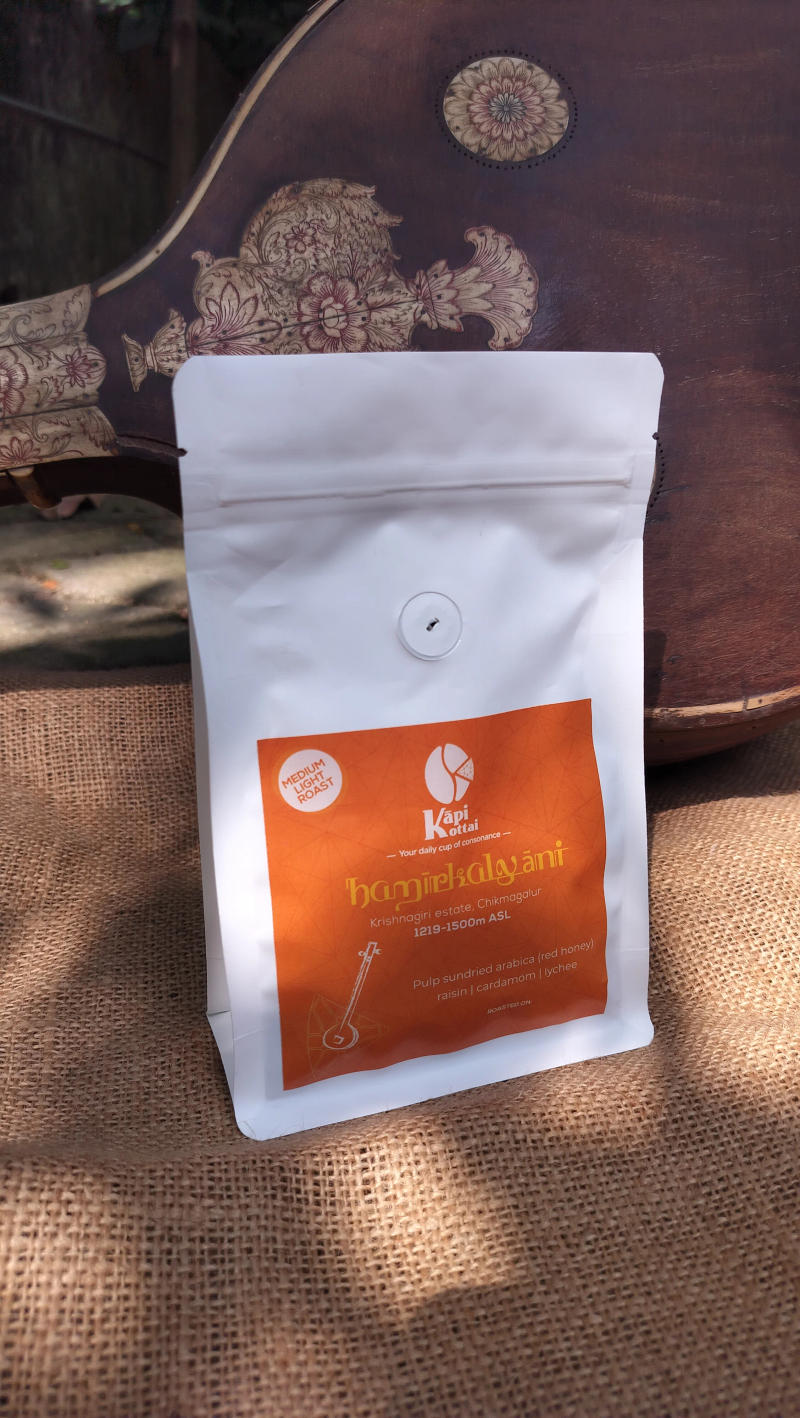
We have a new honey process coffee and it's extra sweet! Sourced from Krishnagiri estate, high up in the Chandra drona hills (a.k.a the Giris) of Chikmagalur, this particular lot fascinated us with its sweetness and lingering fruitiness. Ripe cherries of the SLn. 795 varietal have been selected and fermented in 2 stages for 72 hours. The coffee is then pulped and slow dried for 10-12 days. The resulting cup is very sweet and rather interesting; bursting with cardamom like spice notes. The lychee like tartness reminds us of the rāga Hamīrkalyāni and this coffee is very drinkable. Hamīrkalyāni the coffee, is a delight across all manual brews 8 days from date of roast and also makes for a partly sweet, partly fruity shot of espresso 16 days from date of roast.
Brewing
Suggested for Espresso.
Pack sizes and price
Ratings
What drinkers say
With milk?
More from Kapi Kottai
Read about this

Processing & Flavors
Honey Process Coffee in India: What the Colour Labels Actually Tell You
Honey process removes the cherry skin but leaves the sticky mucilage layer on the bean during drying. The colour label — yellow, red, black — indicates how much mucilage stayed on and how long it dried, which shapes sweetness, body, and fruit intensity. India's specialty estates have produced 81 honey-process coffees across 42 roasters, making it one of the more widely available processing categories in the Indian catalog.

Processing & Flavors
Washed vs Natural vs Honey: What Processing Means for Flavor
Coffee bags list 'washed' or 'natural' processing, but what do these terms actually mean for flavor? Processing method—how the fruit is removed from the seed—creates more flavor variation than origin alone. Here's what each method does, and what ICB's data shows about Indian coffees.

Processing & Flavors
How Processing Methods Affect Flavor in Indian Coffee
A field guide to how washed, natural, honey, anaerobic, and monsooned processing shape the flavor of Indian specialty coffee — with estate examples, tasting benchmarks, and buying guidance.
Questions about this coffee
Kapi Kottai's tasting notes for Hamīrkalyāni lean toward Cardamom Like Spice, Fruitiness, Lychee and Sweet. Flavor is subjective and shifts with roast freshness, grind size, and brew method, so your cup may vary.
Hamīrkalyāni is a single-origin coffee, sourced from one origin rather than blended, so it reflects the character of that specific place.
Hamīrkalyāni is suggested for Espresso. As a rule of thumb: espresso needs a fine grind, pour-over and drip a medium grind, and French press or cold brew a coarse grind. Dial in from there to taste.