

Clean, balanced, highlighting origin characteristics

Flavour
Origin and production
As described by Kapi Kottai
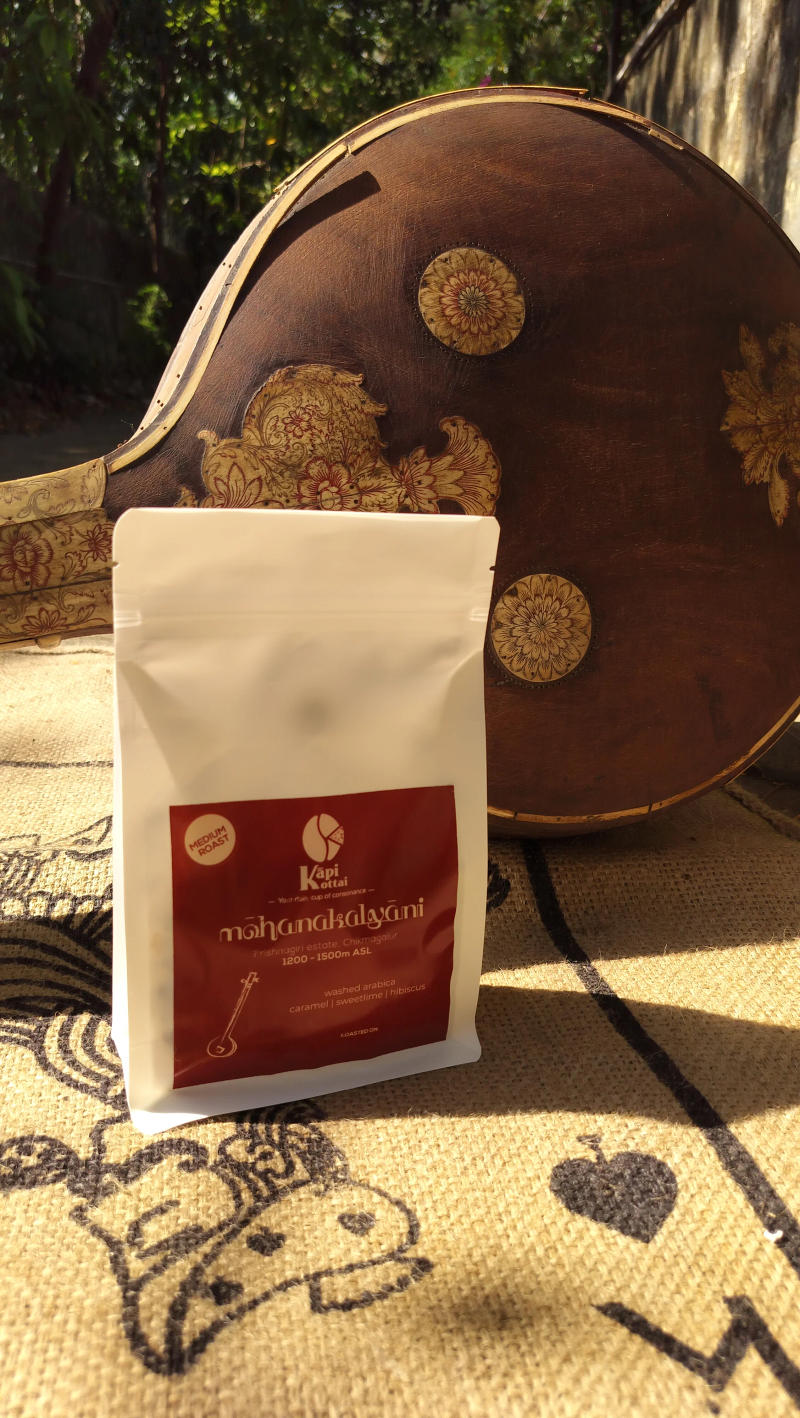
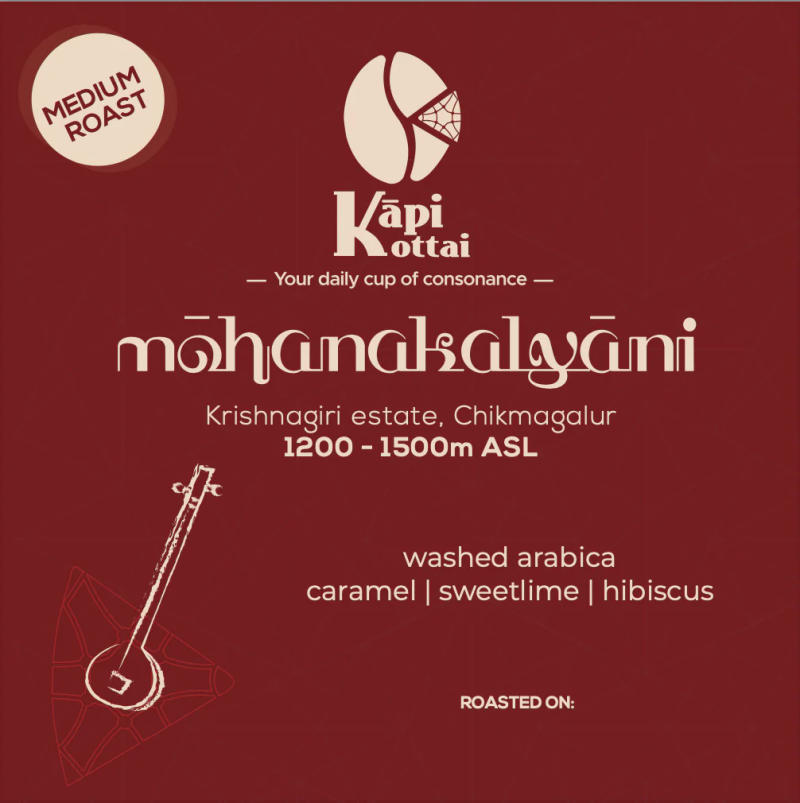
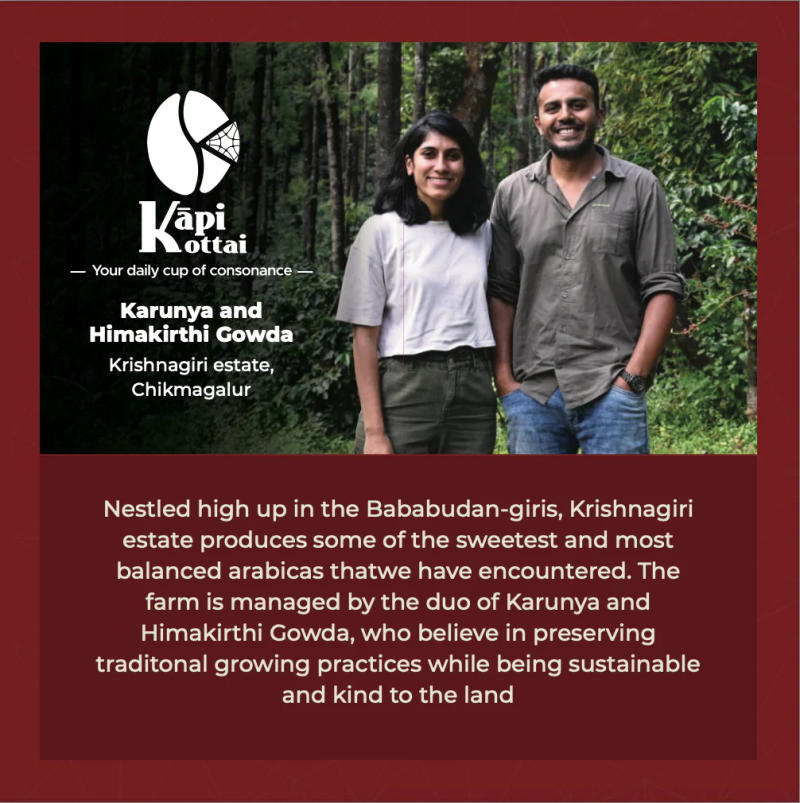
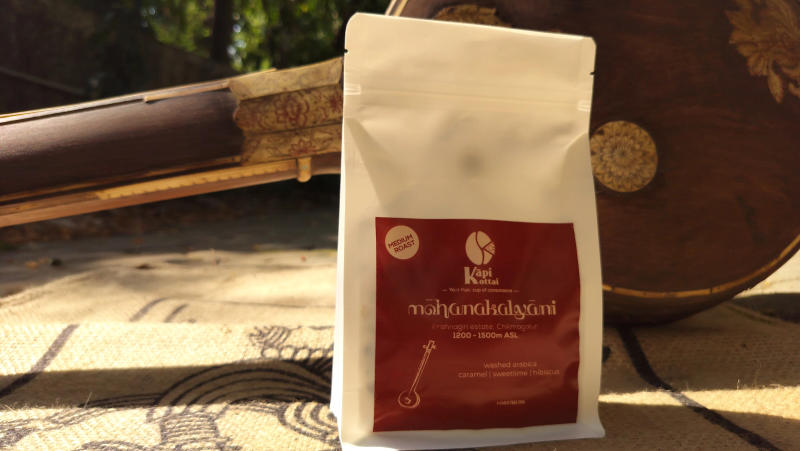
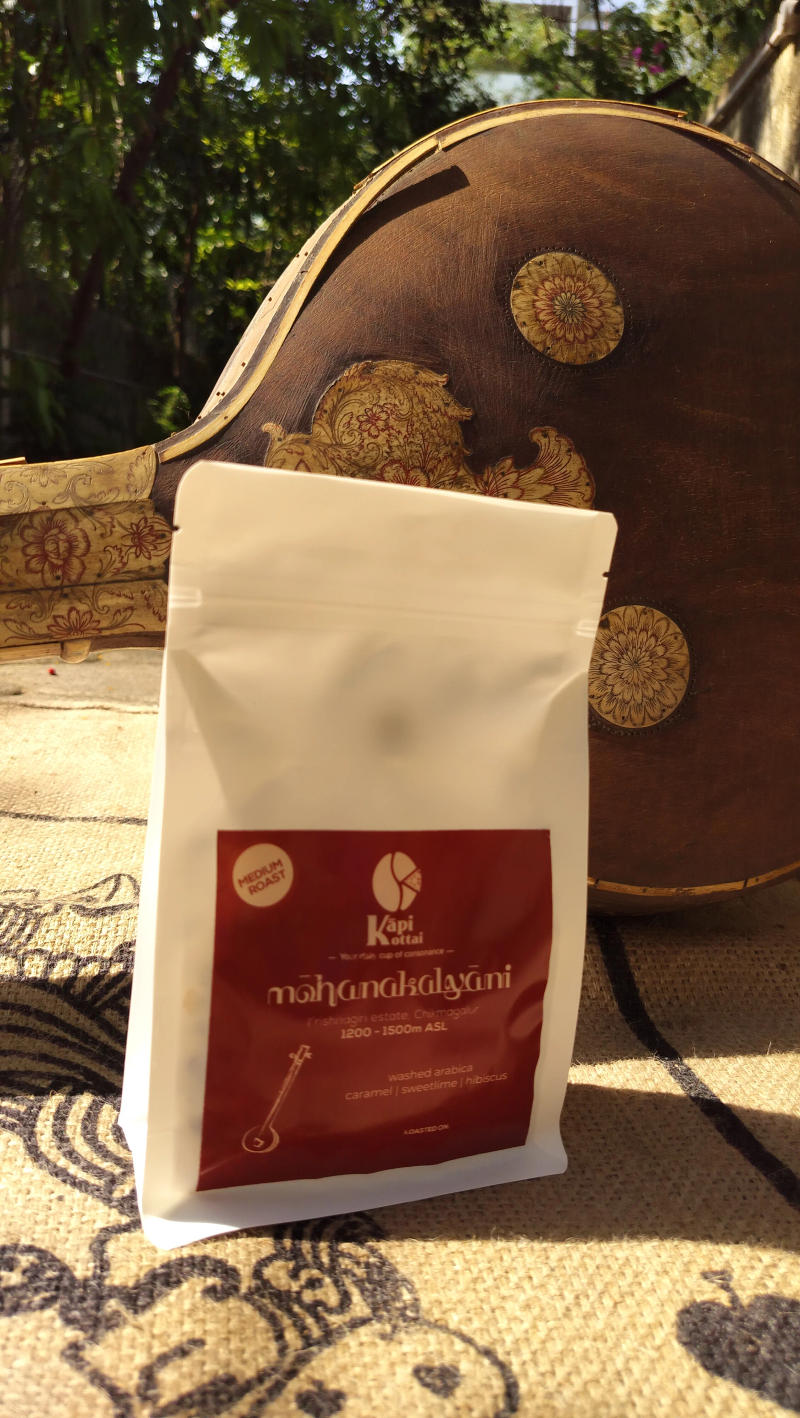
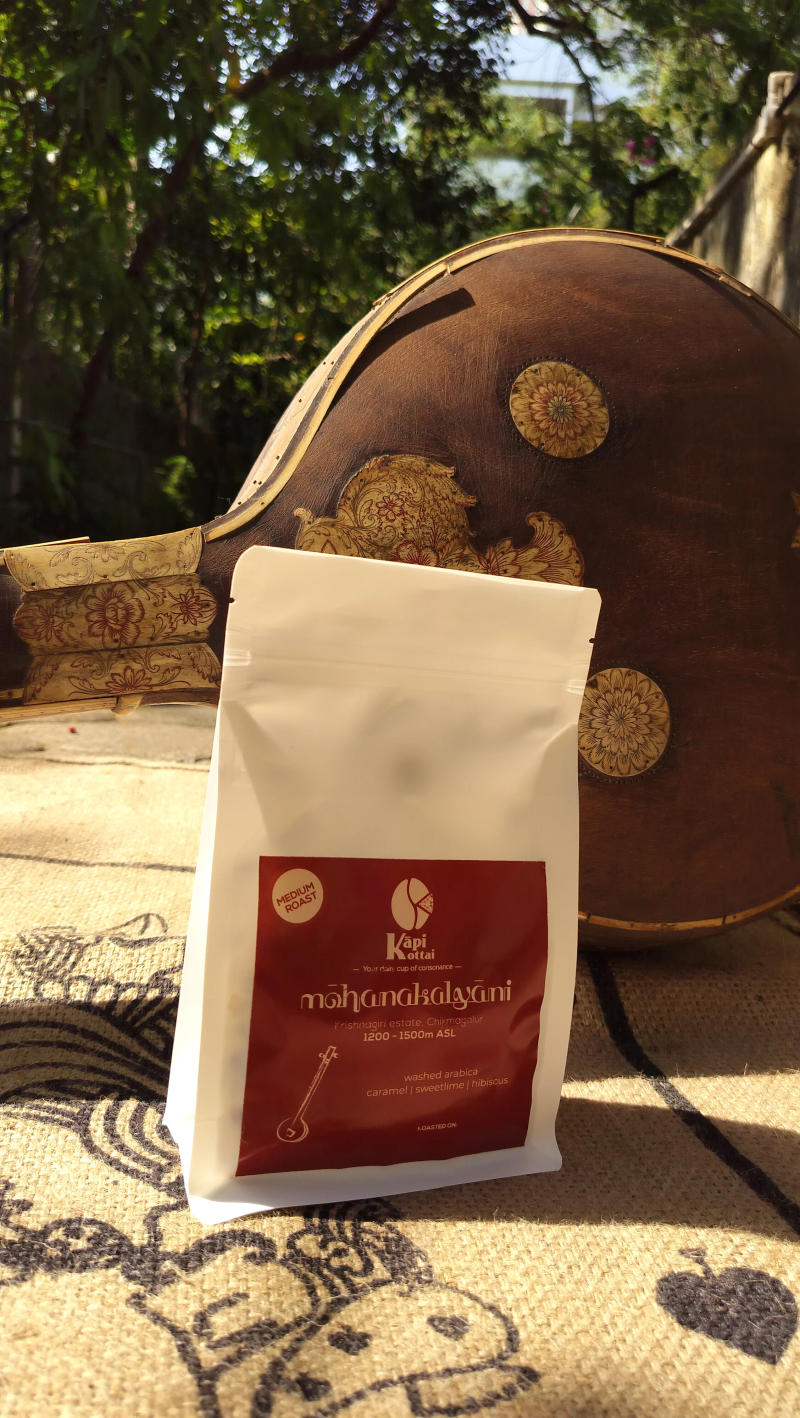
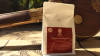
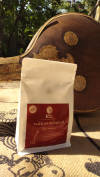
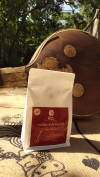
Our sweetest washed coffee is back! Sourced from Krishnagiri estate, high up in the Chandra drona hills(a.k.a the Giris) of Chikmagalur, this lot of washed arabica fascinated us with its bean density and versatility(traits we have come to associate with the coffee from Krishnagiri estate). Ripe cherries of the Chandrigiri varietal have been selected for this lot and the estate has tweaked their standard washed process to eke more out of the coffee. The final cup is very sweet, prominently sweet lime-esqe and floral towards the end. Those hibiscus like florals really surprised us in testing and remind us of the rāga Mohanakalyāni. This coffee is the designated daily driver at kāpikottai HQ. We have been guzzling litres of this lot as an iced pourover and it never disappoints. Mohanakalyāni the coffee, is a delight across all manual brews 9 days from date of roast and also makes for a sweet sweet shot of espresso 18 days from date of roast.
Brewing
Pack sizes and price
Ratings
What drinkers say
With milk?
More from Kapi Kottai
Read about this

Processing & Flavors
Washed vs Natural vs Honey: What Processing Means for Flavor
Coffee bags list 'washed' or 'natural' processing, but what do these terms actually mean for flavor? Processing method—how the fruit is removed from the seed—creates more flavor variation than origin alone. Here's what each method does, and what ICB's data shows about Indian coffees.

Processing & Flavors
How Processing Methods Affect Flavor in Indian Coffee
A field guide to how washed, natural, honey, anaerobic, and monsooned processing shape the flavor of Indian specialty coffee — with estate examples, tasting benchmarks, and buying guidance.

Brewing Behaviour
AeroPress Variables for Indian Washed vs Natural Coffees
Adjust AeroPress grind, temperature, time, and ratio for Indian washed and natural coffees. Data-backed starting recipes from 500+ coffees in the ICB directory.
Questions about this coffee
Kapi Kottai's tasting notes for Mōhanakalyāni lean toward Floral, Hibiscus, Sweet and Sweet Lime. Flavor is subjective and shifts with roast freshness, grind size, and brew method, so your cup may vary.
Mōhanakalyāni is a single-origin coffee, sourced from one origin rather than blended, so it reflects the character of that specific place.
Mōhanakalyāni is suggested for Espresso and Pour Over. As a rule of thumb: espresso needs a fine grind, pour-over and drip a medium grind, and French press or cold brew a coarse grind. Dial in from there to taste.