

Full-bodied, smooth, well-rounded
Flavour
Origin and production
As described by Bare Bean Roastery
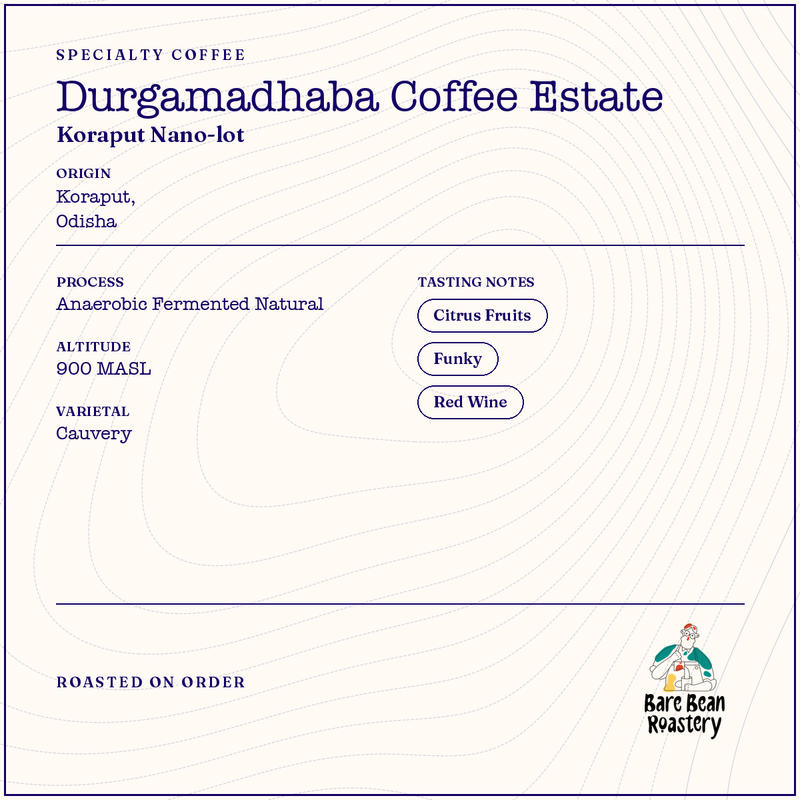
From the estate at Koraput, Odisha, this coffee is produced by Durgamadhaba Coffee Estate using a controlled anaerobic fermentation process. Ripe cherries are sealed and fermented in a low-oxygen environment before being sun-dried as whole fruit, a process that pushes flavor development into bold, funky territory rarely found in traditional naturals. Grown at 900 MASL on the Cauvery varietal, this nano-lot is not one to fade into the background. The result is a bold, expressive cup that showcases just how far anaerobic natural processing can push flavor. Expect a bold, wine-forward profile with notes of citrus fruits and a distinct funk, finishing with rich, red wine-like depth. Perfect for brewers who enjoy bold, funky, wine-driven coffees with real character. Best suited for pour-over and aeropress.
Brewing
Pack sizes and price
Ratings
What drinkers say
With milk?
More from Bare Bean Roastery
Read about this

Processing & Flavors
Anaerobic and Experimental Processing in Indian Coffee
One in five coffees in ICB's catalog now carries an experimental process tag. This is a reference guide to the four categories (anaerobic, carbonic maceration, double fermented, and experimental), covering how each works at the fermentation level, which Indian estates and regions produce them, and what the catalog data says about their flavor patterns.

Processing & Flavors
Carbonic Maceration in Coffee, Explained
Carbonic maceration is the most widely misused term in Indian specialty coffee. It is a specific sub-type of anaerobic fermentation, not a synonym for it, and the distinction shows up in the cup. This field guide maps what CM is, where it happens in India, and what to expect from the 28 Indian coffees that carry the label.

Processing & Flavors
How Fermentation Shapes Coffee Flavour
Every coffee ferments — the variable is how. Understanding the microbial chemistry behind washed, natural, and anaerobic processing explains why the same estate can produce a clean chocolate cup and a grape-forward lot from the same harvest. This article maps the mechanism to the label, with data from ICB's catalog of 1,238 Indian coffees.
Questions about this coffee
Bare Bean Roastery's tasting notes for Durgamadhaba Coffee Estate – Anaerobic Fermented Natural lean toward Citrus Fruits, Funk and Red Wine. Flavor is subjective and shifts with roast freshness, grind size, and brew method, so your cup may vary.
Durgamadhaba Coffee Estate – Anaerobic Fermented Natural is a single-origin coffee, sourced from one origin rather than blended, so it reflects the character of that specific place.
Durgamadhaba Coffee Estate – Anaerobic Fermented Natural is suggested for Aeropress and Pour Over. As a rule of thumb: espresso needs a fine grind, pour-over and drip a medium grind, and French press or cold brew a coarse grind. Dial in from there to taste.