

Clean, balanced, highlighting origin characteristics
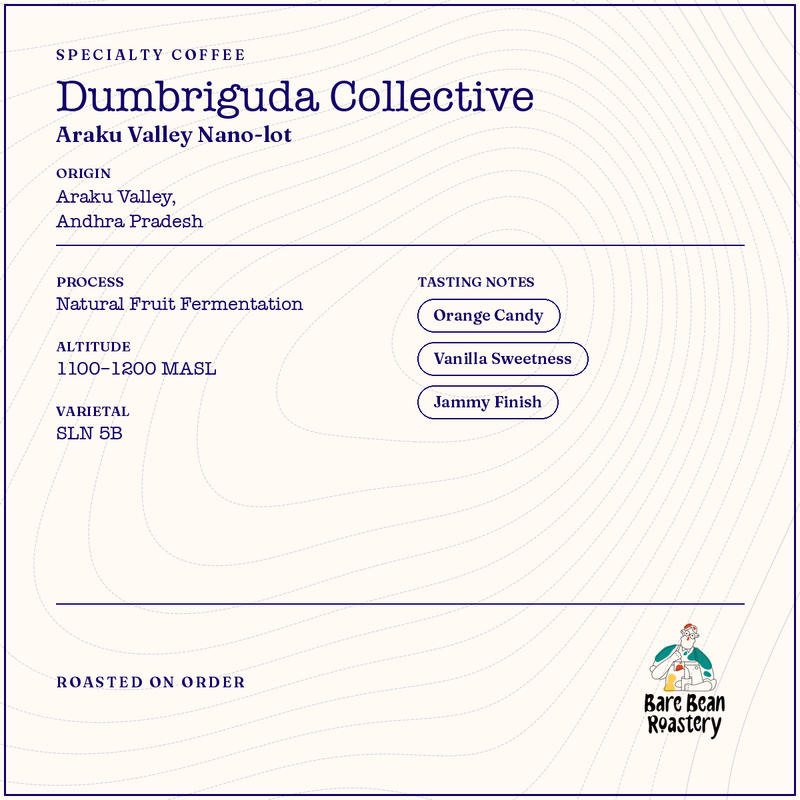
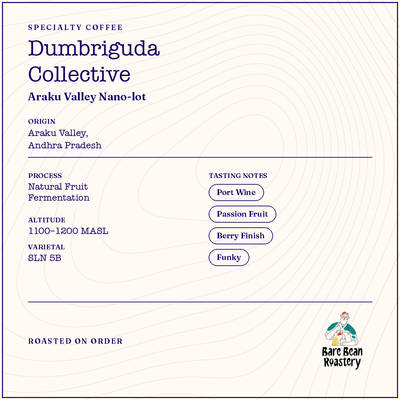
Medium Roast · Natural Fruit Fermentation · Araku Valley, Andhra Pradesh
Flavour
Origin and production
- Araku Valley, Andhra Pradesh
As described by Bare Bean Roastery
From the lush hills of Araku Valley, Andhra Pradesh, this lot from the Dumbriguda Collective showcases a brighter expression of naturally processed coffee. Grown at 1100-1200 MASL, it reflects the region’s unique terroir with remarkable clarity and vibrant fruit character. Carefully selected cherries undergo Natural Fruit Fermentation, allowing the fruit’s natural sugars to develop sweetness and complexity before being slowly dried to preserve their delicate aromatics. The result is a lively, well-balanced cup that combines juicy citrus with layered sweetness and subtle herbal nuances. Expect a vibrant cup with notes of orange candy, and sweetness of vanilla, rounded off by a jam-like finish. Bright acidity, a silky body, and lingering sweetness make this an engaging coffee that continues to evolve as it cools. Ideal for pour-over, AeroPress, Chemex, and other filter brewing methods, where its citrus brightness, layered sweetness, and refined herbal character can truly shine. It also produces a clean, fruit-forward espresso with remarkable complexity.
Brewing
Pack sizes and price
Ratings
What drinkers say
With milk?
More from Bare Bean Roastery
Read about this

Processing & Flavors
Washed vs Natural vs Honey: What Processing Means for Flavor
Coffee bags list 'washed' or 'natural' processing, but what do these terms actually mean for flavor? Processing method—how the fruit is removed from the seed—creates more flavor variation than origin alone. Here's what each method does, and what ICB's data shows about Indian coffees.

Processing & Flavors
How Fermentation Shapes Coffee Flavour
Every coffee ferments — the variable is how. Understanding the microbial chemistry behind washed, natural, and anaerobic processing explains why the same estate can produce a clean chocolate cup and a grape-forward lot from the same harvest. This article maps the mechanism to the label, with data from ICB's catalog of 1,238 Indian coffees.

Brewing Behaviour
Pour Over for Indian Naturals: Parameters, Drippers, and Regional Differences
Natural-process coffees extract faster and carry more residual CO₂ than washed beans — but most pour over guides are written for washed. This guide covers the four parameter adjustments that correct for natural-process behavior, how to choose between a V60 and Kalita Wave, and how Chikmagalur, Araku, and Coorg naturals differ on the same recipe.
Questions about this coffee
Bare Bean Roastery's tasting notes for Dumbriguda Collective – Natural Fruit Fermentation Arabica (Or) lean toward Jam, Orange Candy and Vanilla. Flavor is subjective and shifts with roast freshness, grind size, and brew method, so your cup may vary.
Dumbriguda Collective – Natural Fruit Fermentation Arabica (Or) is a single-origin coffee, sourced from one origin rather than blended, so it reflects the character of that specific place.
Dumbriguda Collective – Natural Fruit Fermentation Arabica (Or) is suggested for Aeropress, Chemex, Espresso and Pour Over. As a rule of thumb: espresso needs a fine grind, pour-over and drip a medium grind, and French press or cold brew a coarse grind. Dial in from there to taste.