


Carbonic Maceration in Coffee, Explained
Carbonic maceration is the most widely misused term in Indian specialty coffee. It is a specific sub-type of anaerobic fermentation, not a synonym for it, and the distinction shows up in the cup. This field guide maps what CM is, where it happens in India, and what to expect from the 28 Indian coffees that carry the label.

The label "carbonic maceration" now appears on Indian roaster product pages with some regularity: 28 coffees across 19 roasters in the current ICB catalogue carry it. When buyers see it, they can generally expect a fruit-forward lot, a premium price point, and a processing method more involved than standard washed or natural.
What they cannot always confirm from the label alone is that the process described is actually carbonic maceration.
In Indian roaster copy, "carbonic maceration" and "anaerobic" frequently appear as synonyms, both used to describe experimental fermentation in sealed vessels. The conflation is understandable; the terms share enough overlap that the distinction can feel purely technical. The mechanics are different, though, and those mechanics produce different cups. The washed, natural, and honey framework that most Indian coffee buyers learn first does not map cleanly onto this layer of variation.
What follows documents what CM is, how it differs from anaerobic fermentation, which Indian estates are doing it, and what to look for when buying a CM lot.
What carbonic maceration actually is
Carbonic maceration has two requirements, both necessary. First: the coffee cherries enter the fermentation vessel whole, unpulped, with skin and pulp intact. Second: the vessel is actively flushed with carbon dioxide before fermentation begins, physically displacing oxygen from the tank. If either condition is absent, the fermentation is anaerobic but not carbonic maceration.
Standard anaerobic fermentation uses a sealed, oxygen-deprived environment, but the coffee may be depulped before entering the tank, and the CO2 in the headspace typically comes from natural microbial off-gassing rather than active injection. Anaerobic is the broader category; carbonic maceration is a specific subset.
The process in practice: freshly harvested ripe cherries go whole into a stainless-steel tank fitted with a one-way valve. Carbon dioxide, heavier than oxygen, is pumped in until oxygen is displaced and the environment is pressurised. The tank is sealed. Fermentation duration ranges from 15 to 120 hours, depending on the producer's target flavour, ambient temperature, and cherry ripeness at harvest. After fermentation, the cherries proceed to standard processing: depulping, drying, and rest.
Origin: The underlying science was identified by French researcher Michel Flanzy in the mid-1930s, and the technique became associated with Beaujolais Nouveau winemaking: light, fruit-forward reds made from whole-berry fermentation. Carbonic maceration entered specialty coffee in 2015 when Saša Šestić (Australia) won the World Barista Championship in Seattle using a CM lot from Finca Las Nubes, El Salvador, developed with Colombian farmer Camilo Merizalde. That competition win set off a decade of global experimentation with CM in specialty coffee.
The fermentation chemistry that distinguishes CM is intracellular: it begins inside the cherry's own cells rather than on the mucilage surface. With oxygen absent and the cherry intact, the fruit's own enzymes drive glycolysis. Sugars break down into ethanol and CO2, malic acid levels fall, and a range of aromatic esters and higher alcohols form. For more on how fermentation shapes coffee flavour at the biochemical level, the fermentation field guide covers that ground. The cup result of this intracellular process: the acid profile shifts away from citric and malic acids toward lactic acid, which reads smoother and softer, with a yoghurty edge. The aromatic compounds are more pronounced and more volatile than those produced under aerobic or open-air fermentation.
CM is also independent of the drying method. A CM lot can be finished as a natural (sun-dried whole cherry after fermentation), a washed (depulped and dried on raised beds), or a honey (partial pulp retained during drying). The fermentation stage determines whether it is CM; the drying method determines whether it is natural, washed, or honey. In Indian catalogue listings, "CM Natural" is the most common combination. "CM Washed" exists but is rarer, and involves a two-stage process.
What carbonic maceration tastes like
The CM flavour profile tends toward red and stone fruit, a silky and juicy mouthfeel, and acidity that is bright but restrained. Lactic rather than citric in character. The aromatics are typically more pronounced than in washed or natural lots from the same origin, and they open further as the cup cools.
ICB's catalogue lists 28 CM coffees across 19 Indian roasters. The most frequent flavour descriptors across those coffees:
Dark chocolate appearing alongside berry and citrus in several lots is worth noting. Not all Indian CM coffees read as purely fruit-forward: body and chocolate character co-exist with the fruit signature, particularly in medium-roasted lots and in CM coffees made from robusta.
CM shifts the acid profile and raises aromatic intensity; it does not erase what is already in the cherry. A CM Geisha from Shevaroy Hills (Blue Tokai's Riverdale Estate lot, light roast) carries jasmine and floral notes alongside the berry signature. A CM robusta from Mooleh Manay Estate in Coorg leads with nuts and delicate florals rather than red fruit. Variety, origin, and roast level still shape the cup. Chocolate notes appearing in roughly a third of Indian CM coffees is more common than most global CM profiles show. Indian arabica carries a chocolate baseline; CM amplifies it without replacing it.
When CM is executed poorly (over-fermentation, inadequate temperature control, or insufficient tank hygiene), the result is sharp vinegar, harsh astringency, or a booziness that overtakes the other notes. These are process failures. A coffee with strong vinegar character is generally a sign of over-fermentation or high ambient temperatures during fermentation, not an inherent trait of the method.
Where Indian carbonic maceration is happening
Of 1,238 coffees in the current ICB catalogue, 28 carry a carbonic maceration process label (2.3%). Combined with anaerobic fermentation (111 coffees, 8.9%), experimental fermentation accounts for 11.2% of the catalogue. CM is at the narrower end of that group.
The 28 CM coffees come from 19 different roasters. Coorg (Kodagu) accounts for 9 of them, driven largely by one estate. Sakleshpur contributes 6 coffees; Chikmagalur 3; Baba Budangiri 2; Shevaroy Hills 1. Seven carry no region tag, which is common for roaster-branded experimental lots where the estate's location is not disclosed. The Coorg concentration comes from Mooleh Manay Estate, which reaches multiple roasters through SICC's green coffee trading network rather than from independent CM development across the region. The roaster count looks broad; the estate supply behind it is narrower.
Ratnagiri Estate (Baba Budangiri / near Chikmagalur)
Ashok Patre assumed ownership of Ratnagiri Estate in 1989, shifting it from conventional production toward specialty. The move accelerated around 2010; the first honey-processed lots came in 2016. The estate now runs 15 distinct processing methods and employs two microbiologists to track fermentation metrics. Cherry is harvested at 23–27° Brix. The signature CM method runs in two stages: 48-hour in-cherry fermentation under CO2, followed by depulping, 90–120 hours of anaerobic fermentation, a 24-hour soak, and 25–27 days of drying. The cup shows medium-intense tart acidity, clean sweetness, jammy berry notes, and a cocoa or nut structure.
The estate won Gold and Silver at India's 2023 National Barista Championship. Lots are exported internationally (Café Imports, Onyx Coffee Lab, Red Rooster, Badger & Dodo) and available domestically through Hill Groove Coffee, Coffeeverse, and Bitter Waters Coffee.
Mooleh Manay Estate (North Coorg, Harangi backwaters)
Mooleh Manay ("corner house" in Kannada) is owned by Komal Sable and Akshay Dashrath, the founders of South India Coffee Company (SICC). The estate was SICC's site for its first carbonic maceration experiment, with modified fermentation drums adapted to create a CO2-rich environment. Because SICC also trades green coffee, Mooleh Manay lots reach more roasters than most single Indian estates: Blue Tokai, Naivo Coffee, Kapi Kottai, Siolim Coffee, Subko Specialty, and Roastery Coffee all carry CM lots from this estate.
The estate has also produced CM lots using both fine robusta and excelsa, species rarely associated with carbonic maceration globally. Naivo Coffee's The Nut Job documents the robusta CM: 120-hour fermentation, medium-dark roast, with a nut-driven profile and delicate floral aromatics rather than the red-fruit character typical of arabica CM lots.
Harley Estate (Sakleshpur)
Harley Estate accounts for most of Sakleshpur's CM coffees in the catalogue and has extended its experimental work into barrel-aging: whiskey barrel and rum barrel lots are listed alongside the CM production. Roasters sourcing from Harley include Naivo (CM natural), Classic Coffees, Kaffenum, and Corridor Seven. The Sakleshpur CM coffees show a different profile from the Coorg lots, shaped by the region's elevation and microclimate.
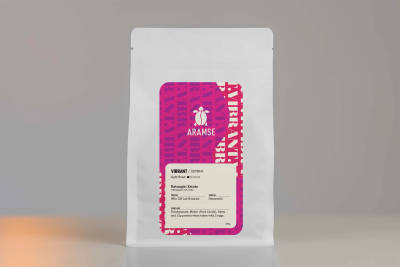
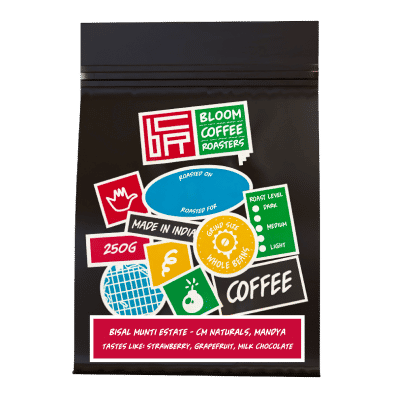
Carbonic Maceration Coffees

Reading a carbonic maceration product label
Indian CM product labels run from technically specific to loosely descriptive. A label that states fermentation duration ("120-hour CM natural"), cherry ripeness at harvest (brix), or the processing sequence (CM as a stage within a longer multi-step protocol) reflects a producer tracking the process. A label that says only "carbonic maceration" with no further detail, and no clarification of whether the cherries were whole or depulped, may be using the term as shorthand for anaerobic or experimental.
This matters because the flavour signatures of genuine CM and of anaerobic fermentation overlap but are not the same. CM's lactic acid character and the specific aromatic compounds produced by intracellular fermentation are reproducible when the process is controlled. Without the whole-cherry and active CO2 requirements, the fermentation follows a different path.
Evaluating a CM product page: Look for three pieces of information: (1) whether the cherries entered the tank whole or depulped, (2) whether CO2 was actively injected or the vessel was simply sealed, (3) the fermentation duration. These details do not guarantee quality, but they indicate a producer who is tracking the process rather than applying a label. Ratnagiri's documented method (23–27° Brix at harvest, 48h + 90–120h staged fermentation, two microbiologists on staff) sits at one end of the specificity spectrum. A label that says only "carbonic maceration natural" sits at the other.
Terminology inconsistency is not unusual; CM is a relatively young processing category in Indian specialty, and labelling conventions have not fully standardised. The more reliable read is the cup itself: clean fruit, restrained lactic acidity, and pronounced aromatics point to a controlled process; sharp vinegar, astringency, or excessive alcohol notes point to over-fermentation, regardless of what the label says.
Brewing carbonic maceration coffees at home
CM coffees brew differently from conventionally processed lots for one reason: the intracellular fermentation increases the bean's sugar content. Sucrose and glucose absorbed from the mucilage and cherry skin during fermentation remain in the cell structure after drying. Higher sugar content produces greater heat sensitivity and higher solubility. CM coffees release their compounds faster than a washed coffee at the same grind setting.
Two practical adjustments: lower brew temperature and a slightly coarser grind than your washed baseline. Lower temperature preserves the aromatic compounds and prevents over-extraction of the elevated sugars, which can push the cup toward harsh, vinegary notes if water is too hot. A coarser grind compensates for the faster extraction.
Starting parameters — carbonic maceration coffees
| Method | Temperature | Ratio | Grind | Notes |
|---|---|---|---|---|
| Pour-over (V60 / Kalita) | 88–92°C | 1:15–1:16 | One step coarser than washed baseline | Draw-down faster than washed; don't extend |
| AeroPress | 88–90°C | 1:12–1:14 | Standard to slightly coarser | Shorter steep than naturals |
| Cold brew | Room temp / 4°C | 1:7–1:8 | Coarse | 12–16h; CM notes translate cleanly |
| Espresso | 90–92°C | 1:2–2.2 | Medium-fine | Pull short; higher solubility means fast extraction |
Let it cool. CM coffees show more of their character between 55–65°C than at brew temperature. The lactic acidity softens as the cup cools, and the stone fruit and aromatic notes become more defined. Tasting at multiple temperatures — immediately after brewing, then at 10-minute intervals — gives a more complete picture of the lot than the first sip alone.
Roast level affects how the process character presents. Most Indian CM coffees are roasted light to light-medium, which preserves the fermentation aromatics and keeps the fruit expression prominent. In medium or medium-dark CM coffees, the fruit character integrates into chocolate or nut notes rather than leading. The fermentation signature does not disappear; it reads differently.
Where carbonic maceration sits in Indian specialty
Carbonic maceration came into Indian specialty coffee largely as a competition and export-oriented technique. The estates doing it well (Ratnagiri, Mooleh Manay) invested in equipment and expertise: sealed tanks, CO2 supply, fermentation monitoring. Neither estate built those investments for the domestic consumer market. Ratnagiri's lots were exported to international buyers (Café Imports, Onyx Coffee Lab, Red Rooster) and won competition placements before becoming widely available in India. The quality credential was international before it was domestic.
It remains a small segment of the catalogue at 2.3%, but 19 roasters now carry at least one CM coffee, which places it past the early-adopter stage.
Two directions the category is moving: CM on non-arabica species, and CM as a stage inside multi-step processes. Mooleh Manay's robusta and excelsa CM lots have few documented global parallels — fine robusta CM is recorded in a small number of Indonesian and Indian contexts but is not common. The Ratnagiri sequential method (CM followed by extended anaerobic fermentation and extended drying) sits outside the standard CM category as well as standard anaerobic.
For the wider picture on experimental processing (anaerobic fermentation, yeast inoculation, and extended fermentation across Indian estates), the anaerobic and experimental processing field guide covers that ground. This article focuses on that subset: what makes CM distinct as a process, which Indian producers are doing it with documented methods, and what to expect when you buy or brew one.
References
- Barista Magazine — Understanding the Process: Carbonic Maceration
- Nordic Brew Lab — Anaerobic Coffee Processing (and how Carbonic Maceration fits in)
- Daily Coffee News — A Guide to Carbonic Maceration and Anaerobic Fermentation in Coffee
- RAVE Coffee — A Short History of Carbonic Maceration
- Sprudge — Sasa Sestic of Australia Wins The 2015 World Barista Championship
- Café Imports — Ratnagiri Estate: A New Era of Coffee from India
- MTPak — Carbonic maceration coffees: How should they be roasted?
- Perfect Daily Grind — How do you roast experimentally processed coffee beans?