

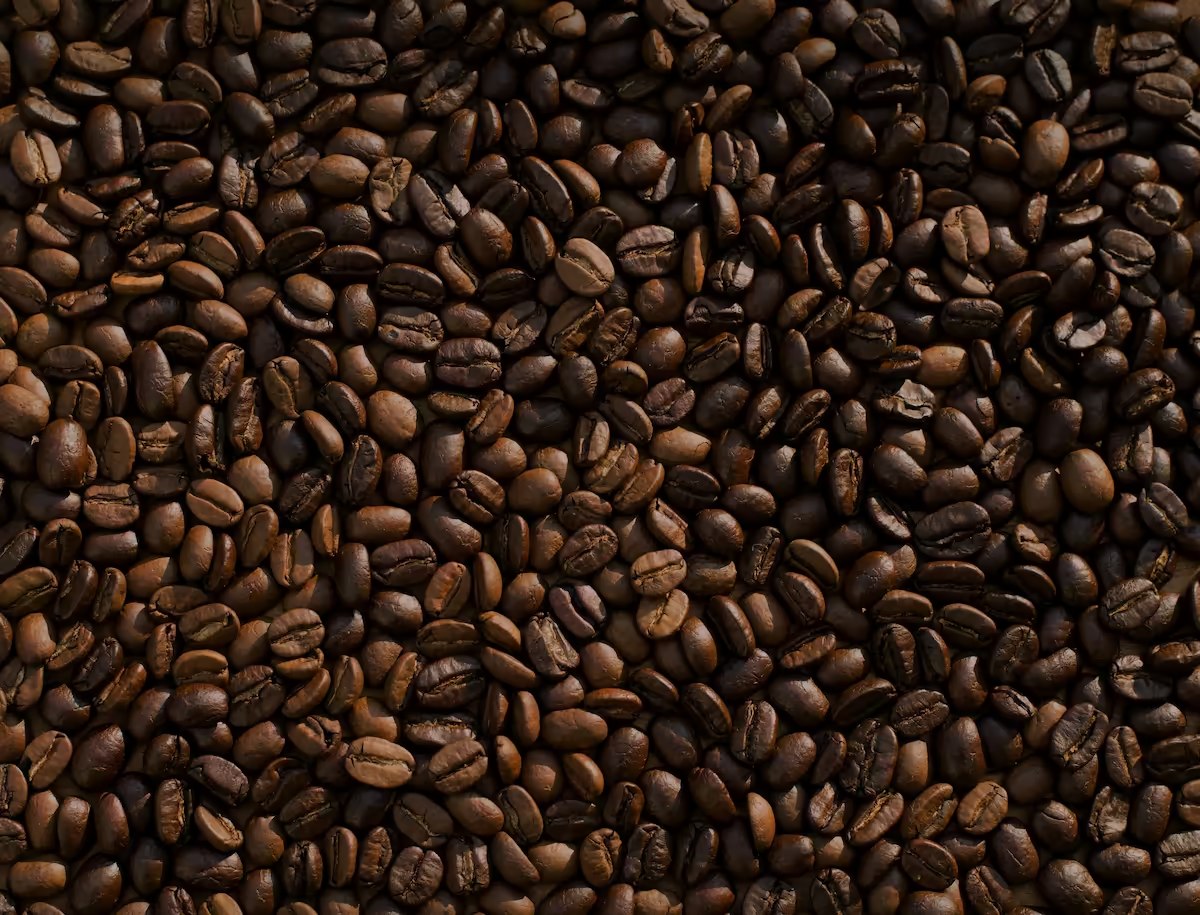
Best Premium Coffee in India
Above ₹1000 is small-batch territory: limited lots, experimental ferments, and beans roasters are proud to put their name on.
What to expect at this price point
The Reality of this Price Range
Above ₹1000 (normalized to 250g) is the top end of Indian specialty, the coffees roasters reserve for their best harvests. Expect competition-grade and award-winning microlots, premium and rare varieties (you'll find SLN 9, SLN 795, Catuai, Chandragiri, Bourbon, Caturra, and even Geisha lots here), and the most ambitious processing on the market: anaerobic and carbonic-maceration ferments, double-fermented and other experimental lots alongside the cleanest washed and natural estate coffees. Traceability typically goes down to the producer and lot. You're paying for rarity and craft, not just a bigger bag.
Smart Buying Guide
Treat these as experiences, not your daily driver
Premium lots are usually limited microlots bought to explore a specific variety, producer, or process, not to brew twice a day. Buy a smaller bag, taste deliberately, and note what you like so you can chase it again.
Demand full traceability at this price
Above ₹1000 you should know the estate, producer, variety, harvest date, and exact process, including the fermentation approach and duration. If a coffee this expensive is vague about its origin, that's a red flag.
Brew clean to reveal the lot
Most premium coffees are roasted light to light-medium to showcase processing and terroir. Favour pour-over or other filter methods, grind fresh, and use good water. Milk and dark-roast habits will mask exactly what you paid for.
Roast Profiles
Roasts span medium, light-medium, and light fairly evenly, since roasters tend to roast premium lots on the lighter side to protect the processing and terroir investment, though richer medium-roasted lots are equally well represented.
Processing Methods
Washed and natural estate lots still lead by count, but this band holds the catalogue's heaviest concentration of experimental processing: anaerobic, carbonic maceration, and double-fermented lots are far more common here than at lower prices.
Top Value Coffees
Sorted by community rating. At this level, look for harvest dates, named producers, and a clear processing story.






Catalogue last refreshed .
What to look for at this price
Start with a smaller pack where offered. It's a low-risk way to find out whether a variety or process is worth chasing.
Sort by rating, then filter to your brew method. Premium lots reward filter brewing over milk drinks.
Check the harvest and roast dates; rarity is no excuse for stale coffee at this price.
Premium lots reward precision, so dial in your grind, ratio, and water temperature to do them justice.
Coffee Calculator
Dial in the exact ratio and dose to get the most from a premium lot.
Read the Context.
The background behind what you are tasting, from our writing on Indian coffee.
Buying Premium Coffee
What you're actually paying for at the top of the Indian specialty range.
Explore More.
Discover other ways to find your perfect coffee.
Under ₹1000
Find the best coffee under ₹1000 in India, from Coorg and Chikmagalur daily drinkers through to high-altitude Baarbara and Ratnagiri single-estate lots. Every coffee here is community-rated and price-normalized to 250g, so you can compare like for like before you buy.
₹500–₹1000
The ₹500–₹1000 range is where Indian specialty coffee gets interesting: Chikmagalur and Baba Budangiri estates, SLN 795 and SLN 9 lots, and processing that turns experimental. Most of the catalogue's standout single origins live in this band.
The *light* end of the spectrum
Bright, acidic, and complex coffees roasted to preserve origin characteristics.
Anaerobic picks
Experimental lots with bold, often wine-like or tropical profiles.