

Clean, balanced, highlighting origin characteristics
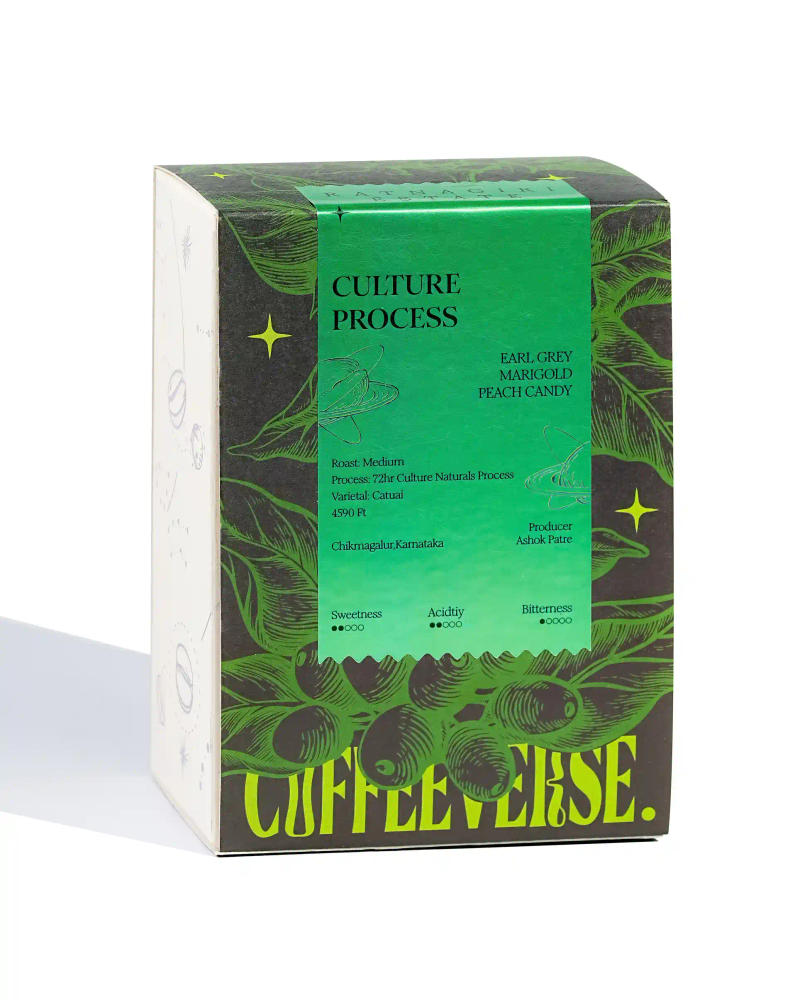
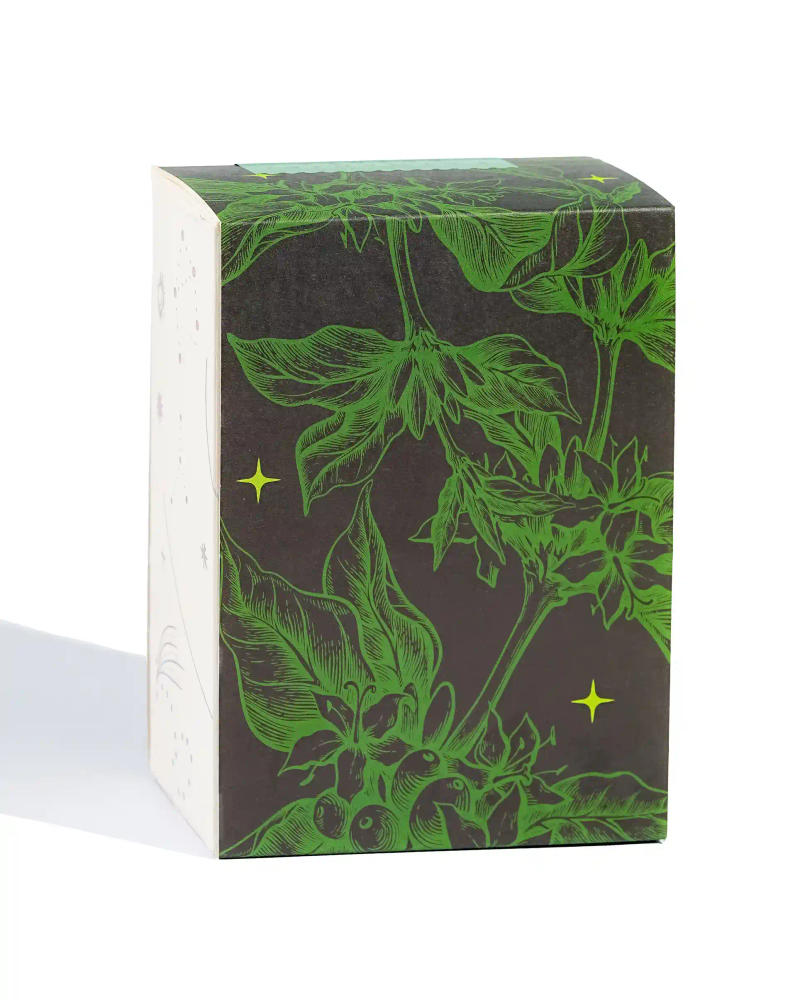

medium roast · carbon dioxide-rich environment · Jeri Patte
Flavour
Origin and production
As described by Coffeeverse
This exceptional coffee undergoes an 80-hour CULTURE PROCESS, sourced from the Catuai varietal at our farm, located 4,400 feet high in the Jeri Patte block. After harvesting with a Brix of 25.8, we placed the cherries in stainless-steel fermenters, adding a specific strain of yeast and lactic acid bacteria. The fermentation took place in a carbon dioxide-rich environment, followed by a slow drying process on raised beds over 29 days with constant stirring. This meticulous approach enhances the unique flavor profile of our coffee.
Brewing
Pack sizes and price
Ratings
What drinkers say
With milk?
More from Coffeeverse

84 Hours Anoxic Naturals
Unrated

Anugraha Slow Dried Naturals
Unrated
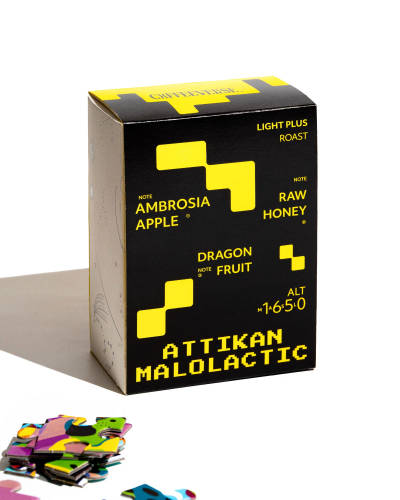
Attikan Malolactic
Unrated
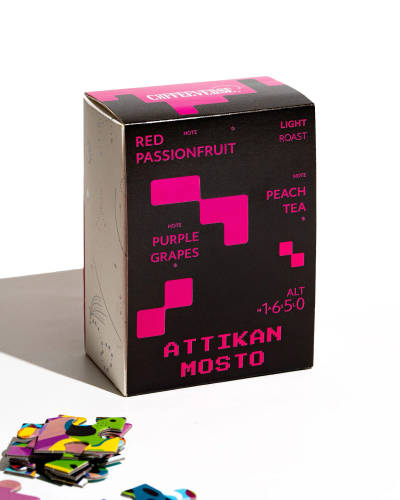
Attikan Mosto
Unrated
Read about this

Brewing Behaviour
AeroPress with Indian Coffee: Recipes by Processing Method
Generic AeroPress recipes are optimized for bright, washed, light-roast coffees. Indian coffees — body-forward, chocolate-nutty, and increasingly fermented — extract differently. This guide provides starting recipes for washed, natural, and anaerobic Indian coffees, with adjustments for roast level and water conditions.

Brewing Behaviour
AeroPress Variables for Indian Washed vs Natural Coffees
Adjust AeroPress grind, temperature, time, and ratio for Indian washed and natural coffees. Data-backed starting recipes from 500+ coffees in the ICB directory.

Brewing Behaviour
Grind Size for Indian Coffee: How to Calibrate by Method and Roast
Grind size determines how fast water extracts from coffee — and for Indian specialty buyers, the standard per-method chart is a starting point, not a fixed answer. Thirty percent of ICB's catalog is light or light-medium roast, coffees that are denser and systematically underextract at standard chart settings. This reference covers the per-method calibration table, the Indian density adjustment, and how to read extraction feedback from the cup.
Questions about this coffee
Coffeeverse's tasting notes for Culture Process lean toward Earl Grey, Marigold and Peach Candy. Flavor is subjective and shifts with roast freshness, grind size, and brew method, so your cup may vary.
Culture Process is a single-origin coffee, sourced from one origin rather than blended, so it reflects the character of that specific place.
Culture Process is suggested for Aeropress, Cold Brew, Espresso, French Press, Moka Pot and Pour Over. As a rule of thumb: espresso needs a fine grind, pour-over and drip a medium grind, and French press or cold brew a coarse grind. Dial in from there to taste.