


AeroPress with Indian Coffee: Recipes by Processing Method
Generic AeroPress recipes are optimized for bright, washed, light-roast coffees. Indian coffees — body-forward, chocolate-nutty, and increasingly fermented — extract differently. This guide provides starting recipes for washed, natural, and anaerobic Indian coffees, with adjustments for roast level and water conditions.

Most AeroPress recipes circulating in India — including widely shared methods from the global specialty community — were developed around East African and Central American light-roast washed coffees. These are high-acidity, relatively lean coffees with a clean flavor profile. Indian specialty coffees run in a different direction: heavier body, lower acidity, and a chocolate-nutty core. The growing share of natural and anaerobic Indian lots also adds fermentation-derived compounds that extract poorly at high temperatures. A recipe calibrated for a Kenyan washed light roast will produce a different result with a Chikmagalur medium natural — often overextracted or muddy in ways the coffee itself isn't responsible for. This guide documents starting recipes for three profiles: washed, natural, and anaerobic.
Why Indian coffee extracts differently in the AeroPress
Body density. Indian Arabica from Chikmagalur, Coorg, and Biligiriranga Hills typically carries more extractable solids per gram than equivalent-roast East African coffees. Global recipes built around 1:16 or 1:18 ratios will often produce thin results with Indian beans. Tighter ratios — less water per gram — are generally needed to get the body these coffees are capable of.
Lower baseline acidity. Indian washed coffees don't carry the brightness that high-temperature extraction is designed to unlock in East African or Guatemalan washed lots. Pushing temperature above 93°C with a medium-roast Indian washed coffee mainly increases bitterness risk without gaining acidity in return.
Processing compounds in naturals and anaerobics. Fermentation-derived esters — responsible for the fruit and floral notes in natural and anaerobic Indian coffees — extract much faster at high temperatures. An Indian anaerobic brewed at 95°C often produces murky, overextracted ferment character. The same coffee at 82–86°C tends to be structured and fruit-forward.
Catalog context: Of 206 AeroPress-tagged, in-stock coffees in the ICB catalog (March 2026), the most common flavor notes in washed AeroPress coffees are dark chocolate, milk chocolate, and caramel. In natural AeroPress coffees, the dominant notes are fruity, raisin, and mango. The flavors you're trying to land are different across processing categories — which is why the recipes need to be different too. Those clusters are also a calibration reference: if your washed cup isn't reading chocolate-forward, adjust the recipe before blaming the coffee.
Recipe 1: Washed Indian coffee
Washed Indian coffees are the most forgiving starting point for AeroPress. They have enough body for full immersion and clean profiles that don't require the temperature reductions natural and anaerobic coffees need. At 58 coffees, washed is the largest processing category in ICB's AeroPress catalog. The fit isn't coincidental: full immersion suits the chocolate-caramel output that most Indian washed medium roasts produce. Browse washed Indian coffees suited for AeroPress in the ICB catalog.
Washed Indian Coffee — Inverted Method
| Method | Grind | Ratio | Time | Notes |
|---|---|---|---|---|
| Washed Indian Coffee — Inverted Method | Medium-fine (table salt coarseness) | 210ml (ratio 1:14) | 1:30 | water temperature: 90–93°C; plunge duration: 20–25 seconds |
Roast level adjustment: Light washed Indian coffees benefit from higher temperatures (92–95°C) to extract their delicate acidity. Medium washed: 88–92°C. Medium-dark washed: drop to 85–88°C to prevent roast bitterness from overpowering the chocolate notes.
Recipe 2: Natural process Indian coffee
Natural process coffees — dried whole cherry before hulling — carry more fermentation-derived compounds than washed lots. In the AeroPress, temperatures above 90°C extract these compounds hard, often producing a muddy or overly fermented result. Lower temperatures let the fruity and dried-fruit notes typical of Indian naturals develop without tipping into off-flavors.
Natural coffees also carry more residual sugars than washed lots. At correct extraction, this reads as sweetness and weight. Overextracted, it reads as syrupy heaviness. The AeroPress handles naturals well — full immersion followed by controlled pressure keeps extraction even — but temperature drives most of the results. There are 32 natural-process coffees tagged for AeroPress in the ICB catalog. Browse natural process Indian coffees in the ICB catalog.
Natural Indian Coffee — Inverted Method
| Method | Grind | Ratio | Time | Notes |
|---|---|---|---|---|
| Natural Indian Coffee — Inverted Method | Medium (slightly coarser than washed recipe) | 210ml (ratio 1:14) | 1:45–2:00 | water temperature: 84–88°C; plunge duration: 20–30 seconds |
Common failure mode: Indian naturals brewed at 93–95°C using standard AeroPress recipes produce a heavy, murky, fermented bitterness that can seem like a defect. It is a temperature mismatch, not a bad coffee. Drop to 85–87°C before drawing conclusions about the coffee.

Recipe 3: Anaerobic and fermented Indian coffee
Anaerobic and double-fermented Indian coffees require the most adjustment from standard recipes. There are 41 AeroPress-tagged coffees in this category in the ICB catalog — roughly one in five. For coffees that sit furthest from the washed, light-roast profile most global recipes assume, that's a number worth knowing. Browse anaerobic and fermented Indian coffees to explore the range.
The fermentation-derived esters responsible for the floral and tropical fruit notes in these coffees extract within a narrow temperature window. The goal is to land that character — fruit, floral, wine-like — without pushing into ferment bitterness. From the natural recipe: drop temperature to 80–84°C, coarsen the grind slightly, and shorten the steep to 1:15. The faster plunge compensates for the coarser grind through pressure.
Anaerobic Indian Coffee — Inverted Method
| Method | Grind | Ratio | Time | Notes |
|---|---|---|---|---|
| Anaerobic Indian Coffee — Inverted Method | Medium-coarse | 196ml (ratio 1:14) | 1:15 | water temperature: 80–84°C; plunge duration: 15–20 seconds (firm, steady pressure) |

Water hardness: the factor most Indian guides ignore
Most Indian city water is harder than the SCA brewing water guideline of 75–150 ppm TDS. Bangalore borewell water commonly runs at 300–500 ppm. Delhi tap water ranges from 400–800 ppm. Mumbai municipal water sits at 150–400 ppm, variable by area. High alkalinity — carbonate hardness specifically — suppresses acidity in the cup and mutes flavor brightness. A recipe that produces good results with filtered water may produce a flat, slightly bitter cup with hard tap water, even when all brewing parameters are correct.
Two options that work:
- Bottled mineral water with labelled TDS between 100–200 ppm. Check the label — Himalaya Natural Mineral Water is one option with published mineral content. Avoid highly purified (near-zero TDS) or carbonated water.
- RO water blended with mineral water at roughly 1:1. Most Indian homes with an RO system produce water at under 20 ppm TDS — too low for good coffee extraction. Blending with an equal volume of mineral water brings TDS into a usable range. Full RO water extracts coffee poorly and produces a flat, hollow cup.
Quick diagnostic: If your Indian specialty coffee consistently tastes noticeably better from a cafe's AeroPress than your setup at home, using the same beans and the same recipe, the most likely variable is water quality. Most specialty cafes use filtered or purified brewing water.
Troubleshooting: common results and adjustments
If the result is bitter and heavy (natural or anaerobic)
Temperature is the most common cause. Drop 3–5°C before adjusting any other variable.
If the result is thin and watery (any process)
The ratio is too lean for Indian coffee density. Move from 1:16 to 1:14 or 1:13. Do not raise temperature to compensate — this trades thin for bitter rather than fixing extraction.
If the result is muddy and fermented (anaerobic or natural)
Temperature is too high in combination with too-fine a grind. Coarsen the grind and drop temperature simultaneously — both variables are contributing.
If the result is flat with no brightness (washed)
Water alkalinity is the most likely cause. Switch to filtered or mineral water and retest before adjusting the recipe.
If the result is sour
Grind finer, keeping all other parameters the same. Do not raise temperature above 93°C for Indian medium roasts — this trades sourness for bitterness rather than increasing extraction yield.
Filter type and orientation
Paper vs metal filter. Paper filters produce a cleaner cup with lower fines and oils. For light-roast Indian washed coffees, paper typically preserves delicate acidity better. Metal filters pass more oils and coffee fines, which adds body and weight — this suits medium and medium-dark washed Indian coffees where body is a feature. Natural and anaerobic coffees work with either; paper tends to moderate the more intense processing notes, while metal amplifies them.
Standard vs inverted method. The inverted method — plunger inserted at the base, cap end open during steep — maintains full immersion without any gravity drip during the brew. For Indian coffees that benefit from the full steep time to build body, the inverted method provides more consistent results. The standard upright method works for experienced brewers who want a faster, lighter cup, but requires a pre-wet cap and careful timing to control gravity drip during steeping.
Coffees to try by recipe type
The coffees below represent each of the three recipe profiles. They are representative examples, not rankings. Browse all AeroPress-suited coffees in the ICB catalog for the full list across 31 roasters and 206 in-stock options.
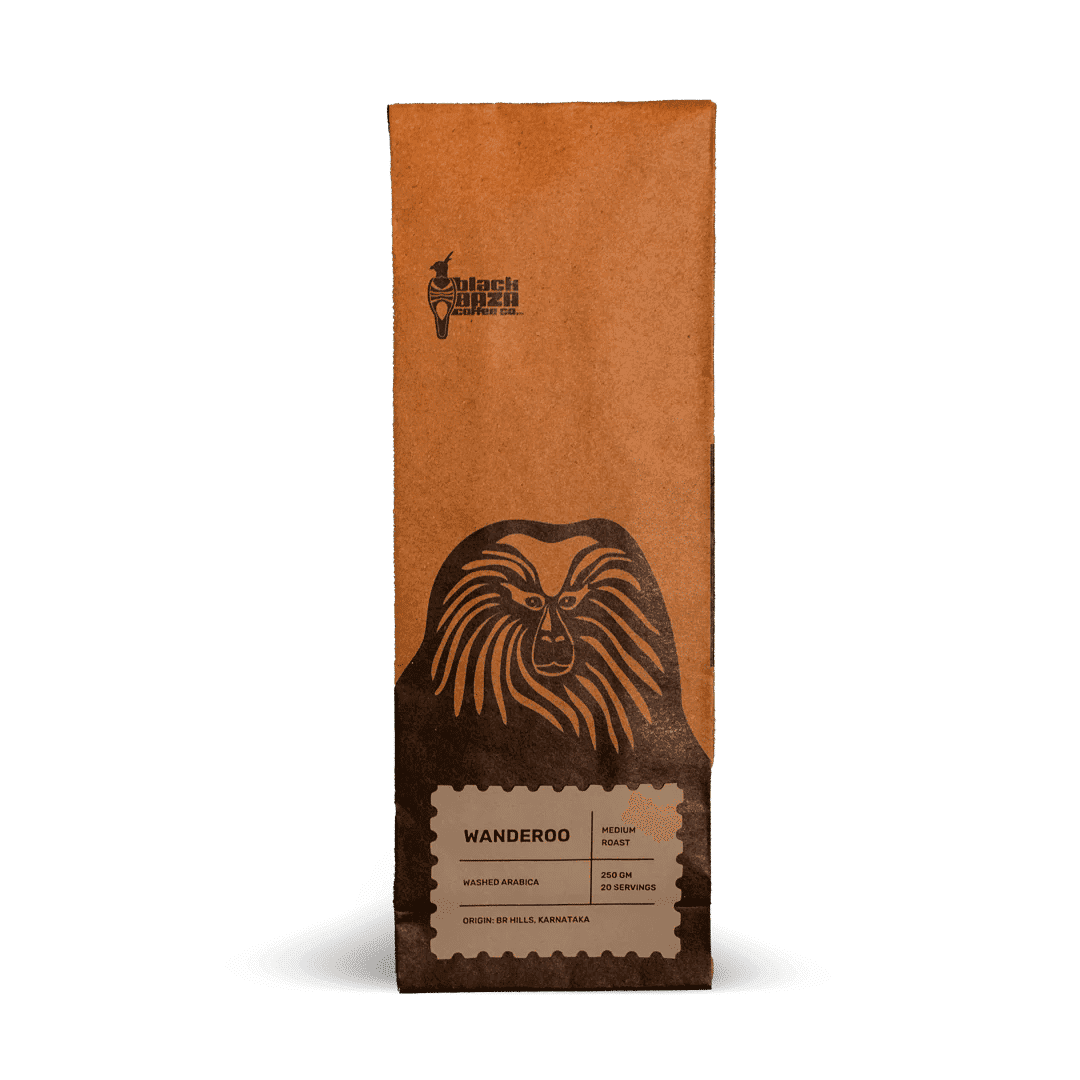
- Recipe 1 (Washed) — Wanderoo, Black Baza Coffee (Biligiriranga Hills, medium roast): 15g, 90–93°C, 1:14
- Recipe 2 (Natural) — Ratnagiri Estate Naturals, Corridor Seven Coffee Roasters (Chikmagalur, light roast): 15g, 84–88°C, 1:14
- Recipe 3 (Anaerobic) — Ratnagiri Estate Culture Naturals Rose, Naivo Coffee (Baba Budangiri, medium-dark roast): 14g, 80–84°C, 1:14
Each coffee is profiled in full in its recipe section above.
References
- Corridor Seven — The AeroPress Brewing Guide
- AeroPrecipe — 2022 Indian AeroPress Championship Winning Recipe, Pratik Sharma
- Coffee ad Astra — Reaching Fuller Flavor Profiles with the AeroPress
- Third Wave Water — TDS and Why It Matters for Brewing Coffee
- Understanding Hard Water in India: City-by-City Analysis