


Full-bodied, clean, minimal sediment
Flavour
Origin and production
As described by Coffee Plus
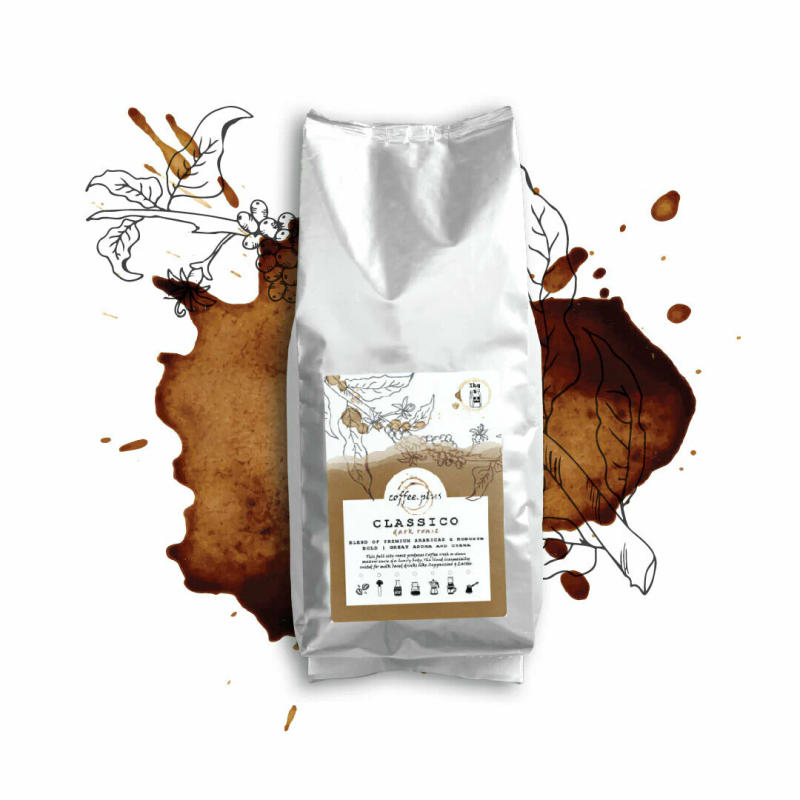
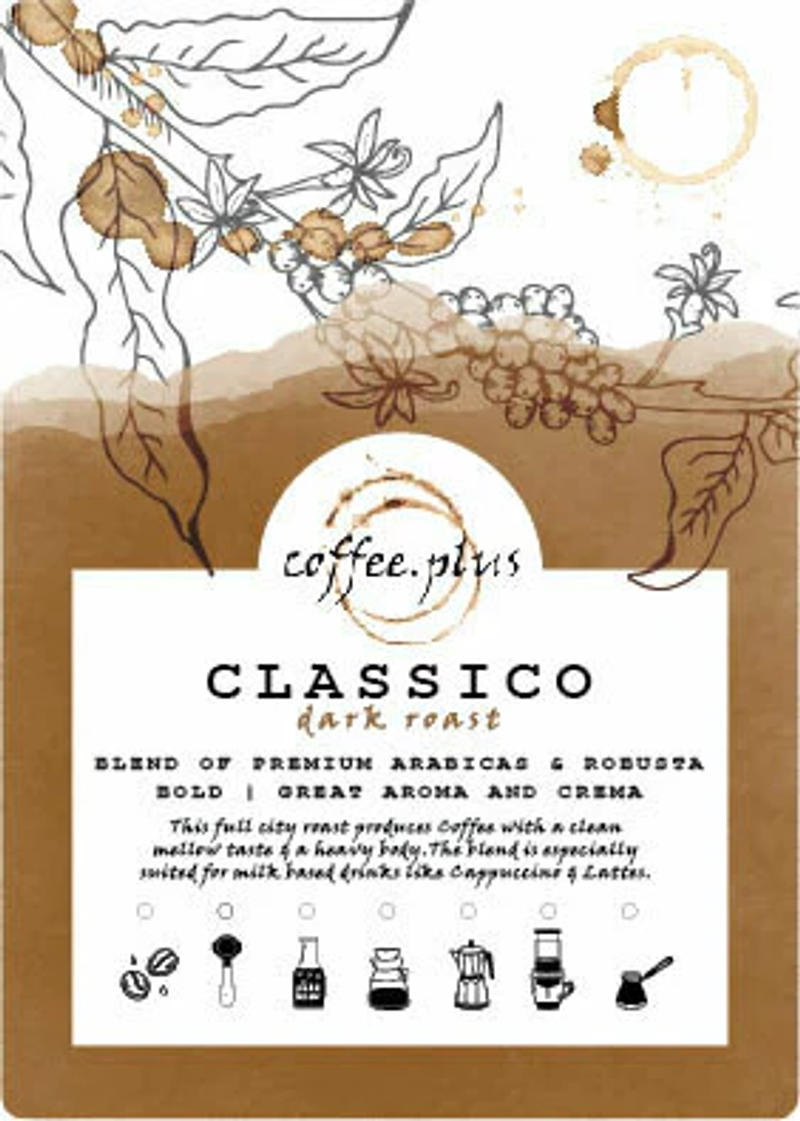
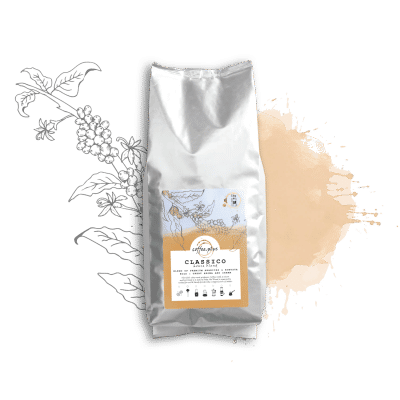
Classico Dark Roast takes our signature 80% Arabica / 20% Robusta house blend and pushes it deeper into flavour. By roasting to a Vienna roast profile, we create a cup that is bold, indulgent, and smooth — perfect for those who crave intensity without harshness. This is coffee at its most comforting and powerful. Dark chocolate – deep, indulgent richness. Heavy body – a satisfying, full mouthfeel. Lower acidity – smooth on the palate, gentle for sensitive drinkers. Clean aftertaste – bold but without bitterness. Roasted just past Full City, our Vienna roast develops natural oils on the bean surface — a hallmark of a true dark roast. This technique reduces acidity while unlocking layers of rich chocolate, roasted depth, and creamy smoothness. For best results, brew with slightly cooler water (88–92°C) to tame intensity and highlight chocolate sweetness.
Brewing
Suggested for Espresso, French Press, Moka Pot. Works with milk (ICB's reading).
Intense, rich, syrupy, pseudo-espresso
Short, dense and bittersweet with thick crema
Pack sizes and price
Ratings
What drinkers say
With milk?
More from Coffee Plus
Read about this

Brewing Behaviour
Espresso at Home with Indian Coffees: Washed, Natural, and Blend Behaviour
Indian coffee has a reputation for espresso reliability — dense beans, low acidity, chocolate-forward profiles that extract cleanly under pressure. That reputation holds, but only for one part of the catalogue. Washed, natural, and blend coffees behave differently enough under 9 bar that a single dial-in recipe will work for some and fail for others in ways that are predictable, once the pattern is clear.

Brewing Behaviour
Grind Size for Indian Coffee: How to Calibrate by Method and Roast
Grind size determines how fast water extracts from coffee — and for Indian specialty buyers, the standard per-method chart is a starting point, not a fixed answer. Thirty percent of ICB's catalog is light or light-medium roast, coffees that are denser and systematically underextract at standard chart settings. This reference covers the per-method calibration table, the Indian density adjustment, and how to read extraction feedback from the cup.

Brewing Behaviour
Why Your Specialty Coffee Tastes Flat (Common Extraction Issues)
Specialty coffee that tastes flat, weak, or sourly thin is almost always an extraction problem — not a coffee quality problem. This guide covers the six most common causes, with particular attention to Indian variables: hard tap water, RO-stripped water, mixer-grinder use, and tropical storage conditions.
Questions about this coffee
Coffee Plus's tasting notes for Classico Dark lean toward Clean Aftertaste, Dark Chocolate, Heavy Body and Smooth Finish. Flavor is subjective and shifts with roast freshness, grind size, and brew method, so your cup may vary.
Classico Dark is suggested for Espresso, French Press and Moka Pot. As a rule of thumb: espresso needs a fine grind, pour-over and drip a medium grind, and French press or cold brew a coarse grind. Dial in from there to taste.