

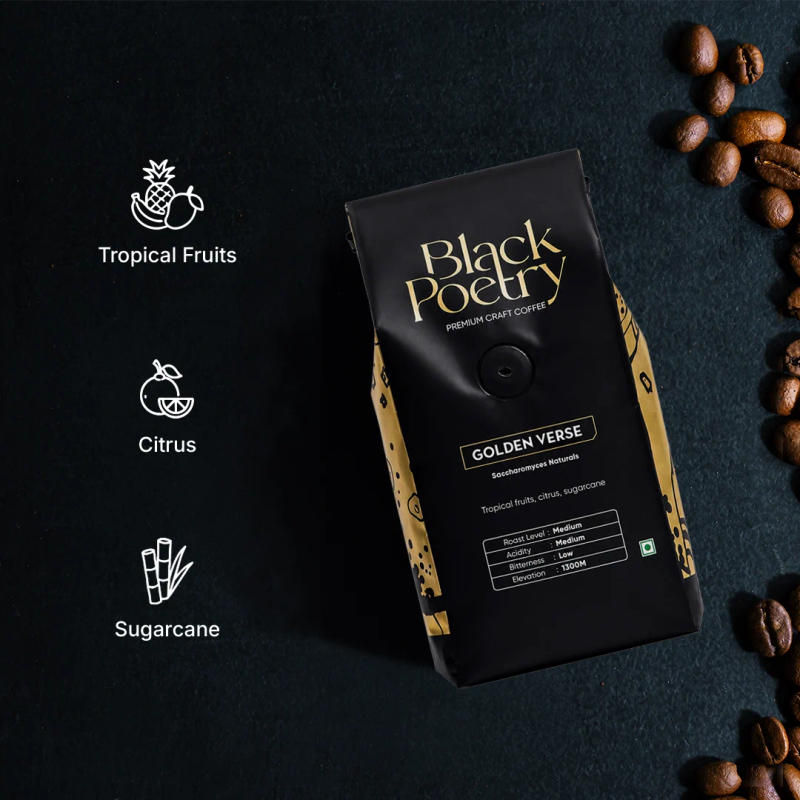
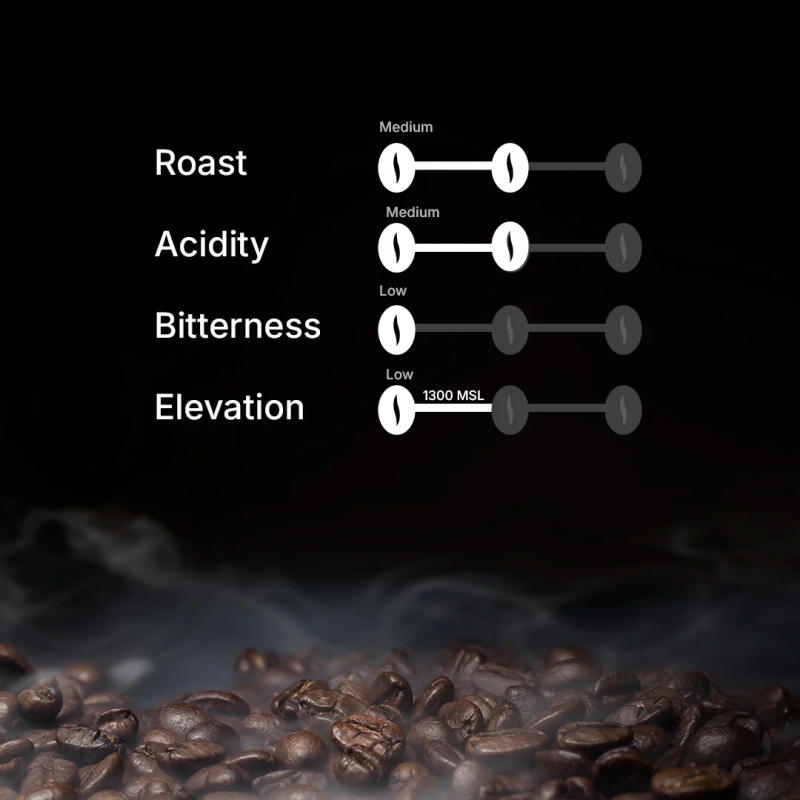




Clean, balanced, highlighting origin characteristics
Flavour
Origin and production
As described by Black Poetry Coffee
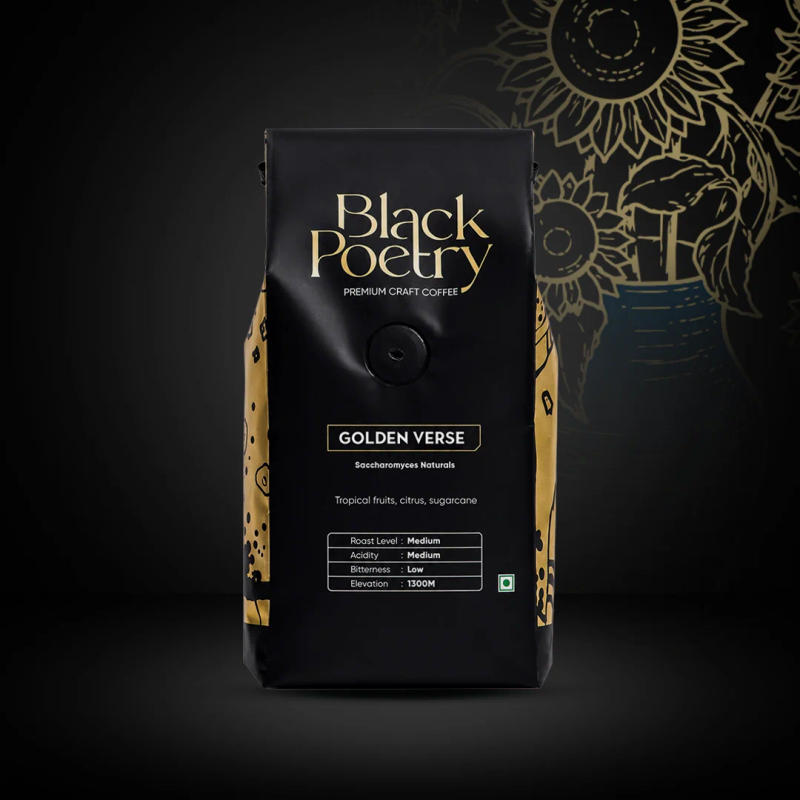
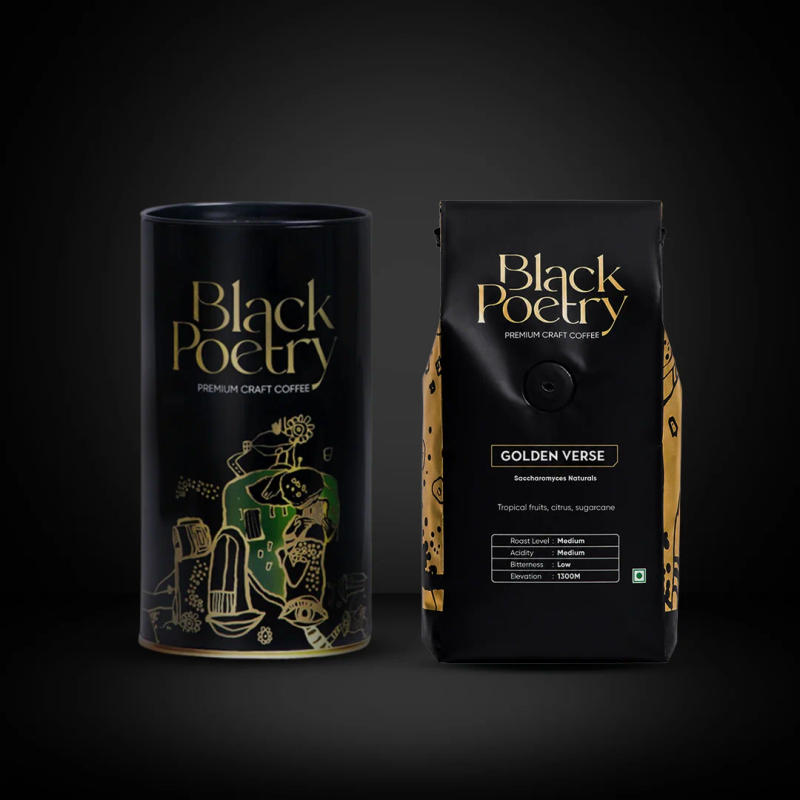
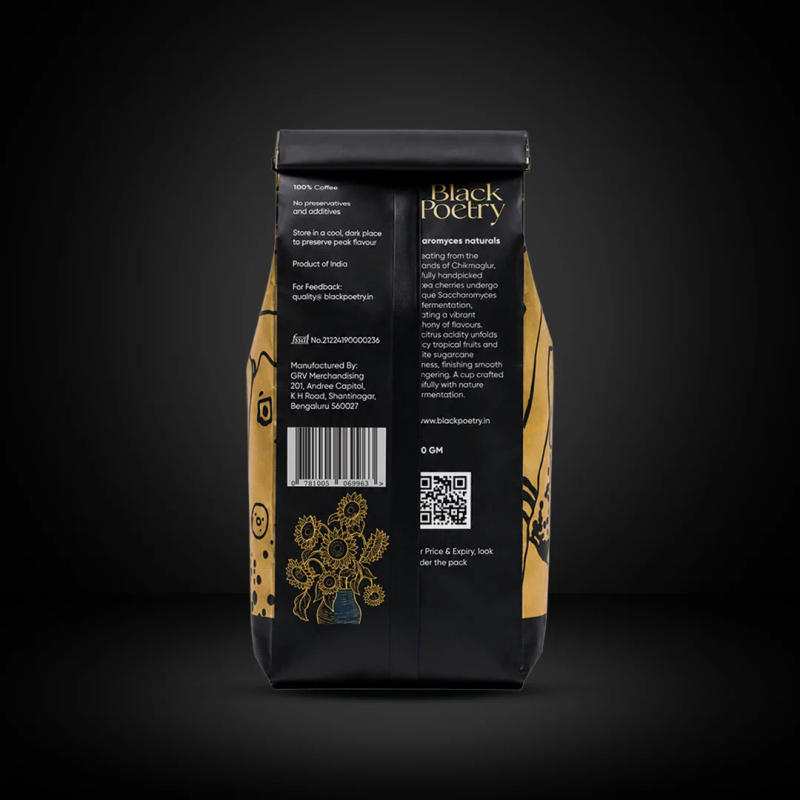
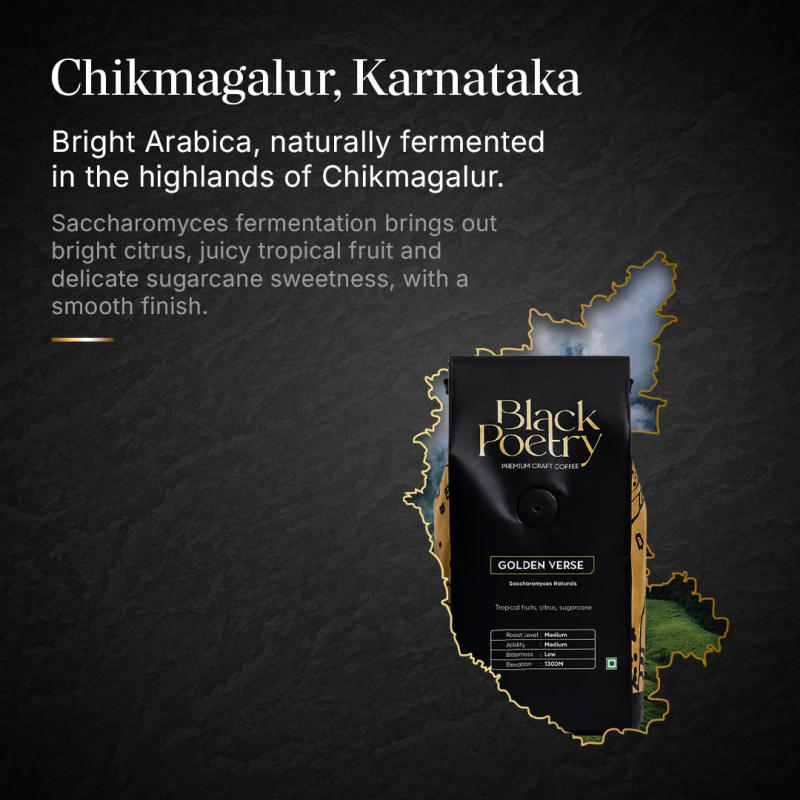
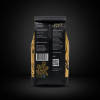
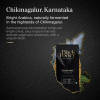
Originating from the highlands of Chikmaglur, this SLN 795 Arabica is crafted from selectively handpicked cherries that undergo a distinctive Saccharomyces yeast fermentation using Intenso yeast. The cherries are fermented for 21 hours in sealed stainless-steel tanks, allowing the yeast to shape and enhance the coffee’s natural character. The cherries are carefully dried on raised beds for 16 hours. The result is a vibrant and expressive cup, with bright citrus acidity, juicy tropical fruit notes and delicate sugarcane sweetness, finishing smooth and lingering. A beautifully crafted coffee where the character of SLN 795 and Chikmaglur meets the precision of fermentation.
Brewing
Pack sizes and price
Ratings
What drinkers say
With milk?
More from Black Poetry Coffee


Read about this

Processing & Flavors
Anaerobic and Experimental Processing in Indian Coffee
One in five coffees in ICB's catalog now carries an experimental process tag. This is a reference guide to the four categories (anaerobic, carbonic maceration, double fermented, and experimental), covering how each works at the fermentation level, which Indian estates and regions produce them, and what the catalog data says about their flavor patterns.

Processing & Flavors
Carbonic Maceration in Coffee, Explained
Carbonic maceration is the most widely misused term in Indian specialty coffee. It is a specific sub-type of anaerobic fermentation, not a synonym for it, and the distinction shows up in the cup. This field guide maps what CM is, where it happens in India, and what to expect from the 28 Indian coffees that carry the label.

Processing & Flavors
How Fermentation Shapes Coffee Flavour
Every coffee ferments — the variable is how. Understanding the microbial chemistry behind washed, natural, and anaerobic processing explains why the same estate can produce a clean chocolate cup and a grape-forward lot from the same harvest. This article maps the mechanism to the label, with data from ICB's catalog of 1,238 Indian coffees.
Questions about this coffee
Black Poetry Coffee's tasting notes for Golden Verse lean toward Bright Citrus Acidity, Delicate Sugarcane Sweetness and Juicy Tropical Fruit Notes. Flavor is subjective and shifts with roast freshness, grind size, and brew method, so your cup may vary.
Golden Verse is a single-origin coffee, sourced from one origin rather than blended, so it reflects the character of that specific place.
Golden Verse is suggested for Aeropress, Cold Brew, Espresso, French Press, Moka Pot and Pour Over. As a rule of thumb: espresso needs a fine grind, pour-over and drip a medium grind, and French press or cold brew a coarse grind. Dial in from there to taste.