

Clean, balanced, highlighting origin characteristics
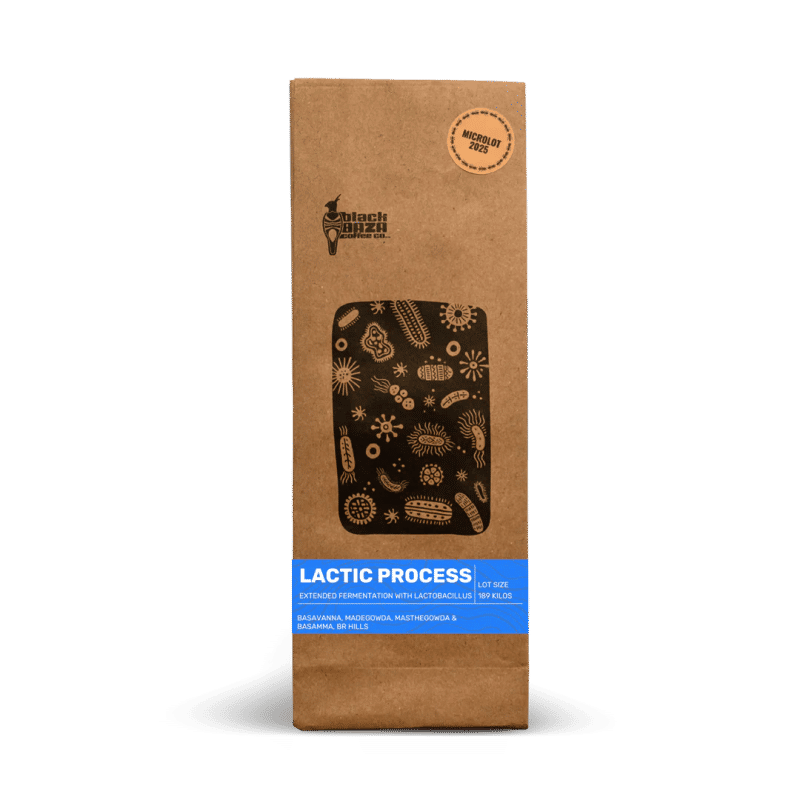
Medium Light roast · lactic process · Biligirirangan Hills
Flavour
Origin and production
- Biligirirangan Hills
- Limited release
As described by Black Baza Coffee
We are continuously inspired by our partner producers – especially those who choose to take fermentation risks with us! We want to acknowledge the courage it takes to try out a new coffee processing technique. In most cases, the producers of our Microlots, like this Lactic Process, are the first people in their hamlets to have ever tried out these methods and we can't wait for you to try it! Let us know what you think and we'll pass on your feedback. Producers: Madegowda, Masthegowda & Basamma, BR Hills. You've tried Lactobacillus in curd but have you in coffee? This diverse group of bacteria is abundant in nature, inside our bodies and in our food. In post-harvest processing of coffee, sugary coffee fruits are kept in anaerobic conditions such that the LAB bacteria can eat away at all the sugars. This fermentation produces metabolites that are then absorbed by the coffee beans to produce flavour. Many microorganisms ferment coffee fruit, but through close monitoring of pH, temperature and oxygen availability, we can create environmental conditions that preferentially allow LAB to thrive. Carrying out controlled fermentations is complex - there are many variables to account for and there is no set recipe for a lactic process coffee. Pushing a lactic fermentation can result in overly bitter cups whereas if you get it right, your brew could be buttery, fruity and floral. This was our first collective attempt at a Lactic Process. Full disclosure, we're happy-ish and think that we perhaps need to modify the fermentation time for future experiments. The coffee is delicious, despite all challenges, and we're very happy to be sharing it with you! Flavour Notes: Molasses, Clove & Dried Fruit. Recommended Brewing: Pourover & Drip Filter. AeroPress: Use a Medium or Medium Coarse Grind, 1:15 ratio and start with 15g, use 2 paper filters or 1 of our cloth filters.
Brewing
Pack sizes and price
Ratings
What drinkers say
With milk?
More from Black Baza Coffee


Read about this

Processing & Flavors
Anaerobic and Experimental Processing in Indian Coffee
One in five coffees in ICB's catalog now carries an experimental process tag. This is a reference guide to the four categories (anaerobic, carbonic maceration, double fermented, and experimental), covering how each works at the fermentation level, which Indian estates and regions produce them, and what the catalog data says about their flavor patterns.

Processing & Flavors
Carbonic Maceration in Coffee, Explained
Carbonic maceration is the most widely misused term in Indian specialty coffee. It is a specific sub-type of anaerobic fermentation, not a synonym for it, and the distinction shows up in the cup. This field guide maps what CM is, where it happens in India, and what to expect from the 28 Indian coffees that carry the label.

Processing & Flavors
How Fermentation Shapes Coffee Flavour
Every coffee ferments — the variable is how. Understanding the microbial chemistry behind washed, natural, and anaerobic processing explains why the same estate can produce a clean chocolate cup and a grape-forward lot from the same harvest. This article maps the mechanism to the label, with data from ICB's catalog of 1,238 Indian coffees.
Questions about this coffee
Black Baza Coffee's tasting notes for Lactic Process lean toward Clove, Dried Fruit and Molasses. Flavor is subjective and shifts with roast freshness, grind size, and brew method, so your cup may vary.
Lactic Process is a single-origin coffee, sourced from one origin rather than blended, so it reflects the character of that specific place.
Lactic Process is suggested for Cold Brew, Electric Drip and Pour Over. As a rule of thumb: espresso needs a fine grind, pour-over and drip a medium grind, and French press or cold brew a coarse grind. Dial in from there to taste.