

Clean, balanced, highlighting origin characteristics
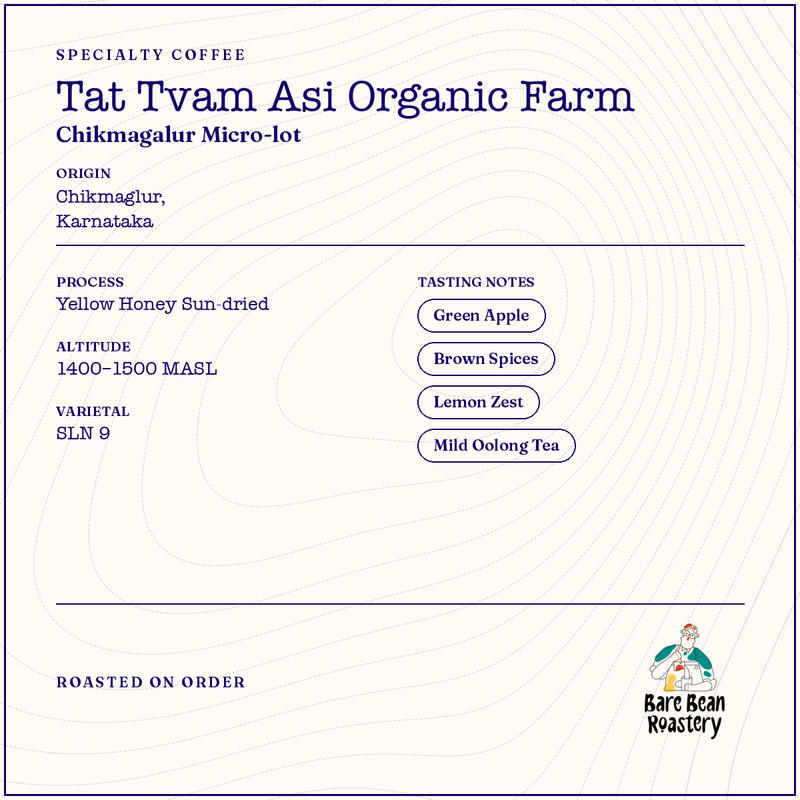
medium roast · processed using the Yellow Honey method · Bababudangiri
Flavour
Origin and production
As described by Bare Bean Roastery
Grown at 1,400 metres above sea level in the biodiverse forests of the Baba Budangiri range, this coffee comes from the renowned Tat Tvam Asi Organic Farm, where every crop is cultivated using certified organic and regenerative farming practices. Shade-grown beneath a canopy of native forest trees and processed using the Yellow Honey method, the coffee retains a portion of its fruit mucilage during drying, resulting in a cup that beautifully balances brightness and sweetness. Expect a vibrant, fruit-forward profile with bright acidity, rounded sweetness, and a clean, silky finish. The cup is expressive yet approachable, showcasing the clarity of high-altitude Indian Arabica while preserving the character of the farm’s unique ecosystem. A coffee that captures the harmony between nature, cultivation, and careful processing. Best suited for Aeropress, pour-over and French press.
Brewing
Suggested for Aeropress, French Press, Pour Over.
Full-bodied, clean, minimal sediment
Sweet, syrupy texture, complex acidity, citrus notes
Pack sizes and price
Ratings
What drinkers say
With milk?
More from Bare Bean Roastery
Read about this

Processing & Flavors
Honey Process Coffee in India: What the Colour Labels Actually Tell You
Honey process removes the cherry skin but leaves the sticky mucilage layer on the bean during drying. The colour label — yellow, red, black — indicates how much mucilage stayed on and how long it dried, which shapes sweetness, body, and fruit intensity. India's specialty estates have produced 81 honey-process coffees across 42 roasters, making it one of the more widely available processing categories in the Indian catalog.

Processing & Flavors
Washed vs Natural vs Honey: What Processing Means for Flavor
Coffee bags list 'washed' or 'natural' processing, but what do these terms actually mean for flavor? Processing method—how the fruit is removed from the seed—creates more flavor variation than origin alone. Here's what each method does, and what ICB's data shows about Indian coffees.

Processing & Flavors
How Processing Methods Affect Flavor in Indian Coffee
A field guide to how washed, natural, honey, anaerobic, and monsooned processing shape the flavor of Indian specialty coffee — with estate examples, tasting benchmarks, and buying guidance.
Questions about this coffee
Tat Tvam Asi Organic Farm – Yellow Honey Sun-Dried Arabica is a single-origin coffee, sourced from one origin rather than blended, so it reflects the character of that specific place.
Tat Tvam Asi Organic Farm – Yellow Honey Sun-Dried Arabica is suggested for Aeropress, French Press and Pour Over. As a rule of thumb: espresso needs a fine grind, pour-over and drip a medium grind, and French press or cold brew a coarse grind. Dial in from there to taste.