

Best Monsooned Malabar in India
Monsooning swells beans and mellows acidity, so profiles are earthy, smooth, and unlike anything else.
How this process works
From Cherry to Cup
- 01
Post-harvest exposure
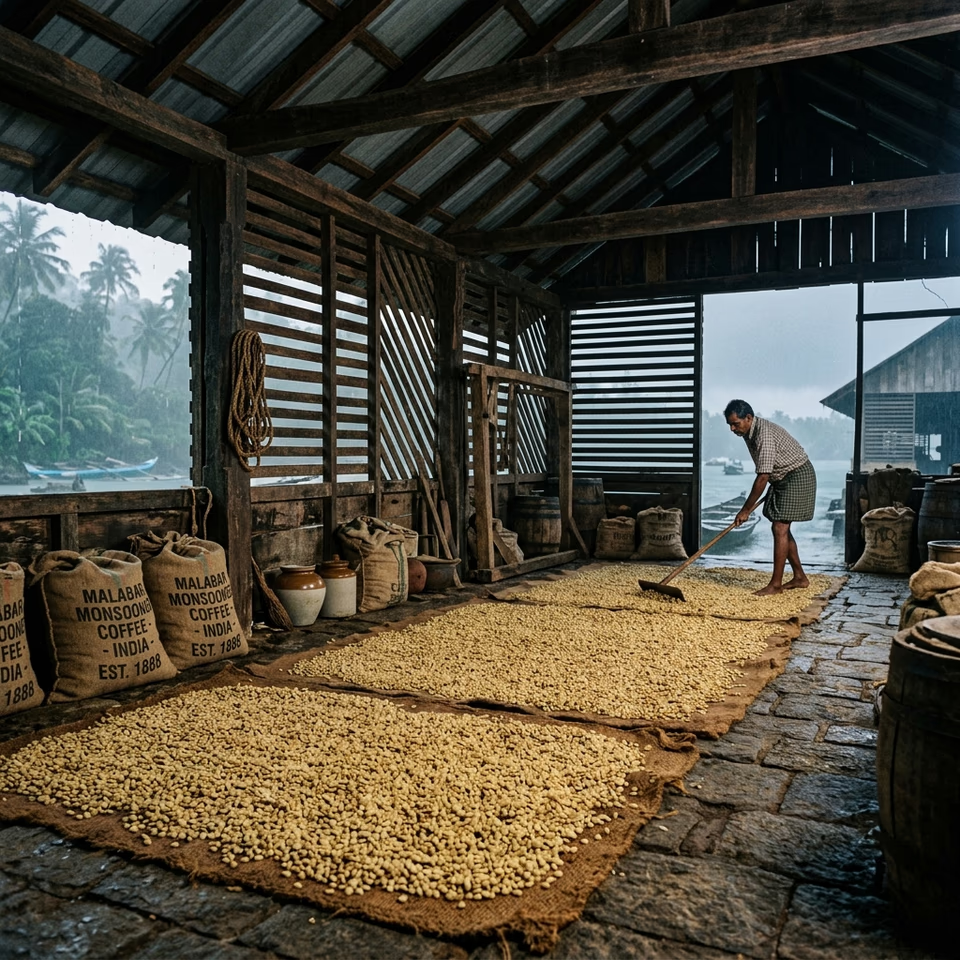
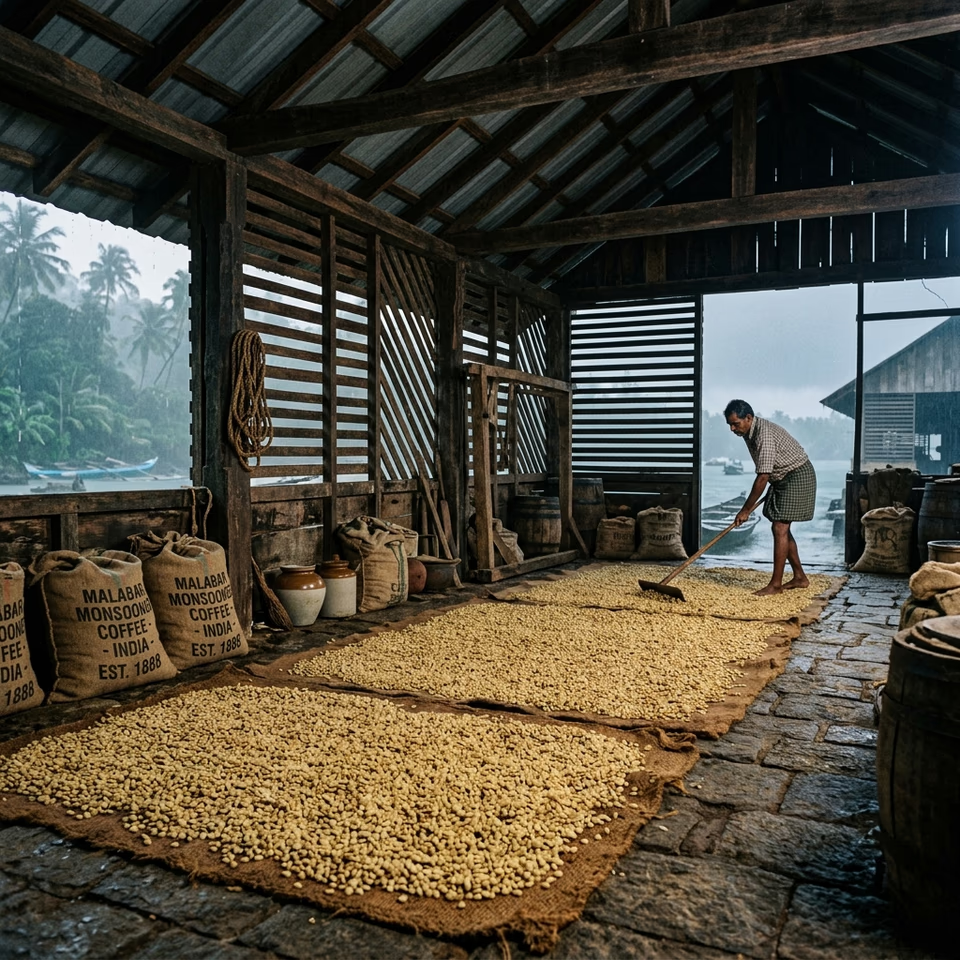
After initial processing (usually washed or natural), green beans are stored in open warehouses on the Malabar coast during the monsoon season, June to September. Warehouse walls have open slats to allow monsoon winds and humid air to circulate freely through the beans.
- 02
Monsoon absorption
Over 12–16 weeks, the beans absorb monsoon moisture and swell, sometimes doubling in volume. The high humidity and warm temperatures trigger a slow, controlled oxidation. Beans are turned and raked regularly to prevent clumping and ensure even exposure.
- 03
Dry and grade
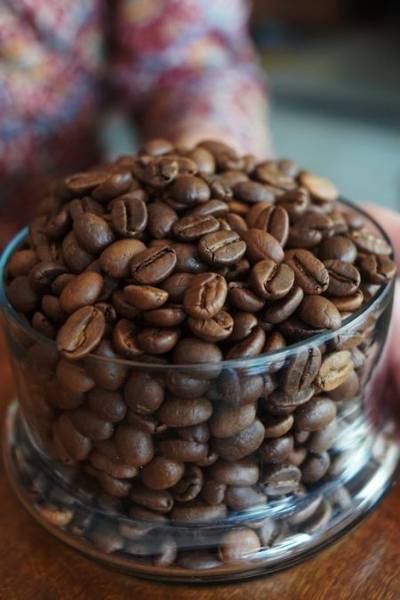
Beans are allowed to dry back to stable moisture levels, then graded and sorted. The swollen, pale-yellow beans are distinctly different from conventionally processed green coffee, and they look and behave differently in the roaster too.
In the cup
Flavour Profile
Typical notes
Monsooned Malabar is India's most unique contribution to global coffee, and there is nothing else like it. The profile is deliberately low-acid, heavy-bodied, and earthy, the opposite of what specialty coffee usually aims for. Yet it has a dedicated following: in South Indian filter coffee culture, Monsooned Malabar is often blended in for body and smoothness. In European markets, particularly Italy, it's used in espresso blends for the same reason. In specialty circles, it's interesting as a single origin curiosity, best appreciated by those who understand its context rather than judging it against a washed light roast.
Process comparison
Monsooned Malabar vs dark roast: similar low acidity and heavy body, but the earthiness comes from the processing rather than roasting, so it can be appreciated at medium roast without bitterness. Monsooned Malabar vs natural: both are unconventional, but monsooned is earthier and less fruit-forward.
Indian Specialty Context
Monsooning originated accidentally. During the colonial era, green coffee shipped from India to Europe in wooden sailing vessels absorbed sea moisture during the months-long voyage, arriving swollen and flavour-transformed. When steam ships made the journey faster, Indian exporters discovered their European customers preferred the old, weathered taste. The monsooning process was developed deliberately to replicate the effect on land. Today it's produced almost exclusively in Karnataka's Malabar coast warehouses and is one of India's most recognised coffee exports. Monsooned Malabar AA is the premium grade.
Brew Guidance
Monsooned Malabar suits immersion methods and milk-based preparations best, where the heavy body and low acidity work with French Press and South Indian filter coffee decoction. Espresso blending is traditional: 10–20% Monsooned Malabar in an espresso blend adds body and smoothness. Moka Pot delivers strong, low-acid cups at home without a machine, similar in spirit to espresso for this profile. As a single origin pour-over it's unusual, and the earthiness can feel muddy on V60. Use medium-dark to dark roast and embrace the profile for what it is rather than trying to brew it like a light roast. Lower water temperature (87–90°C) suits it well.
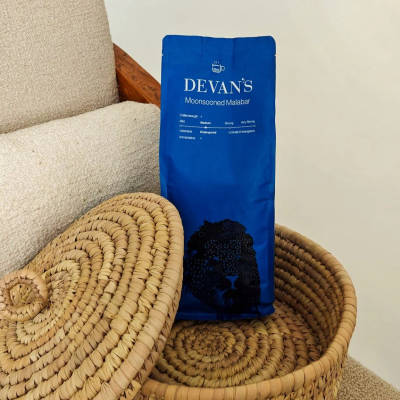
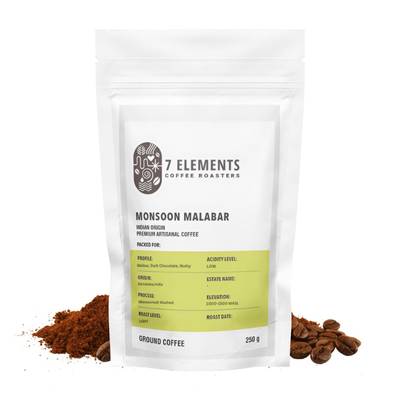
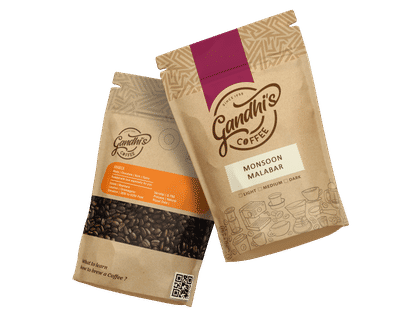
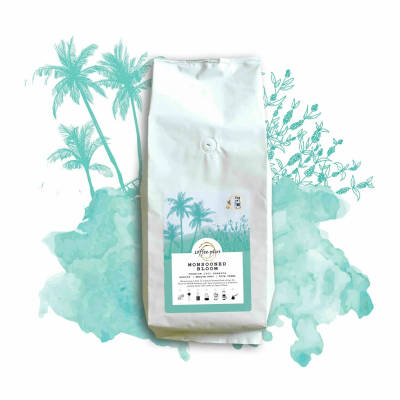
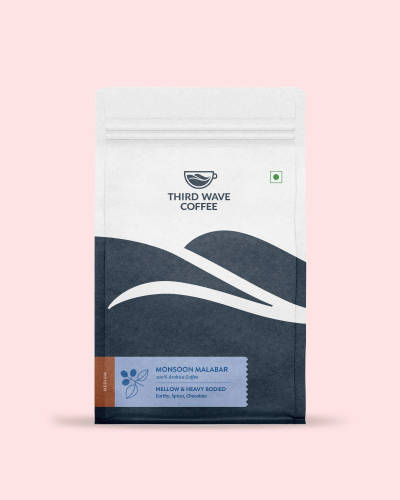
Monsooned Malabar picks
Works well in espresso blends or with milk, and French Press brings out the full body.



Catalogue last refreshed .
Learn about Indian coffee
Regions, processes, and brewing on our learn hub.
Read the Context.
The background behind what you are tasting, from our writing on Indian coffee.
About monsooned coffee
India's monsooning tradition in brief.
Explore More.
Discover other ways to find your perfect coffee.

Deep, dark, and *low-acid*
Low-acid, heavy-bodied cups, from specialty bittersweet to traditional South Indian boldness.
Full-bodied for the *French Press*
Heavy-bodied, oily, low-acid lots built for a long immersion.
Decoction-ready *filter* blends
Robusta-arabica blends and traditional dark roasts for a proper decoction.