


Sweet, syrupy texture, complex acidity, citrus notes
Flavour
Origin and production
As described by Fraction 9 Coffee
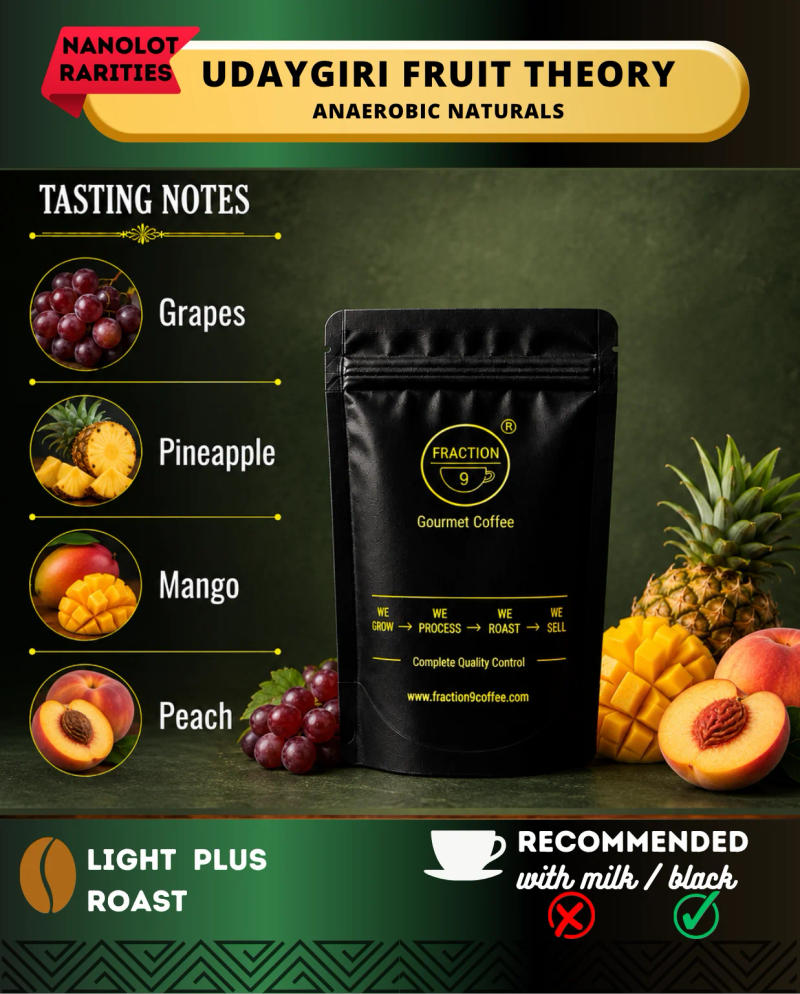
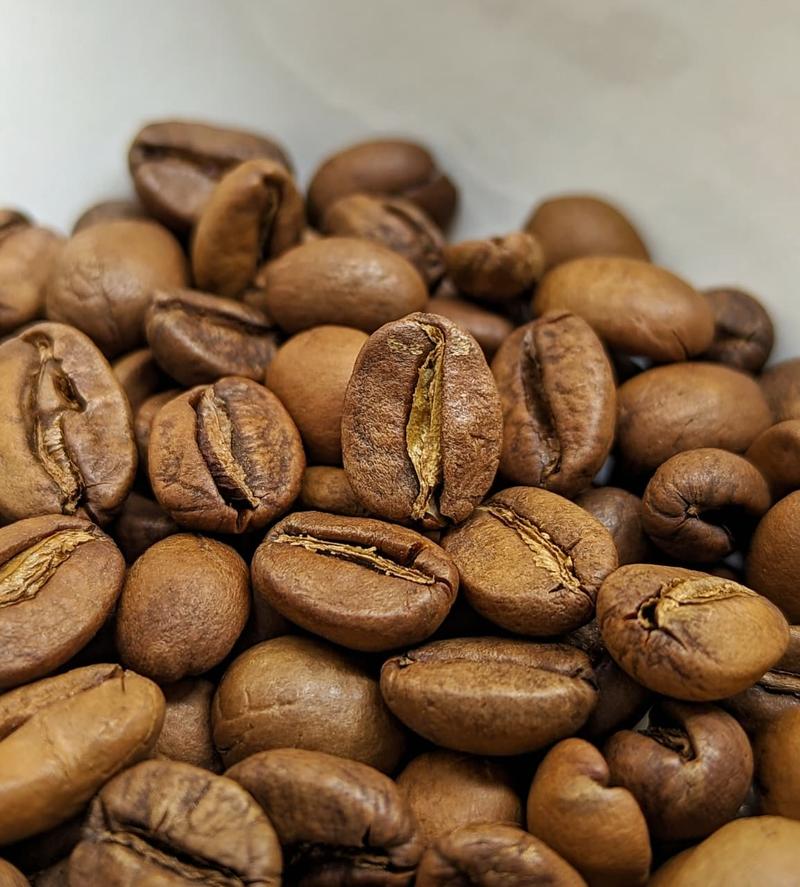
Udayagiri Fruit Theory Naturals comes from Udayagiri Estate in Hosapura Village, Chikmagalur, situated at around 4,100 feet in the Western Ghats. This lot is produced from Chandragiri and SLN 795 varieties and undergoes a controlled 120-hour anaerobic natural fermentation. The ripe coffee cherries are fermented in an oxygen-limited environment before being slowly dried, allowing the coffee to develop a pronounced fruit character while retaining sweetness and clarity.
Brewing
Suggested for Aeropress, French Press. Better black (ICB's reading).
Pleasant mouthfeel, highlighting sweetness and acidity
Clean, delicate, highlighting light roast complexity
Pack sizes and price
Ratings
What drinkers say
3.0
With milk?
- Rated 3 out of 5
“Initial brews were sour but after increasing steep time, managed to get decent extraction.”
More from Fraction 9 Coffee


Read about this

Processing & Flavors
Anaerobic and Experimental Processing in Indian Coffee
One in five coffees in ICB's catalog now carries an experimental process tag. This is a reference guide to the four categories (anaerobic, carbonic maceration, double fermented, and experimental), covering how each works at the fermentation level, which Indian estates and regions produce them, and what the catalog data says about their flavor patterns.

Processing & Flavors
Carbonic Maceration in Coffee, Explained
Carbonic maceration is the most widely misused term in Indian specialty coffee. It is a specific sub-type of anaerobic fermentation, not a synonym for it, and the distinction shows up in the cup. This field guide maps what CM is, where it happens in India, and what to expect from the 28 Indian coffees that carry the label.

Processing & Flavors
How Fermentation Shapes Coffee Flavour
Every coffee ferments — the variable is how. Understanding the microbial chemistry behind washed, natural, and anaerobic processing explains why the same estate can produce a clean chocolate cup and a grape-forward lot from the same harvest. This article maps the mechanism to the label, with data from ICB's catalog of 1,238 Indian coffees.
Questions about this coffee
Fraction 9 Coffee's tasting notes for Udayagiri Fruit Theory - Naturals lean toward Grapes, Mango, Peach and Pineapple. Flavor is subjective and shifts with roast freshness, grind size, and brew method, so your cup may vary.
Udayagiri Fruit Theory - Naturals is a single-origin coffee, sourced from one origin rather than blended, so it reflects the character of that specific place.
Udayagiri Fruit Theory - Naturals is suggested for Aeropress and French Press. As a rule of thumb: espresso needs a fine grind, pour-over and drip a medium grind, and French press or cold brew a coarse grind. Dial in from there to taste.