

Clean, balanced, highlighting origin characteristics
No longer listed by the roaster. You can still rate it if you have tried it.


medium roast · other · Meghalaya
Flavour
Origin and production
- Meghalaya
- other
As described by 7000Steps Coffee
100% Arabica beans from Meghalaya, medium roast with sweet lime and grapefruit notes, ground for pour-over brewing. Freshly roasted upon order from high-elevation farms at 1200m. Processed and roasted in Shillong, Meghalaya.
Brewing
Suggested for Pour Over. Works with milk (ICB's reading).
Ultra-clean, bright, tea-like clarity, no sediment
Balanced, bright, clear cup with smooth finish
Pack sizes and price
₹899
No longer listedRatings
What drinkers say
With milk?
More from 7000Steps Coffee

Assam Kd Microlot
Unrated

Assam Speciality Arabica Coffee
Unrated

Northeast Adventures
Unrated
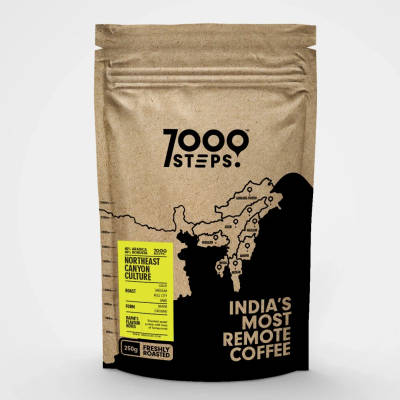
Northeast Canyon Culture
Unrated
Read about this

Brewing Behaviour
Pour Over Brewing Behaviour with Indian Light Roasts: A Field Guide
A field guide to pour-over brewing with Indian light roasts. Covers grind calibration, water temperature, pouring technique, and how origin and processing shape your cup.

Brewing Behaviour
Pour Over for Indian Naturals: Parameters, Drippers, and Regional Differences
Natural-process coffees extract faster and carry more residual CO₂ than washed beans — but most pour over guides are written for washed. This guide covers the four parameter adjustments that correct for natural-process behavior, how to choose between a V60 and Kalita Wave, and how Chikmagalur, Araku, and Coorg naturals differ on the same recipe.

Brewing Behaviour
Grind Size for Indian Coffee: How to Calibrate by Method and Roast
Grind size determines how fast water extracts from coffee — and for Indian specialty buyers, the standard per-method chart is a starting point, not a fixed answer. Thirty percent of ICB's catalog is light or light-medium roast, coffees that are denser and systematically underextract at standard chart settings. This reference covers the per-method calibration table, the Indian density adjustment, and how to read extraction feedback from the cup.
Questions about this coffee
7000Steps Coffee's tasting notes for Meghalaya Speciality Arabica Coffee lean toward Grapefruit and Sweet Lime. Flavor is subjective and shifts with roast freshness, grind size, and brew method, so your cup may vary.
Meghalaya Speciality Arabica Coffee is a single-origin coffee, sourced from one origin rather than blended, so it reflects the character of that specific place.
Meghalaya Speciality Arabica Coffee is suggested for Pour Over. As a rule of thumb: espresso needs a fine grind, pour-over and drip a medium grind, and French press or cold brew a coarse grind. Dial in from there to taste.