


How to Choose Specialty Coffee in India: A Beginner's Framework
Most guides answer this question with a list of roasters. This one works backward — starting from the brewer you already own, the flavors you tend to enjoy, and the budget you are comfortable with. No brand names. Just the traits worth looking for.

Most beginner guides to specialty coffee in India lead with a list of roaster names. The problem: it is like recommending a restaurant without asking what food you like.
A more useful starting point is you — what you brew with, what flavors feel familiar, and what you are willing to spend. Specialty coffee is not a single thing. It is a range of coffees with different roast levels, processing methods, origins, and flavor profiles. The goal is to find the part of that range that fits your preferences.
This guide walks through that process. No brand recommendations. Just the characteristics that matter when choosing a bag.
Start with what you brew with
Your brewer shapes which coffees work well for you. Different brew methods extract coffee differently — they favor certain roast levels and processing styles over others. Starting here narrows your options immediately.
South Indian filter — The concentrated decoction and long contact time suit medium to medium-dark roasts. Coffees suited for South Indian filter with chocolatey, full-bodied profiles perform well here.
French press — Full immersion, forgiving technique. Medium roasts and natural-process coffees do well — the method brings out body and sweetness more than acidity.
Aeropress — Versatile and quick, and the most forgiving of the lot. Handles light to medium roasts well. It adapts easily to different grind sizes and brew times, which makes it useful for trying unfamiliar coffees.
Moka pot — Pressure-based, produces a concentrated, espresso-like cup. Medium to medium-dark roasts hold up best. Works well with milk.
Pour-over — Highlights clean, bright flavors. Best with light to light-medium roasts; heavier profiles can read flat or muddy through this method.
If starting without equipment, most brew methods (French press, Aeropress, Moka pot) work well across a range of coffees.
Fresh grinding makes a noticeable difference in flavor. Entry-level hand grinders are sufficient for most methods. If a grinder is not an option right away, order pre-ground from roasters who grind to order, and brew within a day or two of receiving.
As a quick reference, these are the roast levels each common method tends to favor:
| Brew method | Best roast match |
|---|---|
| South Indian filter | Medium-dark to dark |
| Moka pot | Medium to medium-dark |
| French press | Medium |
| Pour-over / V60 / Chemex | Light to medium |
| AeroPress | Light to medium |
| Espresso | Medium to dark |
Choose a roast level that fits your taste
Roast level determines the balance between the bean's natural character and the flavors created by roasting. It is the single most visible label on any coffee bag, and the most reliable predictor of how a coffee will taste.
Lighter roasts let origin flavors through — more acidity, more complexity, but less of the familiar bitterness and body. Darker roasts emphasize roast-driven flavors — chocolate, caramel, smokiness, and heavier body.
For people coming from instant or traditional filter coffee, medium to medium-dark roasts tend to be the most natural starting point. They retain some origin character while keeping the body and warmth that feels familiar. That is not a coincidence. Most Indian specialty roasters have historically skewed toward medium and medium-dark — not because lighter roasts are rare here, but because most buyers are coming from filter coffee and instant, not from the lighter-roast cafe culture more common in other markets.
In rough terms:
- Light — Bright, acidic, fruit-forward, tea-like body. Often paired with pour-over or Aeropress.
- Light-medium — Balanced acidity with some sweetness and moderate body. Versatile across methods.
- Medium — Balanced, chocolatey, nutty. Works across most brew methods. This is where many medium roast coffees in the Indian specialty catalog sit.
- Medium-dark — Rich, low acidity, full body, caramel and chocolate notes. Familiar territory for filter coffee drinkers. Works well with milk.
- Dark — Bold, smoky, bitter, heavy body. Closest to traditional commercial coffee profiles.
For many first-time buyers, medium roast tends to feel most familiar. It offers enough complexity to taste the difference from commercial coffee, without the acidity that can catch newcomers off guard.
For a deeper look at how Indian roasters approach roast levels, see Understanding Roast Levels in the Indian Context.
Explore by origin and processing
Two more labels on the bag that shape what ends up in your cup: where the coffee was grown and how the cherry was processed after picking.
Origin gives you a rough flavor neighborhood. Processing fine-tunes it.
Indian coffee regions and their typical flavor tendencies:
- Chikmagalur — Balanced, with stone fruit and chocolate notes. India's largest specialty coffee region and a reliable starting point. Coffees from Chikmagalur are widely available across roasters. That availability matters practically — Chikmagalur's share of the Indian specialty catalog means buyers encounter a wider range of roasters, price points, and processing styles here than anywhere else, which makes it easier to learn what you like and don't.
- Coorg (Kodagu) — Fuller-bodied, with spice and earth notes. Naturals from Coorg tend to be particularly distinctive.
- Araku Valley — Smooth, mild acidity, floral-chocolate tones. Known for organic and tribal cooperative farming.
- Wayanad — Peppery, bold, often with robusta influence. Familiar territory for those who prefer strong, heavy cups.
- Nilgiris — Brighter, tea-like, clean. Higher altitude gives it a lighter, more delicate profile.
For detailed profiles of each growing area, see Coffee Regions of India: A Complete Guide.
Processing methods, briefly:
- Washed — Fruit removed before drying. Produces cleaner, brighter flavors. Generally the most approachable for beginners.
- Natural — Dried with fruit intact. Produces fruitier, heavier-bodied cups. More adventurous.
- Honey — Partial fruit left during drying. Sits between washed and natural — some sweetness, moderate body.
A fuller breakdown is covered in Washed vs Natural vs Honey: What Processing Means for Flavor.
A practical starting combination: medium roast, washed process, Chikmagalur origin. This tends to produce a balanced, approachable cup across most brew methods. From there, explore in any direction — try a natural for more fruit, shift to Coorg for more body, or go lighter on the roast for more brightness. Browse washed medium roast coffees to see what is available.
Follow the flavor, not the brand
At this point, a profile is forming: a brew method, a roast range, maybe a region or process preference. The next step is finding coffees that match those traits.
This is where most guides hand you a list of roaster names. The limitation: two roasters can source from the same estate, the same harvest, and produce noticeably different cups depending on how they roast. Searching by flavor characteristics is more reliable than searching by brand — the bag describes the coffee, not who roasted it.
Every specialty coffee bag lists tasting notes — descriptions like "chocolate, stone fruit, caramel" or "berry, wine, dark chocolate." These are not ingredients. They are reference points for the dominant characteristics you might notice in the cup — the closest thing to a flavor preview before buying.
Search by the characteristics you have identified. If you gravitate toward chocolate and nut flavors, look for coffees with chocolatey and caramel notes in a medium roast. If you want to try something fruitier, look for natural-processed coffees with berry or citrus notes.
This approach works across any roaster. It also means your second bag can build on what you learned from the first — same flavor family but a different region, or same region but a different process.
The same logic applies to scores and awards. SCA cupping scores, competition wins, and "limited edition" labels are meaningful signals within the specialty world, but they are poor guides for a first bag — a 78-point coffee that matches your taste will satisfy more than an 86-point coffee that does not. Let scores become useful later, once your own reference points are established.
If flavor notes still feel confusing, see How to Read Coffee Flavor Notes (Without Overthinking).
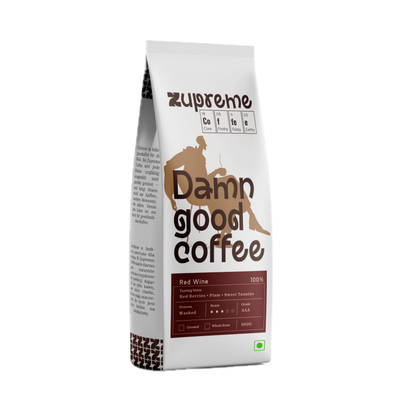
Single-Origin Coffees to Start With

What to expect at different price points
Specialty coffee in India typically ranges from around Rs 550 to Rs 1,300+ per 250g. What changes across that range is not always quality — it is often specificity.
Entry-level specialty typically begins around Rs 550–700 per 250g, depending on roaster and availability. Blends and estate coffees from larger roasters. Predominantly medium to medium-dark roasts. Coffees under Rs 700 in this range offer clear character without a steep commitment.
Rs 650–900 per 250g — Single-origin coffees with more variety in roast level and processing method. This is where most of the Indian specialty catalog sits.
Rs 900–1,300 per 250g — Micro-lots, small-batch roasters, and less common processing methods like honey or anaerobic. More distinctive flavor profiles. This is also where most processing experimentation in Indian specialty shows up — honey, anaerobic, and carbonic maceration lots cluster here because of higher sourcing and production costs, not as a premium for novelty.
Rs 1,300+ per 250g — Competition lots, rare varietals, experimental processing. Suited for those who know what they are looking for.
A reasonable first purchase tends to sit in the Rs 600–750 range. That is typically enough to get a well-roasted single-origin that shows clear character without requiring advanced palate or equipment.
For a deeper look at what drives pricing differences, see Why Specialty Coffee Costs More in India.
What to look for on the bag
Six things worth checking on any specialty coffee bag or product page:
Roast date
Look for a specific date, not just "best before." Most coffees benefit from a 5–10 day resting period after roasting before peak flavor develops. Coffee is typically at its best 7–30 days post-roast. No roast date is itself a signal. Across the Indian specialty market, roast date transparency varies — some roasters print it prominently, others omit it entirely. A missing date usually means older stock or a roaster who does not track it closely.
Roast level
Light, medium, or dark. The single biggest predictor of how the coffee will taste in your cup.
Origin
Country and region at minimum. An estate name is even more useful — it means the coffee is traceable to a specific farm.
Processing method
Washed, natural, or honey. This tells you more about expected flavor than most other details on the bag.
Flavor notes
Use them as a rough guide, not a guarantee. "Chocolate and caramel" signals a different cup than "berry and citrus."
Brew method suggestions
Some roasters list recommended methods. Useful as a starting reference, though not a strict rule.
Water quality matters in India. Hard water (common in Delhi, Bangalore, Chennai) can flatten acidity and sweetness. RO-only water is too pure and strips minerals needed for extraction. Filtered water with some mineral content, or RO water with mineral drops, tends to produce better results.
A practical starting strategy
Three bags is enough to start seeing patterns in what you enjoy.
First bag: A medium roast, washed process, from a region that interests you. This gives you a baseline — something balanced and approachable.
Second bag: Change one variable. A different region, or a different process (try a natural), or a slightly different roast level. Keep the same brew method so the comparison is cleaner.
Third bag: Change another variable. By the third bag, you will notice what you are drawn to — whether that is a particular roast range, a processing style, or a regional flavor tendency.
After each bag, note three things: Did you enjoy it? Was it too sour, too bitter, or too flat? What flavor came through most? Even rough notes help you search more precisely next time.
Many roasters offer sampler packs — three or four coffees in 50–100g portions. These are a low-commitment way to explore before committing to a full bag.
Track what you try
After a few coffees, your preferences become clearer. Rating what you try helps you track patterns — which regions you gravitate toward, which roast levels feel right, which flavor families you enjoy. Over time, this builds a personal taste map that makes choosing your next bag easier.
Explore further
- Medium roast coffees — A good starting filter for approachable options
- Coffees suited for South Indian filter — Filtered for compatibility with traditional brewing
- Coffees suited for Aeropress — Options that work well with this versatile brewer
- Coffees from Chikmagalur — India's most widely available specialty coffee region
- Coffees under Rs 700 — Entry-level specialty without steep commitment