

Clean, balanced, highlighting origin characteristics
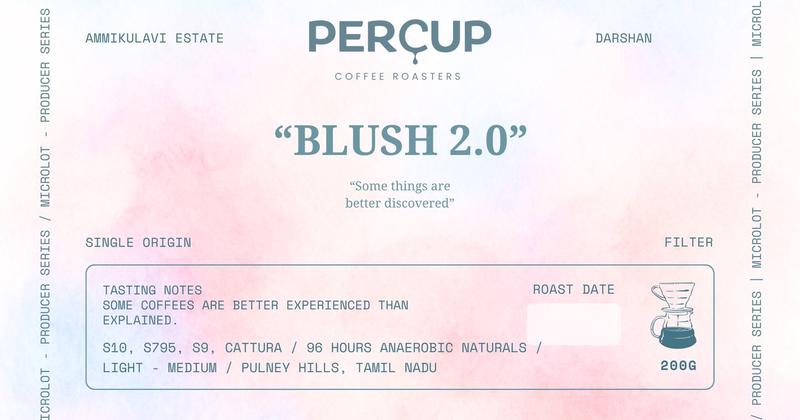
Medium-Light roast · 96 Hours Anaerobic Natural · PULNEY HILLS, TAMIL NADU
Flavour
Origin and production
- PULNEY HILLS, TAMIL NADU
- Limited release
As described by Percup Coffee Roasters
Nestled in the Palani Hills of Tamil Nadu, at elevations of approximately 1,200–1,400 metres above sea level, Ammikulavi Estate is a 40-acre coffee-growing landscape shaped by generations of cultivation and a passion for specialty coffee. Located around Periyur, the estate is led by Darshan, a sixth-generation grower and specialty coffee processor who continues to explore the possibilities of Indian coffee through innovative cultivation and experimental processing. Ammikulavi is particularly known for its experimental approach to post-harvest processing. From honey and washed coffees to Pichia yeast fermentations, flash-frozen cherries, and slow shade-drying on raised beds, each method offers a different way to explore the character of the coffee. This extended fermentation encourages the development of complex aromatic compounds while allowing the coffee to retain the expressive fruit character associated with the natural process. This gradual process helps preserve the qualities developed during fermentation while supporting a more balanced and consistent cup. Rather than treating fermentation as an end in itself, the focus is on creating a coffee in which processing enhances the character of the beans without overwhelming their identity. Ammikulavi Estate represents a new chapter in Indian specialty coffee, where generations of growing experience meet curiosity, experimentation, and a willingness to push boundaries. Through Darshan's work, each micro-lot becomes an opportunity to explore the relationship between variety, fermentation, and terroir.
Brewing
Pack sizes and price
Ratings
What drinkers say
With milk?
More from Percup Coffee Roasters

Read about this

Processing & Flavors
Anaerobic and Experimental Processing in Indian Coffee
One in five coffees in ICB's catalog now carries an experimental process tag. This is a reference guide to the four categories (anaerobic, carbonic maceration, double fermented, and experimental), covering how each works at the fermentation level, which Indian estates and regions produce them, and what the catalog data says about their flavor patterns.

Processing & Flavors
Carbonic Maceration in Coffee, Explained
Carbonic maceration is the most widely misused term in Indian specialty coffee. It is a specific sub-type of anaerobic fermentation, not a synonym for it, and the distinction shows up in the cup. This field guide maps what CM is, where it happens in India, and what to expect from the 28 Indian coffees that carry the label.

Processing & Flavors
How Fermentation Shapes Coffee Flavour
Every coffee ferments — the variable is how. Understanding the microbial chemistry behind washed, natural, and anaerobic processing explains why the same estate can produce a clean chocolate cup and a grape-forward lot from the same harvest. This article maps the mechanism to the label, with data from ICB's catalog of 1,238 Indian coffees.
Questions about this coffee
Blush 2.0 is a single-origin coffee, sourced from one origin rather than blended, so it reflects the character of that specific place.
Blush 2.0 is suggested for Aeropress, Espresso and Pour Over. As a rule of thumb: espresso needs a fine grind, pour-over and drip a medium grind, and French press or cold brew a coarse grind. Dial in from there to taste.