

Sweet, syrupy texture, complex acidity, citrus notes
Ultra Light Roast · 100% Anaerobic Naturals · Karnataka
Flavour
Origin and production
As described by Fraction 9 Coffee
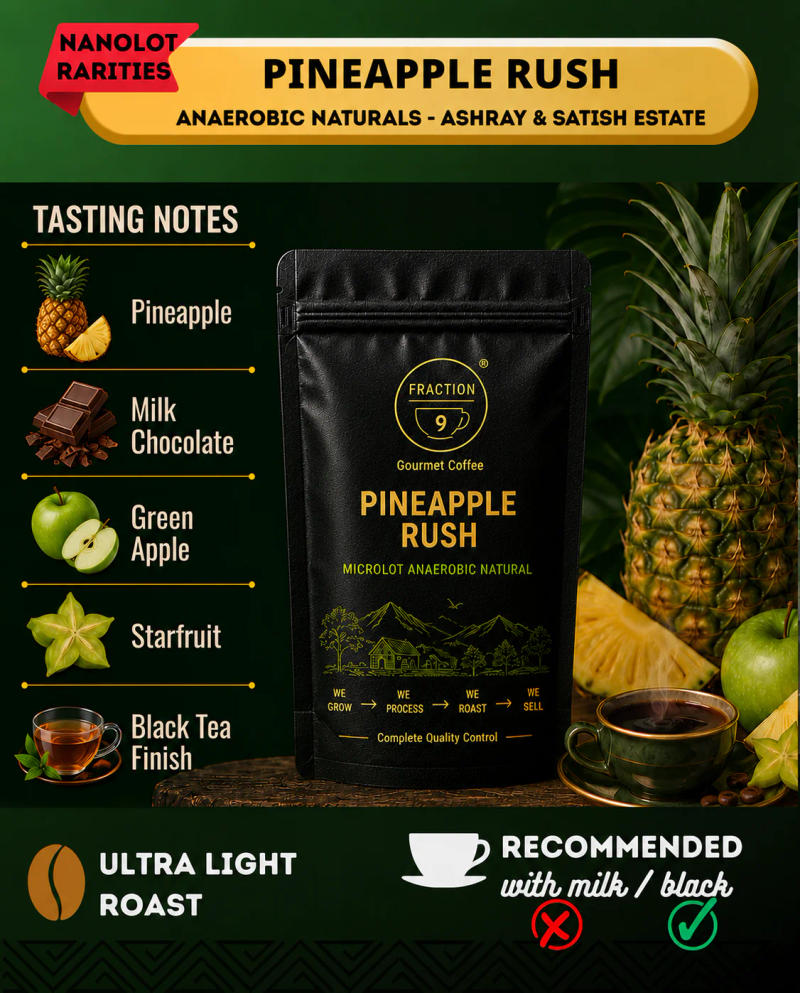
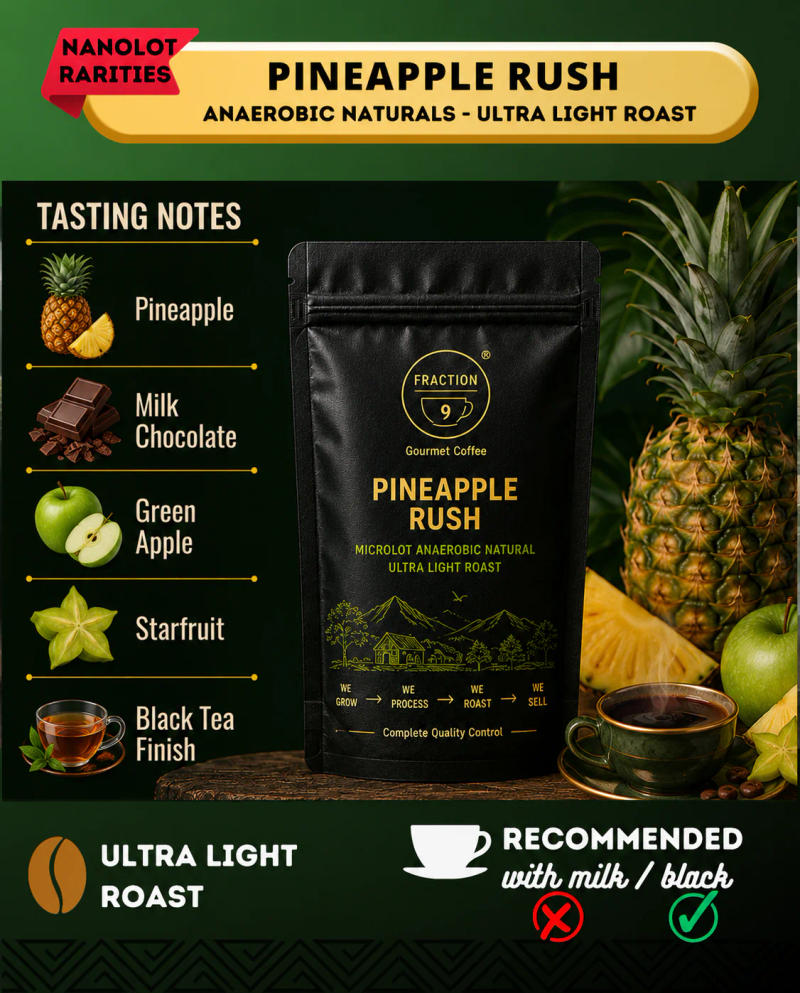
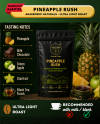
Pineapple Rush is an ultra-light roasted anaerobic natural microlot created to showcase vibrant tropical fruit, exceptional clarity, and remarkable sweetness. Crafted from a carefully selected blend of 80% Ashray Estate (Cheyyandane) and 20% Satish Estate (Hoskeri), both estates contribute carefully selected Chandragiri varietal Arabica, each processed as an anaerobic natural. The result is an expressive and juicy cup that opens with vibrant tropical fruit, develops into creamy chocolate sweetness, and finishes with elegant tea-like refinement.
Brewing
Suggested for Aeropress, French Press, South Indian Filter. Better black (ICB's reading).
Pleasant mouthfeel, highlighting sweetness and acidity
Clean, delicate, highlighting light roast complexity
Pack sizes and price
Ratings
What drinkers say
With milk?
More from Fraction 9 Coffee


Read about this

Processing & Flavors
Anaerobic and Experimental Processing in Indian Coffee
One in five coffees in ICB's catalog now carries an experimental process tag. This is a reference guide to the four categories (anaerobic, carbonic maceration, double fermented, and experimental), covering how each works at the fermentation level, which Indian estates and regions produce them, and what the catalog data says about their flavor patterns.

Processing & Flavors
Carbonic Maceration in Coffee, Explained
Carbonic maceration is the most widely misused term in Indian specialty coffee. It is a specific sub-type of anaerobic fermentation, not a synonym for it, and the distinction shows up in the cup. This field guide maps what CM is, where it happens in India, and what to expect from the 28 Indian coffees that carry the label.

Processing & Flavors
How Fermentation Shapes Coffee Flavour
Every coffee ferments — the variable is how. Understanding the microbial chemistry behind washed, natural, and anaerobic processing explains why the same estate can produce a clean chocolate cup and a grape-forward lot from the same harvest. This article maps the mechanism to the label, with data from ICB's catalog of 1,238 Indian coffees.
Questions about this coffee
Fraction 9 Coffee's tasting notes for Pineapple Rush - Anaerobic Naturals lean toward Black Tea Finish, Green Apple, Milk Chocolate and Pineapple. Flavor is subjective and shifts with roast freshness, grind size, and brew method, so your cup may vary.
Pineapple Rush - Anaerobic Naturals is a blend, combining beans from more than one origin. Blends are built for a consistent, balanced cup across seasons.
Pineapple Rush - Anaerobic Naturals is suggested for Aeropress, French Press and South Indian Filter. As a rule of thumb: espresso needs a fine grind, pour-over and drip a medium grind, and French press or cold brew a coarse grind. Dial in from there to taste.