

Clean, balanced, highlighting origin characteristics
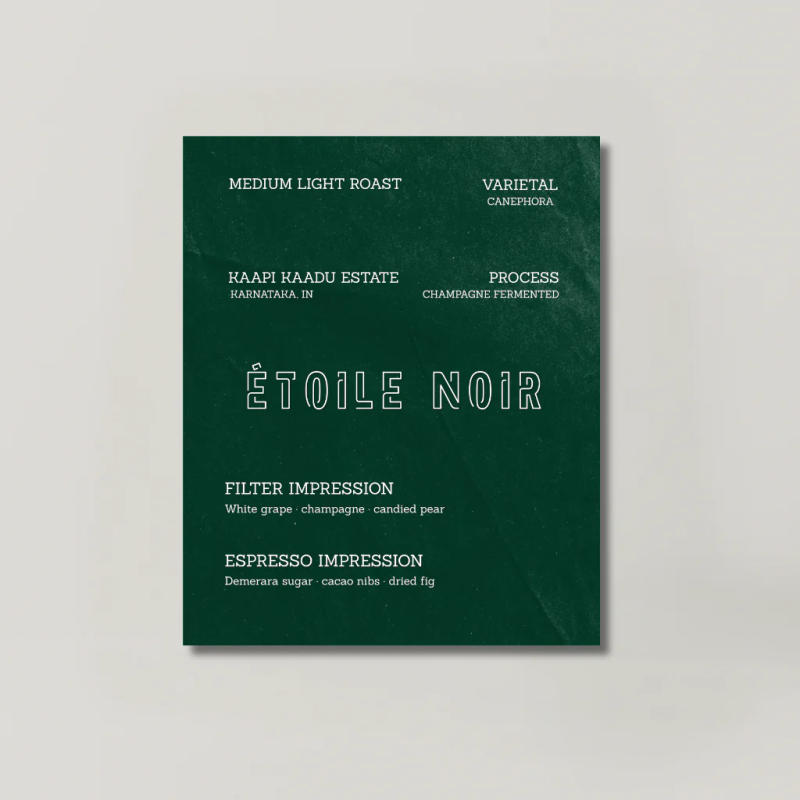


Medium Light roast · Champagne Fermented · Karnataka
Flavour
Origin and production
- Karnataka
- Champagne Fermented
- Limited release
As described by Broot Coffee
ÉTOILE NOIR Champagne Fermented Canephora • Kaapikaadu Estate, Karnataka Not every coffee is meant to be familiar. Étoile Noir is the second release in our experimental robusta series, produced at Kaapi Kaadu Estate and processed using a champagne fermentation protocol that transforms canephora into something unexpectedly refined. The result is a cup that carries the elegance of sparkling fruit, layered sweetness, and a structure rarely associated with robusta. In the filter, it opens with bright notes of white grape, champagne, and candied pear. As the cup cools, the sweetness deepens and becomes increasingly expressive. Pulled as espresso, it shifts into richer territory with notes of demerara sugar, cacao nibs, and dried fig, supported by a dense, syrupy body. This is not a coffee trying to imitate arabica. It is a celebration of what exceptional robusta can become when grown with intent and processed without compromise. Filter Impression White Grape • Champagne • Candied Pear Espresso Impression Demerara Sugar • Cacao Nibs • Dried Fig Roast Profile Medium Light Origin Kaapi Kaadu Estate, Karnataka, India Process Champagne Fermented Varietal Canephora (Robusta) Brewing Recommendations Pour Over Coffee: 15g Water: 250g Temperature: 93°C Brew Time: 2:45–3:15 Espresso Dose: 18g Yield: 36–40g Time: 28–32 seconds Roaster’s Note The idea behind the robusta series has never been to prove a point. It has been to explore possibilities. Étoile Noir is one of the most expressive coffees we’ve tasted from this project, combining the sparkling character of its fermentation with the weight and sweetness that great canephora naturally possesses. Limited release. Roasted to order. Only while stocks last. ✨
Brewing
Pack sizes and price
Ratings
What drinkers say
With milk?
More from Broot Coffee



Read about this

Brewing Behaviour
Espresso at Home with Indian Coffees: Washed, Natural, and Blend Behaviour
Indian coffee has a reputation for espresso reliability — dense beans, low acidity, chocolate-forward profiles that extract cleanly under pressure. That reputation holds, but only for one part of the catalogue. Washed, natural, and blend coffees behave differently enough under 9 bar that a single dial-in recipe will work for some and fail for others in ways that are predictable, once the pattern is clear.

Brewing Behaviour
Grind Size for Indian Coffee: How to Calibrate by Method and Roast
Grind size determines how fast water extracts from coffee — and for Indian specialty buyers, the standard per-method chart is a starting point, not a fixed answer. Thirty percent of ICB's catalog is light or light-medium roast, coffees that are denser and systematically underextract at standard chart settings. This reference covers the per-method calibration table, the Indian density adjustment, and how to read extraction feedback from the cup.

Brewing Behaviour
Why Your Specialty Coffee Tastes Flat (Common Extraction Issues)
Specialty coffee that tastes flat, weak, or sourly thin is almost always an extraction problem — not a coffee quality problem. This guide covers the six most common causes, with particular attention to Indian variables: hard tap water, RO-stripped water, mixer-grinder use, and tropical storage conditions.
Questions about this coffee
Broot Coffee's tasting notes for Étoile Noir lean toward Cacao Nibs, Candied Pear, Champagne and Demerara Sugar. Flavor is subjective and shifts with roast freshness, grind size, and brew method, so your cup may vary.
Étoile Noir is a single-origin coffee, sourced from one origin rather than blended, so it reflects the character of that specific place.
Étoile Noir is suggested for Espresso and Pour Over. As a rule of thumb: espresso needs a fine grind, pour-over and drip a medium grind, and French press or cold brew a coarse grind. Dial in from there to taste.