

Clean, balanced, highlighting origin characteristics


Flavour
Origin and production
As described by BrewClan Coffee Roasters
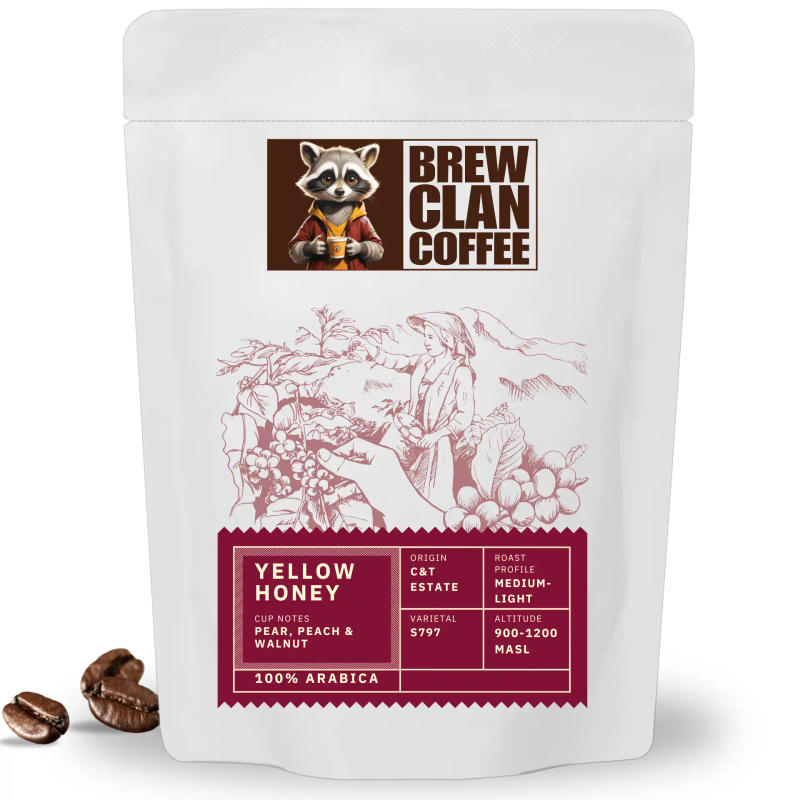
Savor the fruity elegance of Yellow Honey from the C&T Estate, where highland coffee meets honey processing. The beans, grown at 900-1200 MASL, undergo a honey process that enhances their natural sweetness. With notes of pear and peach, balanced by the earthy warmth of walnut, this medium-light roast showcases a delicate, refreshing cup. Perfect for those who enjoy a nuanced, sweet coffee with a smooth body, Yellow Honey is ideal for a relaxing morning brew or an afternoon treat.
Brewing
Pack sizes and price
Ratings
What drinkers say
With milk?
More from BrewClan Coffee Roasters

Read about this

Processing & Flavors
Honey Process Coffee in India: What the Colour Labels Actually Tell You
Honey process removes the cherry skin but leaves the sticky mucilage layer on the bean during drying. The colour label — yellow, red, black — indicates how much mucilage stayed on and how long it dried, which shapes sweetness, body, and fruit intensity. India's specialty estates have produced 81 honey-process coffees across 42 roasters, making it one of the more widely available processing categories in the Indian catalog.

Processing & Flavors
Washed vs Natural vs Honey: What Processing Means for Flavor
Coffee bags list 'washed' or 'natural' processing, but what do these terms actually mean for flavor? Processing method—how the fruit is removed from the seed—creates more flavor variation than origin alone. Here's what each method does, and what ICB's data shows about Indian coffees.

Processing & Flavors
How Processing Methods Affect Flavor in Indian Coffee
A field guide to how washed, natural, honey, anaerobic, and monsooned processing shape the flavor of Indian specialty coffee — with estate examples, tasting benchmarks, and buying guidance.
Questions about this coffee
BrewClan Coffee Roasters's tasting notes for C&T Estate Yellow Honey - 100% Arabica Specialty Coffee lean toward Peach, Sweet Pear and Walnut. Flavor is subjective and shifts with roast freshness, grind size, and brew method, so your cup may vary.
C&T Estate Yellow Honey - 100% Arabica Specialty Coffee is a single-origin coffee, sourced from one origin rather than blended, so it reflects the character of that specific place.
C&T Estate Yellow Honey - 100% Arabica Specialty Coffee is suggested for Cold Brew and Pour Over. As a rule of thumb: espresso needs a fine grind, pour-over and drip a medium grind, and French press or cold brew a coarse grind. Dial in from there to taste.