

Full-bodied, clean, minimal sediment


medium roast · natural and washed · Chikmagalur
Flavour
Origin and production
- natural and washed
As described by Blue Tokai Coffee
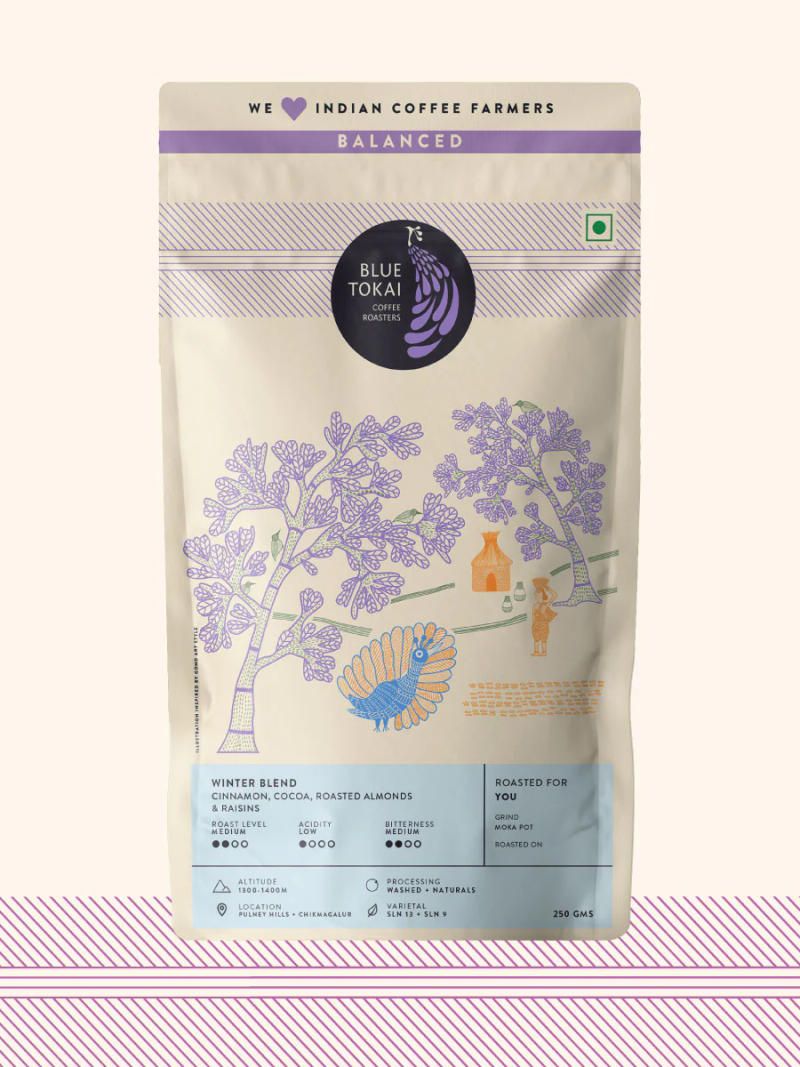
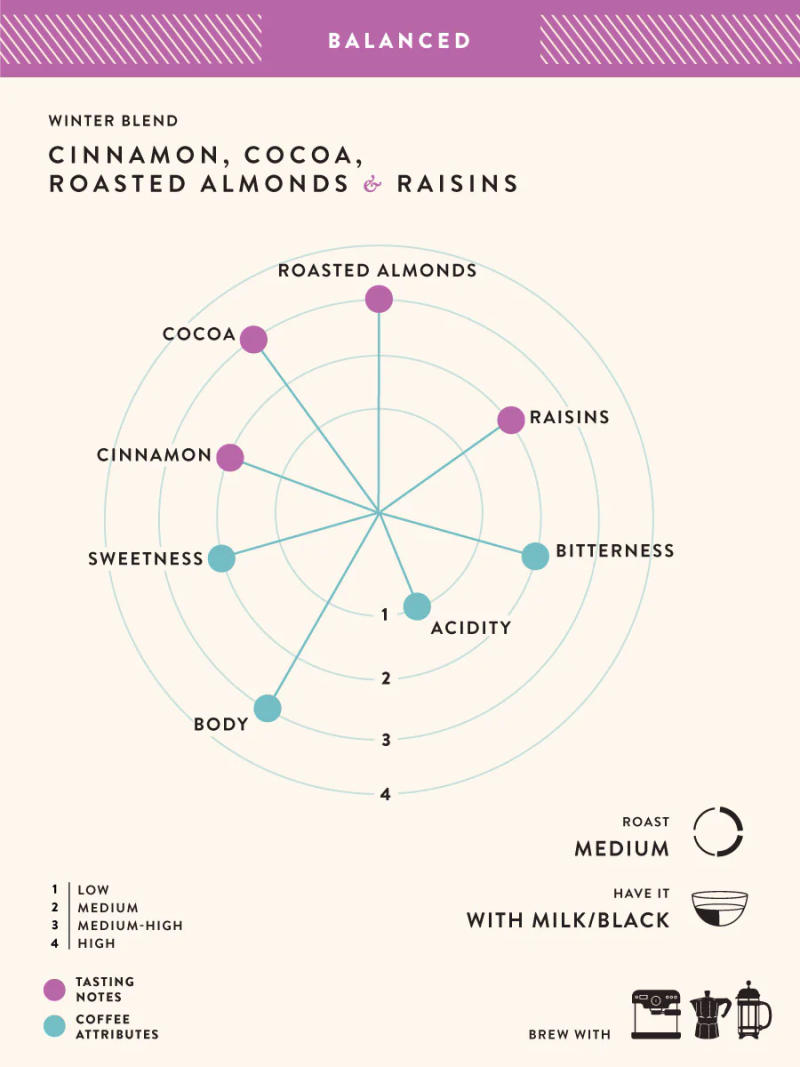
Meet the blend our roasters look forward to crafting each winter. Pairing well with milk, it is also a solid base for all those winter recipes you've been saving. We've created it using a careful mix of natural and washed lots from St. Joseph Estate and Attikan Estate. Opening with the aroma of brown spices, this coffee has a medium body and a syrupy, round mouthfeel. You’ll be able to taste cinnamon, cacao, roasted almonds, and raisins, and tying everything together nicely is a chocolatey aftertaste. We recommend brewing it as an espresso, or with a Moka Pot or French Press.
Brewing
Suggested for Espresso, French Press, Moka Pot. Works with milk (ICB's reading).
Intense, rich, syrupy, pseudo-espresso
Balanced, sweet, syrupy body with clear acidity
Pack sizes and price
Ratings
What drinkers say
With milk?
More from Blue Tokai Coffee


Read about this

Origins & Estates
Understanding Chikmagalur Coffee: Regional Characteristics and Flavor Patterns
Chikmagalur is India's most-searched coffee origin and the deepest in the catalogue. Its chocolate reputation is real but roast-dependent: dark roasts taste of cocoa and nut, light roasts of fruit and florals. This is the flavour-pattern reference, drawn from 390 catalogued coffees across 50 roasters.

Origins & Estates
Coorg vs Chikmagalur vs Araku: Flavor Differences Explained
Chikmagalur, Coorg, and Araku are the three names Indian specialty buyers encounter most on coffee bags. This comparison maps the actual flavor patterns across all three regions using ICB catalog data — 219 Chikmagalur coffees, 36 from Coorg, and 9 from Araku — to show how they differ and why.

Origins & Estates
Where Is Coffee Grown in India: 13 Regions, Flavors & Altitude Data
Coffee is grown in India across three distinct geographic zones — the Western Ghats, the Eastern Ghats, and the northeastern hills. Each zone, and each region within it, has a measurably different altitude, soil, harvest window, and flavor signature. This guide maps all of them using ICB's catalog and the Coffee Board's own regional specs as the data layer.
Questions about this coffee
Blue Tokai Coffee's tasting notes for Winter Blend lean toward Cacao, Chocolatey, Cinnamon and Raisins. Flavor is subjective and shifts with roast freshness, grind size, and brew method, so your cup may vary.
Winter Blend is a blend, combining beans from more than one origin. Blends are built for a consistent, balanced cup across seasons.
Winter Blend is suggested for Espresso, French Press and Moka Pot. As a rule of thumb: espresso needs a fine grind, pour-over and drip a medium grind, and French press or cold brew a coarse grind. Dial in from there to taste.