

Short, dense and bittersweet with thick crema


Medium–Dark roast · Monsooning (weather-aged) · Malabar Coast
Flavour
Origin and production
- Malabar Coast
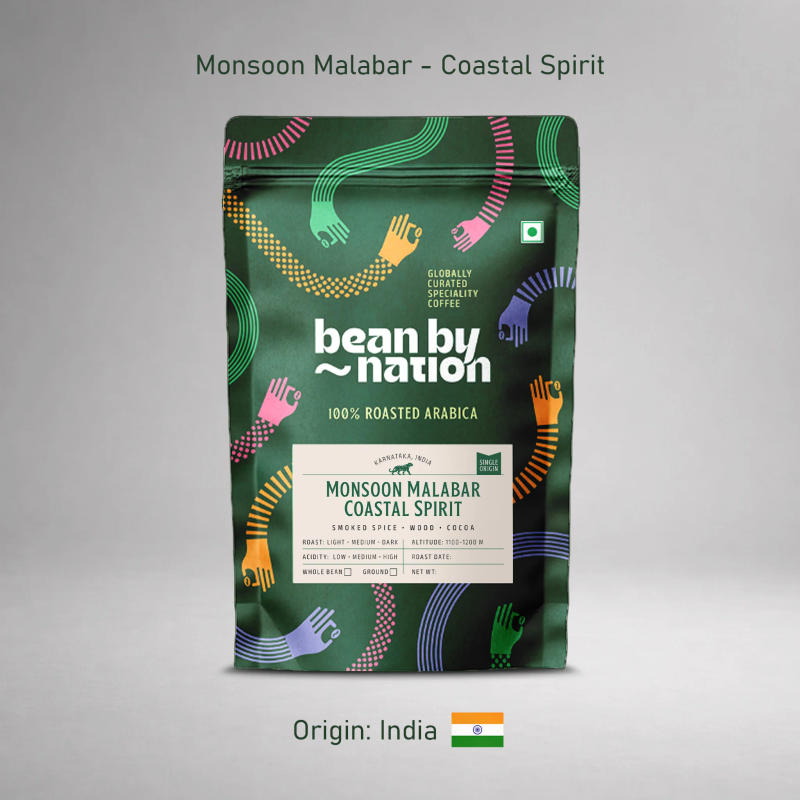
As described by Bean By Nation
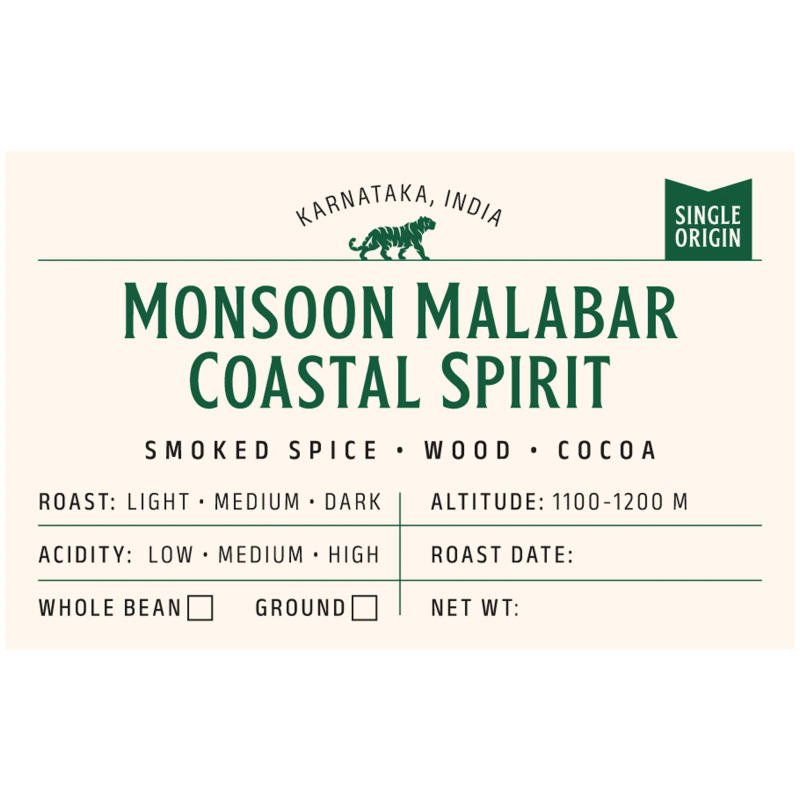
Monsoon Malabar is one of the world's most unique coffees - a GI-tagged Indian Arabica transformed by exposure to southwest monsoon winds along the Malabar Coast. This weather-aging process, once accidental during colonial sea trade, mellows acidity dramatically and develops a distinctly full, syrupy body with deep notes of smoked spice, wood and cocoa. Rich, bold and unmistakably Indian - perfect for strong black brews, espresso or South Indian filter.
Brewing
Suggested for Espresso, South Indian Filter. Works with milk (ICB's reading).
Pack sizes and price
Ratings
What drinkers say
With milk?
More from Bean By Nation


Read about this

Processing & Flavors
What is Monsooned Malabar Coffee?
Monsooned Malabar is not a roast level or a variety — it is a post-harvest processing method applied to green beans on India's Malabar Coast. The process originated as a colonial shipping accident and has been deliberately replicated since the 19th century. It produces a distinct flavor profile: near-zero acidity, heavy body, and earthy, nutty, spiced character unlike any other Indian coffee.

Ecosystem Intelligence
How India's Coffee Processing Mix Is Changing
At commodity volume, Indian arabica has been wet-processed for over a century. The specialty roaster catalog shows something different: experimental methods now represent more than 20% of labeled coffees in a directory of 1,240 entries, up from roughly 7–8% in an earlier snapshot. This is a field guide to the two-track processing shift: what the data shows, where it is happening, and what drives the divergence between the commodity baseline and the specialty catalog.

Origins & Estates
Coffee GI Tags in India: What They Certify (and What They Don't)
A GI tag on an Indian coffee bag is a geographic authenticity claim, not a quality grade. Seven Indian coffees hold GI registration — two Monsooned Malabar varieties since 2007, and five regional coffees since 2019. Understanding what that mark certifies changes how you read a label.
Questions about this coffee
Bean By Nation's tasting notes for Monsoon Malabar Coffee – Coastal Spirit (Indian Arabica) lean toward Cocoa, Smoked Spice and Wood. Flavor is subjective and shifts with roast freshness, grind size, and brew method, so your cup may vary.
Monsoon Malabar Coffee – Coastal Spirit (Indian Arabica) is a single-origin coffee, sourced from one origin rather than blended, so it reflects the character of that specific place.
Monsoon Malabar Coffee – Coastal Spirit (Indian Arabica) is suggested for Espresso and South Indian Filter. As a rule of thumb: espresso needs a fine grind, pour-over and drip a medium grind, and French press or cold brew a coarse grind. Dial in from there to taste.