





Clean, balanced, highlighting origin characteristics
Flavour
Origin and production
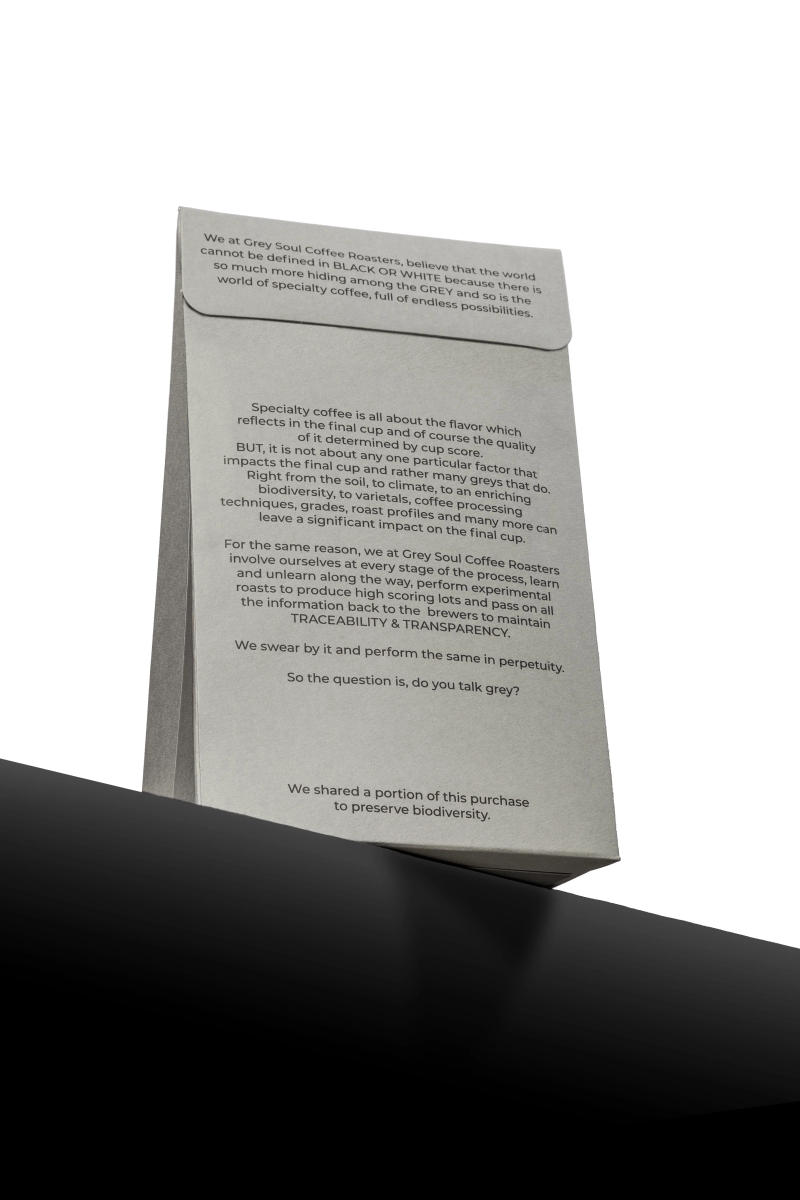
As described by Grey Soul Coffee Roasters
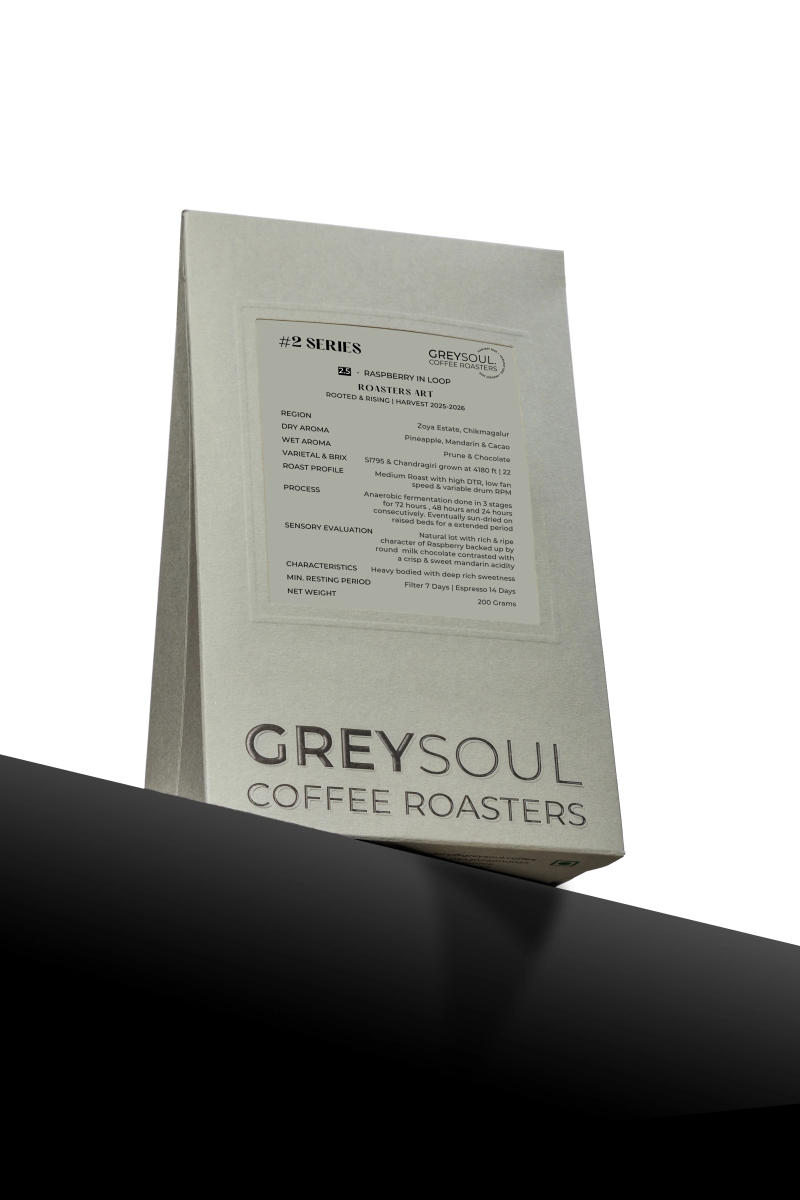
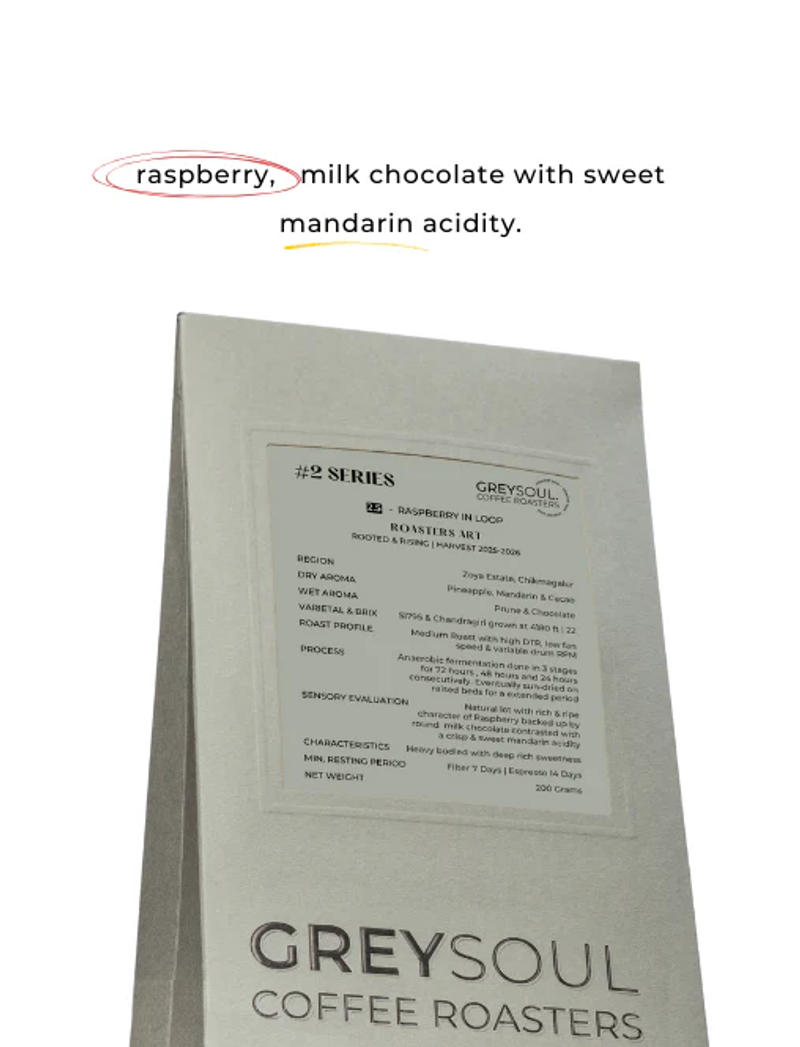
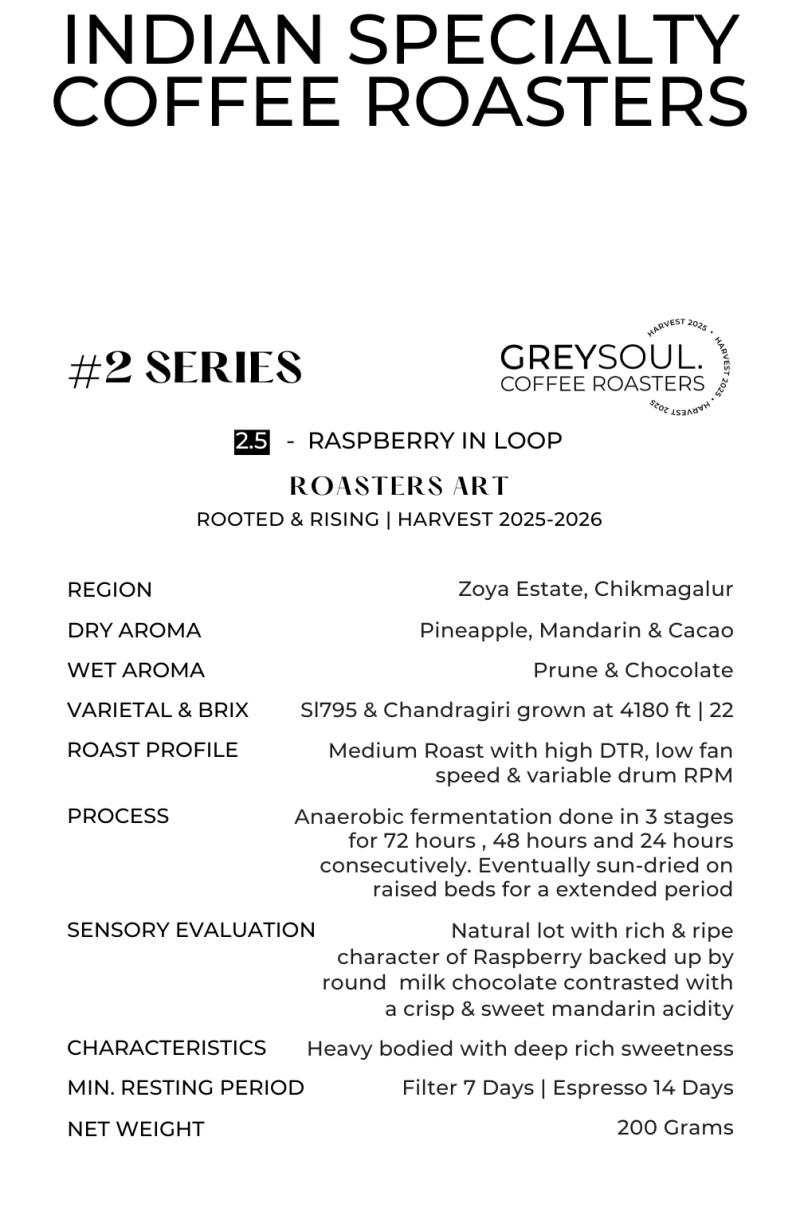
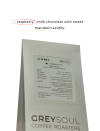
#2 SERIES - ROASTERS ART | 2.3 RASPBERRY IN LOOP Heavy Bodied with Raspberry tartiness in your final cup. Origin Chikmagalur, Karnataka. Anaerobic fermentation done in 3 stages for 72 hours , 48 hours and 24 hours consecutively. Eventually sun-dried on raised beds for a extended period. Varietal Sl795 & Chandragiri grown at 4180 ft. Dry Aroma Pineapple, Mandarin & Cacao. Wet Aroma Prune & Chocolate. Sensory Evaluation Natural lot with rich & ripe character of Raspberry backed up by round milk chocolate contrasted with a crisp & sweet mandarin acidity. Roast Profile Med Roast with high DTR, low fan speed & variable drum RPM. Characteristics Heavy bodied with deep rich tart sweetness. Minimum resting period Filter 7 Days | Espresso 14 Days.
Brewing
Pack sizes and price
Ratings
What drinkers say
With milk?
More from Grey Soul Coffee Roasters

1615 West Giri (Light-Med)
Unrated

Cane and Lime (Light-Med Roast)
Unrated

Jampui Tripura (Light-Med)
Unrated

Mizoram Reserve (Med-Dark)
Unrated
Read about this

Processing & Flavors
Anaerobic and Experimental Processing in Indian Coffee
One in five coffees in ICB's catalog now carries an experimental process tag. This is a reference guide to the four categories (anaerobic, carbonic maceration, double fermented, and experimental), covering how each works at the fermentation level, which Indian estates and regions produce them, and what the catalog data says about their flavor patterns.

Processing & Flavors
Carbonic Maceration in Coffee, Explained
Carbonic maceration is the most widely misused term in Indian specialty coffee. It is a specific sub-type of anaerobic fermentation, not a synonym for it, and the distinction shows up in the cup. This field guide maps what CM is, where it happens in India, and what to expect from the 28 Indian coffees that carry the label.

Processing & Flavors
How Fermentation Shapes Coffee Flavour
Every coffee ferments — the variable is how. Understanding the microbial chemistry behind washed, natural, and anaerobic processing explains why the same estate can produce a clean chocolate cup and a grape-forward lot from the same harvest. This article maps the mechanism to the label, with data from ICB's catalog of 1,238 Indian coffees.
Questions about this coffee
Grey Soul Coffee Roasters's tasting notes for Raspberry in Loop lean toward Mandarin, Milk Chocolate, Pineapple and Raspberry. Flavor is subjective and shifts with roast freshness, grind size, and brew method, so your cup may vary.
Raspberry in Loop is a single-origin coffee, sourced from one origin rather than blended, so it reflects the character of that specific place.
Raspberry in Loop is suggested for Espresso and Pour Over. As a rule of thumb: espresso needs a fine grind, pour-over and drip a medium grind, and French press or cold brew a coarse grind. Dial in from there to taste.