

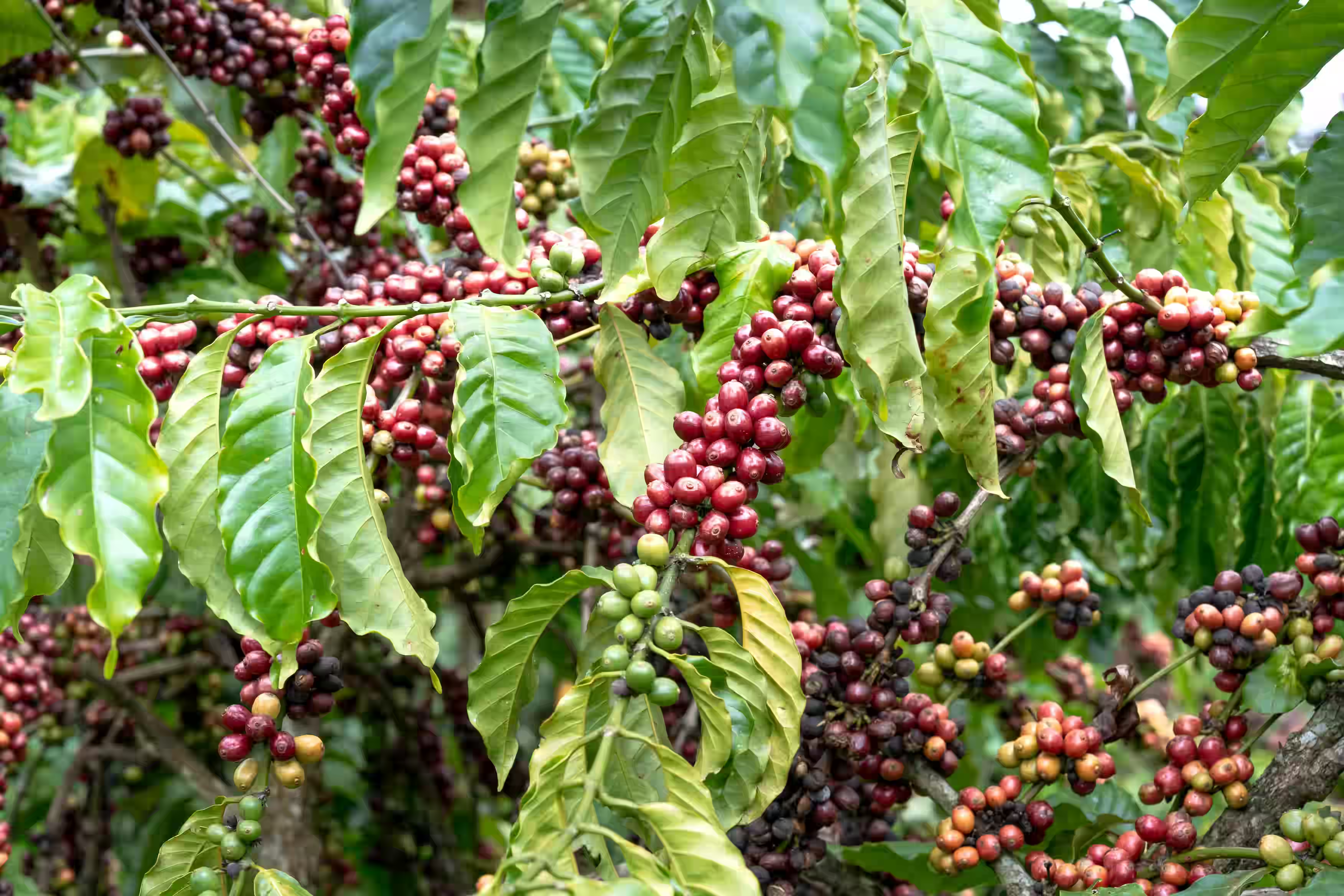
Best Northeast India Coffee
Expect different flavour cues from Karnataka and Kerala classics, which rewards a curious palate.
Explore the Terroir
About the Region
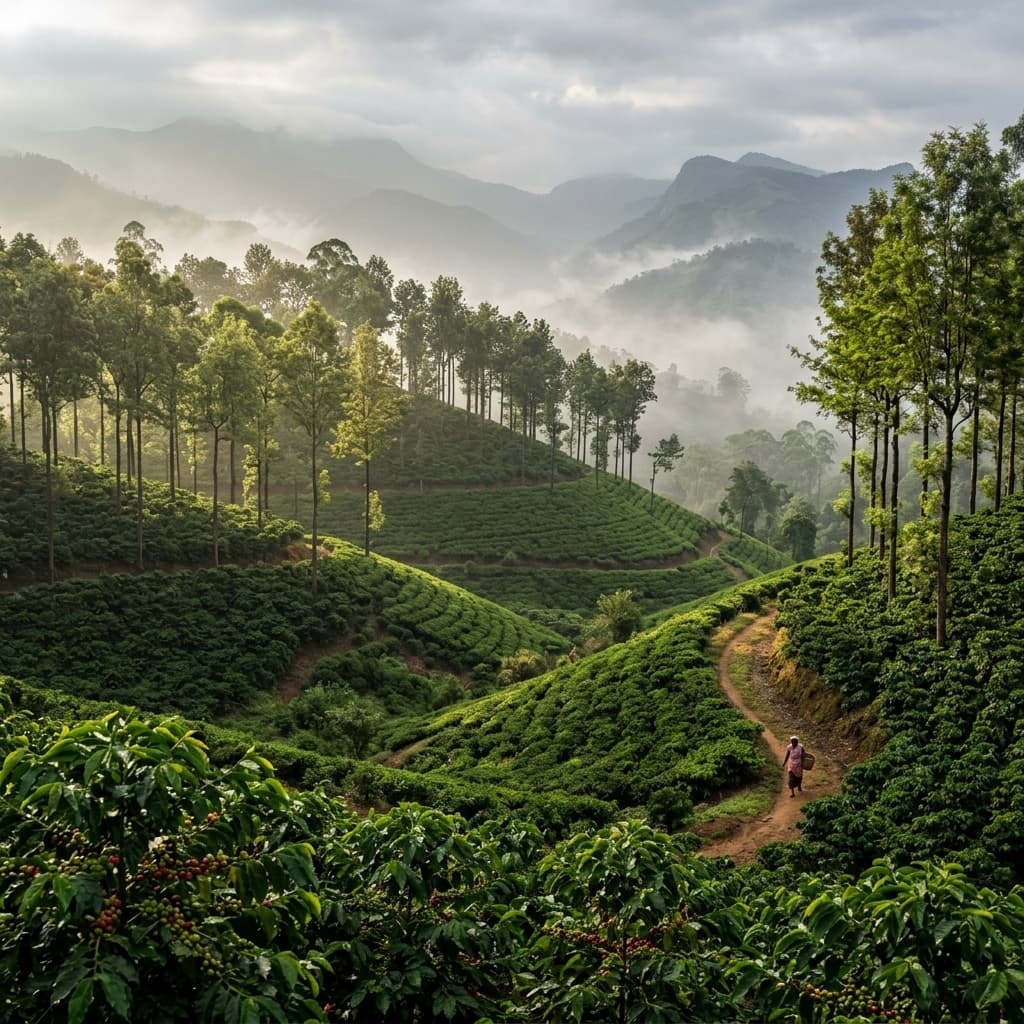
India's Northeast is coffee's newest frontier in specialty circles. The ICB catalogue currently captures lots from Meghalaya's Garo Hills, Khasi Hills, and West Khasi Hills, where arabica is grown by tribal communities at elevations between 800 and 1,700 metres. Meghalaya is one of India's wettest states, with Cherrapunji (in the Khasi Hills) holding world records for rainfall. This extreme moisture shapes the growing conditions dramatically: dense forest, rich soil, and challenging processing conditions. Coffee from the Northeast is genuinely rare in specialty roaster catalogues, and roasters who carry it are making a deliberate origin diversity statement.
In the cup & on the map
Quick facts to anchor flavour expectations, paired with the coffees below.
Known for
Frontier specialty origin, distinct hill terroir beyond the Western Ghats
Terroir & Growing Conditions
Area
674 ha under coffee (NRSC 2024, Sept 2024)
Northeast India coffees
Pour-over and AeroPress suit lighter roasts. Compare with Araku and Koraput for an Eastern India tour.





Catalogue last refreshed .
In the Cup
Typical notes
Process Variation
Washed lots dominate due to the high rainfall making natural drying very difficult. Clean, paper-filtered pour-over is the best way to understand the region's terroir, since the cup is typically delicate and benefits from the transparency of pour-over methods.
Roaster Sourcing
Northeast India coffee is carried by a very small number of Indian specialty roasters, those specifically committed to origin diversity and supporting emerging growing regions. It's not available year-round from most sources. On ICB it's worth tracking, and as more lots appear the regional story will become clearer.
Indian Specialty Context
Northeast India specialty coffee is genuinely unexplored territory, and there isn't yet enough data across enough lots to make confident regional generalizations. What's emerged so far: the extreme rainfall and forest environment produce a clean, light-bodied cup with mild fruit and floral notes, different from both Karnataka's boldness and Araku's brightness. Each new lot from the Northeast tells part of a story that's still being written. If you try one, your ICB rating contributes directly to building the regional flavour understanding.
Brew Guidance
Approach Northeast India coffee with curiosity and standard light roast parameters: 93–96°C, medium-fine grind, 1:15–1:16 ratio on V60. The delicate character responds well to clean pour-over. Adjust based on what you taste, since there's less established guidance for this region than for Karnataka origins because it's so new to specialty.
Explore Nearby Regions


Sourcing from Northeast India
Explore Indian coffee regions
Region guides and brewing tips on the learn hub.
Read the Context.
The background behind what you are tasting, from our writing on Indian coffee.
About Northeast India coffee
India's frontier specialty origin, and what ICB currently tracks.
Explore More.
Discover other ways to find your perfect coffee.
Koraput & Odisha coffees
Eastern Ghats origin lots from India's newest specialty region.
Araku coffees
Highland lots from the Eastern Ghats of Andhra Pradesh.
The *light* end of the spectrum
Bright, acidic, and complex coffees roasted to preserve origin characteristics.
Washed process picks
Fermented and washed to remove mucilage before drying.