

Balanced, sweet, syrupy body with clear acidity
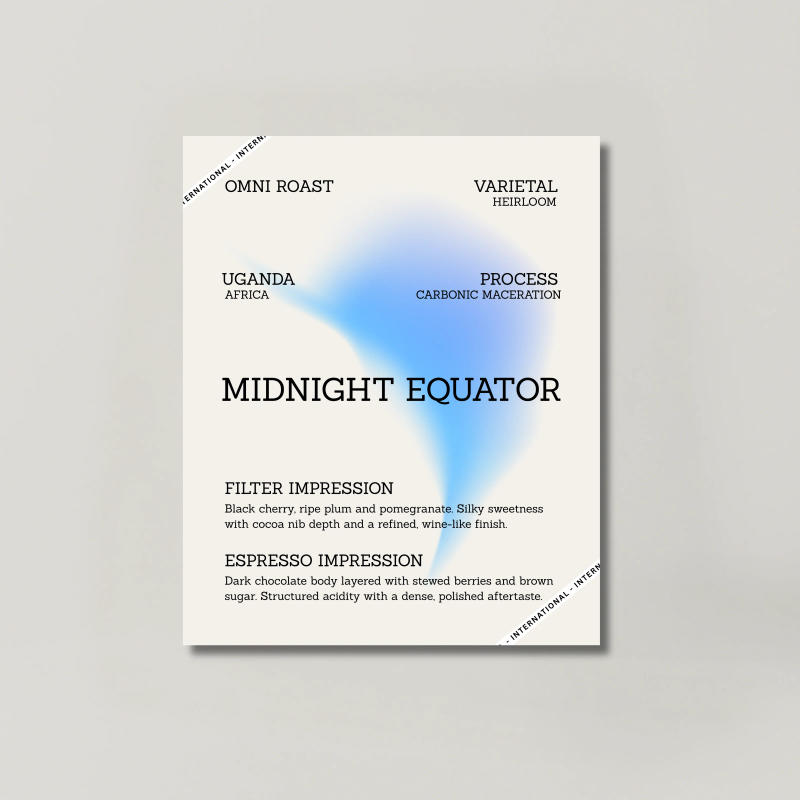
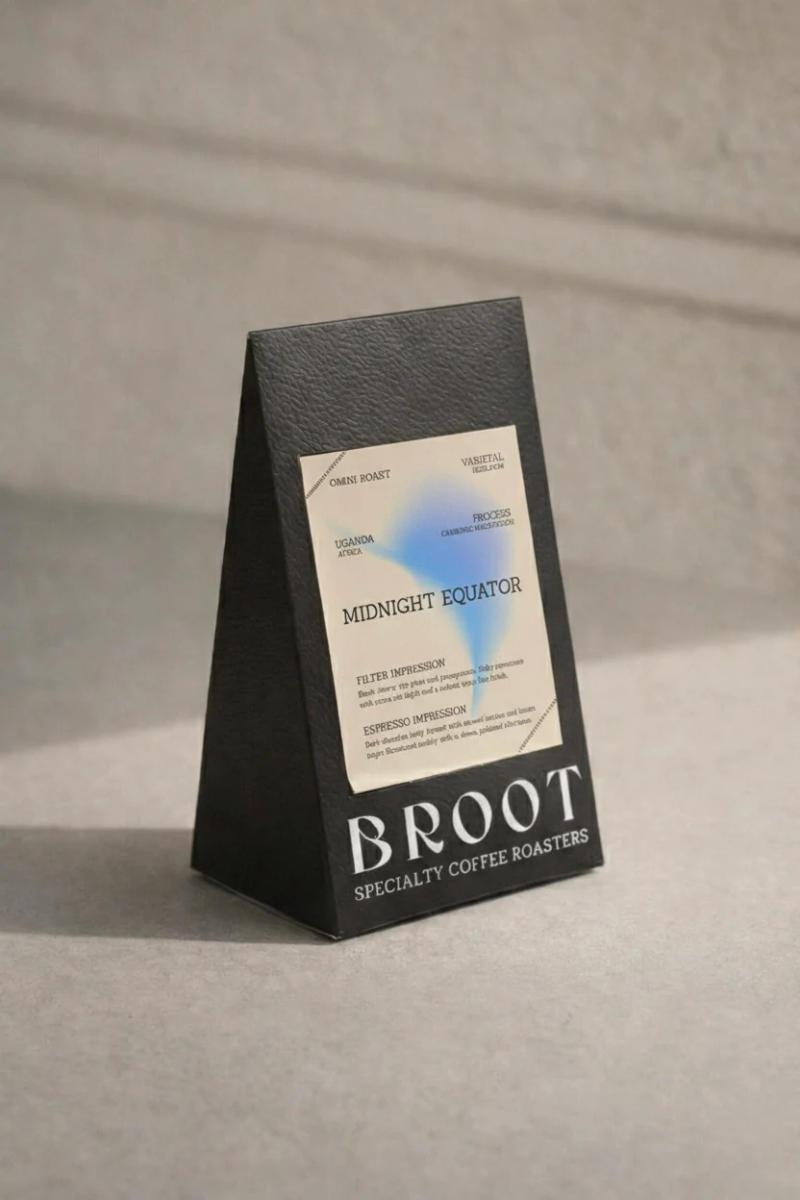
Medium Omni roast · Carbonic Maceration · Uganda
Flavour
Origin and production
- Uganda
- Carbonic Maceration
As described by Broot Coffee
A carbonic maceration natural from Uganda, roasted medium to medium-light as a true omni roast. Midnight Equator is precise fermentation done right. The sealed-tank process intensifies fruit clarity while preserving structure, giving the cup layered sweetness without chaos. Dark fruit leads. Cocoa grounds it. The finish lingers long and composed. This is Uganda with control. Fermented in control. Roasted for clarity. Built for depth
Brewing
Suggested for Espresso, Filter. Works with milk (ICB's reading).
Short, dense and bittersweet with thick crema
Lighter body, clear and sweet, less bitterness
Pack sizes and price
Ratings
What drinkers say
With milk?
More from Broot Coffee


Read about this

Brewing Behaviour
Espresso at Home with Indian Coffees: Washed, Natural, and Blend Behaviour
Indian coffee has a reputation for espresso reliability — dense beans, low acidity, chocolate-forward profiles that extract cleanly under pressure. That reputation holds, but only for one part of the catalogue. Washed, natural, and blend coffees behave differently enough under 9 bar that a single dial-in recipe will work for some and fail for others in ways that are predictable, once the pattern is clear.

Brewing Behaviour
Grind Size for Indian Coffee: How to Calibrate by Method and Roast
Grind size determines how fast water extracts from coffee — and for Indian specialty buyers, the standard per-method chart is a starting point, not a fixed answer. Thirty percent of ICB's catalog is light or light-medium roast, coffees that are denser and systematically underextract at standard chart settings. This reference covers the per-method calibration table, the Indian density adjustment, and how to read extraction feedback from the cup.

Brewing Behaviour
Why Your Specialty Coffee Tastes Flat (Common Extraction Issues)
Specialty coffee that tastes flat, weak, or sourly thin is almost always an extraction problem — not a coffee quality problem. This guide covers the six most common causes, with particular attention to Indian variables: hard tap water, RO-stripped water, mixer-grinder use, and tropical storage conditions.
Questions about this coffee
Broot Coffee's tasting notes for Midnight Equator lean toward Cocoa and Dark Fruit. Flavor is subjective and shifts with roast freshness, grind size, and brew method, so your cup may vary.
Midnight Equator is a single-origin coffee, sourced from one origin rather than blended, so it reflects the character of that specific place.
Midnight Equator is suggested for Espresso and Filter. As a rule of thumb: espresso needs a fine grind, pour-over and drip a medium grind, and French press or cold brew a coarse grind. Dial in from there to taste.