


Indian Coffee Exports vs Domestic Specialty: Two Different Quality Ladders
India sends roughly 70–80% of its annual coffee harvest abroad. The common reading is that the best beans leave. What that framing misses is that "best" means something different in the export channel than it does in a domestic specialty roastery — and the highest-value lots per kilogram are increasingly staying in India.

India exported 3.84 lakh tonnes of coffee in calendar year 2025, earning approximately USD 2 billion — a record by earnings, though total volume fell slightly. The inference follows easily: India is an export-oriented producer, and the finest of what it grows ships abroad.
That inference is half right. The export channel is large and genuinely buys premium lots. But what it calls "specialty" and what a domestic Indian roaster means by the same word are not the same thing. The channels target different flavor profiles, use different grading systems, and buy different lot types from the same estates. That distinction shows up when reading an Indian coffee bag — or in understanding why a Chikmagalur estate might appear in both an Italian espresso blend and a specialty café in Bangalore.
What the export channel actually buys
India's export coffee market is dominated by Robusta. Robusta accounts for approximately 72% of total production and roughly the same share of green coffee exports by volume. The anchor grade is Kaapi Royale: washed Robusta at screen 17 and above, fully polished, near-zero defects. The Coffee Board introduced this grade in 1993 to create a differentiated export tier separate from standard parchment grades. Italian espresso roasters prize it for consistent crema and clean body in high-volume blends. Italy imported 60,688 tonnes from India in calendar year 2025, more than any other destination. That concentration — a single destination accounting for roughly a third of export volume — reflects a buyer relationship built over three decades, anchored in the crema-forward espresso blends that Kaapi Royale was specifically designed to supply.
For Arabica, the export premium grade is Mysore Nuggets Extra Bold (MNEB): screen 19 and above, zero primary defects, fully polished. The "Mysore" designation predates Karnataka's state formation; in practice it applies to washed Arabica from Karnataka estates. MNEB appears in specialty import catalogs from US traders like Josuma Coffee Company, positioned as single-estate Indian Arabica for the global specialty segment. In calendar year 2025, India's green Arabica exports fell sharply from 44,315 to 15,607 tonnes, partly due to weather-related yield compression. The remaining lots commanded higher per-tonne prices because of the reduced supply.
India ranks seventh in global coffee production and fifth in exports, per IBEF. Germany, Russia, Belgium, and the UAE are the other major buyers after Italy. Nearly all exports are green (unroasted) coffee. The estate's name may appear on shipping documentation, but it rarely reaches the consumer. What reaches the consumer is the roaster's label and the Coffee Board grade designation.
Export buyers select for a specific set of criteria given their purpose: consistency across a large lot (10–20 metric tonnes minimum), predictable screen size for uniform heat transfer in drum roasters at scale, a clean flavor baseline with no off-notes that would affect a blend, and price competitiveness with other producing countries. These are legitimate quality criteria. They are not the same criteria a specialty roaster in Mumbai uses when selecting a lot.
Two grading systems share one word. The Coffee Board's "specialty grade" — MNEB for Arabica, Kaapi Royale for Robusta — is defined by bean size (screen number) and defect count. The SCA's specialty grade is defined by cupping score: 80 or above on a 100-point scale. A Kaapi Royale export lot may or may not score above 80 at the cupping table. The Coffee Board grade says nothing about it.
India Coffee Exports by Type — Calendar Year 2025
| Type | Volume (tonnes) |
|---|---|
| Robusta green | ~180,000 |
| Arabica green | 15,607 |
| Instant/soluble | 46,954 |
| Total | ~384,000 |
Source: Coffee Board of India via KNN India
What the domestic specialty channel buys
India's domestic coffee consumption sits at approximately 1.58 million 60-kg bags, roughly 95,000 tonnes against a production base of around 363,500 tonnes. Of that domestic consumption, 73% is instant or soluble coffee. Nescafé and Bru account for the bulk of Indian household coffee spending.
The specialty segment sits within the 27% non-instant share. It is small by volume but the fastest-growing margin segment, and the part that produces the contents of ICB's catalog. Domestic specialty roasters buy small lots (100–500 kg rather than container loads), estate-specific or cooperative-specific traceable green coffee, and lots where processing method has been intentionally chosen to shape flavor rather than to meet a screen-size specification.
ICB's active catalog of 1,219 coffees breaks down by processing method: washed (299), natural (148), anaerobic (112), experimental (85), honey (80), washed-natural (55), carbonic maceration (31), monsooned (30), double-fermented (22). The fermentation-forward categories — anaerobic, experimental, carbonic maceration, honey, and double-fermented — total 330 coffees. These categories do not appear in Indian green coffee export statistics. Export buyers do not want kombucha-culture fermentation character in a blend. Domestic specialty buyers pay a premium for exactly that distinctiveness.
The 2013 shift matters here. Blue Tokai's founders started in Delhi because they could not find quality Indian coffee in India despite India being a producer nation. Their initial model was to persuade a handful of growers to divert lots that would otherwise have gone to export traders toward a domestic buyer willing to pay specialty premiums. By 2026, Blue Tokai holds 80-plus farm partnerships and reports paying premiums up to 22% above pre-2022 farmgate prices to secure specialty lots. Subko Coffee Roasters in Mumbai sources against a self-declared SCA 85-plus threshold, a bar above what standard MNEB or Kaapi Royale export specifications require.
52 of the 94 roasters in ICB's directory were founded in 2013 or later. The specialty channel is a recent development, not a continuation of India's export tradition.
On scale: 94 roasters selling 1,240 coffees represents real diversity within the domestic specialty segment, but the total volume is small relative to India's overall production. The channel's significance is in the premiums it creates and the processing innovation it incentivises, not in the share of production it handles.
The two quality ladders compared
The channels rarely compete for the same lots because they are looking for different things.
| Dimension | Export channel | Domestic specialty |
|---|---|---|
| Quality criteria | Bean size (screen), defect count | SCA cupping score, processing method, flavour distinctiveness |
| Lot size | 10–20+ metric tonnes | 100–500 kg |
| Format | Green (unroasted) | Green, small-batch roasted with roast date |
| Buyer relationship | Trading houses and importers | Direct-trade relationships, per-lot cupping negotiation |
| Estate visibility | Origin field on shipping documentation | Primary label identity on retail bag |
The Arabica vs Robusta species split tracks this division clearly. India's production is approximately 72% Robusta and 28% Arabica. ICB's catalog is 68% Arabica (843 of 1,240 coffees) and only 4% Robusta (47 coffees). Robusta dominates the export channel — it is what Italian espresso blenders need for crema and body. Arabica dominates the domestic specialty catalog because its flavor range across processing methods works for single-origin purchasing and per-bag presentation. The same production base serves two markets with nearly inverted species priorities.
Why fermentation-forward lots are a domestic-first category
The 330 fermentation-forward coffees in ICB's active catalog — anaerobic, experimental, carbonic maceration, honey, and double-fermented lots — are a domestic-first category. The economics are clear: export buyers don't pay premiums for these processing methods. Their buyers (European espresso blenders) can't use fermentation-forward flavor in high-volume blends, and don't want to. Domestic specialty buyers do pay premiums, and the flavor distinctiveness is the point.
Black Baza Coffee, for example, produced more than a dozen micro-lots in 2025 using kombucha cultures, wild ginger co-fermentation, and inoculation with yeast or lactobacillus strains. These are lots sized in the hundreds of kilograms. They cannot fill an export container. They cannot be blended without their character dominating the cup. They exist because domestic specialty buyers have created the market for them — a market that did not exist before 2013.
When an estate experiments with anaerobic processing or a honey micro-lot, the output goes to domestic roasters not by ideology but by commercial logic. The price per kilogram a domestic roaster pays for a high-cupping-score experimental lot exceeds what a green commodity importer would pay for the same volume at standard grade. The channels do not compete for the same supply: a 15-tonne export container cannot be assembled from micro-lot anaerobic runs, and no domestic specialty buyer can absorb a bulk parchment shipment at commodity grade.
A structural shift since 2013
Before 2013, no dedicated domestic channel for premium Indian coffee existed. The 1942 Coffee Board pooling system routed all output through centralised sales; the 1996 deregulation freed market transactions, but the export momentum continued — estates had established relationships with export traders, and no domestic buyer existed with enough volume or premium-payment capacity to compete. The GI system, activated in 2007 and expanded to five regional coffees in 2019, was designed primarily as an export protection instrument. The official GI logos appear more commonly on export documentation than on domestic retail packaging, which reflects the system's original orientation.
The shift after 2013 was gradual. Blue Tokai's founding is the most-cited example, but it was followed by dozens of roasters across Bangalore, Delhi, Mumbai, and Pune who adopted direct-trade sourcing models. By the time global Arabica prices rose sharply in 2024–25 — compressing export Arabica volumes by 65% — the domestic specialty market had built enough purchasing depth that estates could redirect constrained Arabica supply toward domestic buyers without losing commercial viability. Tighter export supply and higher domestic premiums moved in the same direction.
The dual-channel model is now standard practice at medium-to-large Karnataka estates with their own curing works and fermentation infrastructure. The estate's name may appear on an export bill of lading to an Italian importer and on a retail bag sold through a domestic roaster's D2C store in the same season. The 2024–25 Arabica supply compression — 65% fewer export tonnes, higher per-tonne prices — stress-tested this model at scale; estates with established domestic relationships absorbed the constrained supply without exiting either channel.
Araku: both channels in one origin
Araku Valley Arabica illustrates the dual-channel logic at origin scale. The cooperative model — tribal smallholder farmers in Andhra Pradesh's Araku Valley, organised under a regenerative agriculture framework — established its export credentials first. Araku won a gold medal at the Paris Prix Epicures in 2018; GI status (Araku Valley Arabica, registration 333) followed in 2019. Those credentials brought the cooperative to international specialty buyers' attention. Buyers in Japan, South Korea, and France sourced from Araku before domestic retail was a significant channel.
The domestic cafe and D2C retail expansion followed. ICB lists 19 Araku coffees across the domestic specialty catalog, sourced by multiple roasters. The cooperative's output is large enough that export and domestic channels coexist without cannibalisation — each serves a different buyer segment with different lot characteristics.
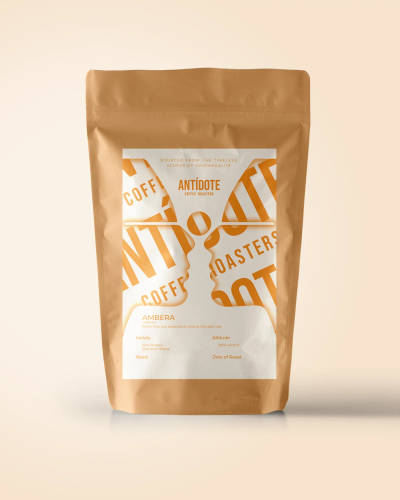
Single-Origin Indian Coffees


What this means in practice
The export channel's specialty grades — MNEB and Kaapi Royale — are not the same as "specialty" in the sense domestic Indian roasters use the word. MNEB is the highest Coffee Board grade for washed Arabica; it is graded by screen size and defect count. A domestic specialty roaster sourcing against an SCA 85-plus threshold is using a different system. Both describe their coffees as "specialty." The word covers different things.
When a domestic estate name appears on a retail bag in India, the lot it represents is almost certainly a micro-lot selected specifically for the domestic channel. Direct-to-roaster micro-lot sales command higher per-kg prices, come in smaller volumes, and transact more frequently than export lots. That model, combined with the flavor requirements of domestic buyers, has created a procurement track that runs parallel to the export channel's bulk lot operations rather than competing with it.
The experimental-processing category in Indian coffee — anaerobic, carbonic maceration, co-fermented — is domestic-first by structure. The market conditions that make these lots viable (domestic buyers paying per cupping score, not per screen size) don't translate to the export channel. This category of Indian coffee, which accounts for 330 of 1,219 active ICB listings, is a domestic specialty creation.
References
- Coffee Board of India — Coffee Statistics
- KNN India — India's Coffee Export Volumes Fall 4.5%, Earnings Jump 22.5% (2025)
- Daily Coffee News — India Coffee Report: Soluble Coffee Drives Exports (May 2026)
- IBEF — India's Coffee Industry: Top Producers & Exporters
- India Coffee Company — Coffee Grading Codes Explained
- Agriculture Institute — Indian Coffee Grading Standards
- Fresh Cup — How India Acquired a Taste for Specialty Coffee
- Fresh Cup — How India's Specialty Coffee Industry Is Coming of Age