

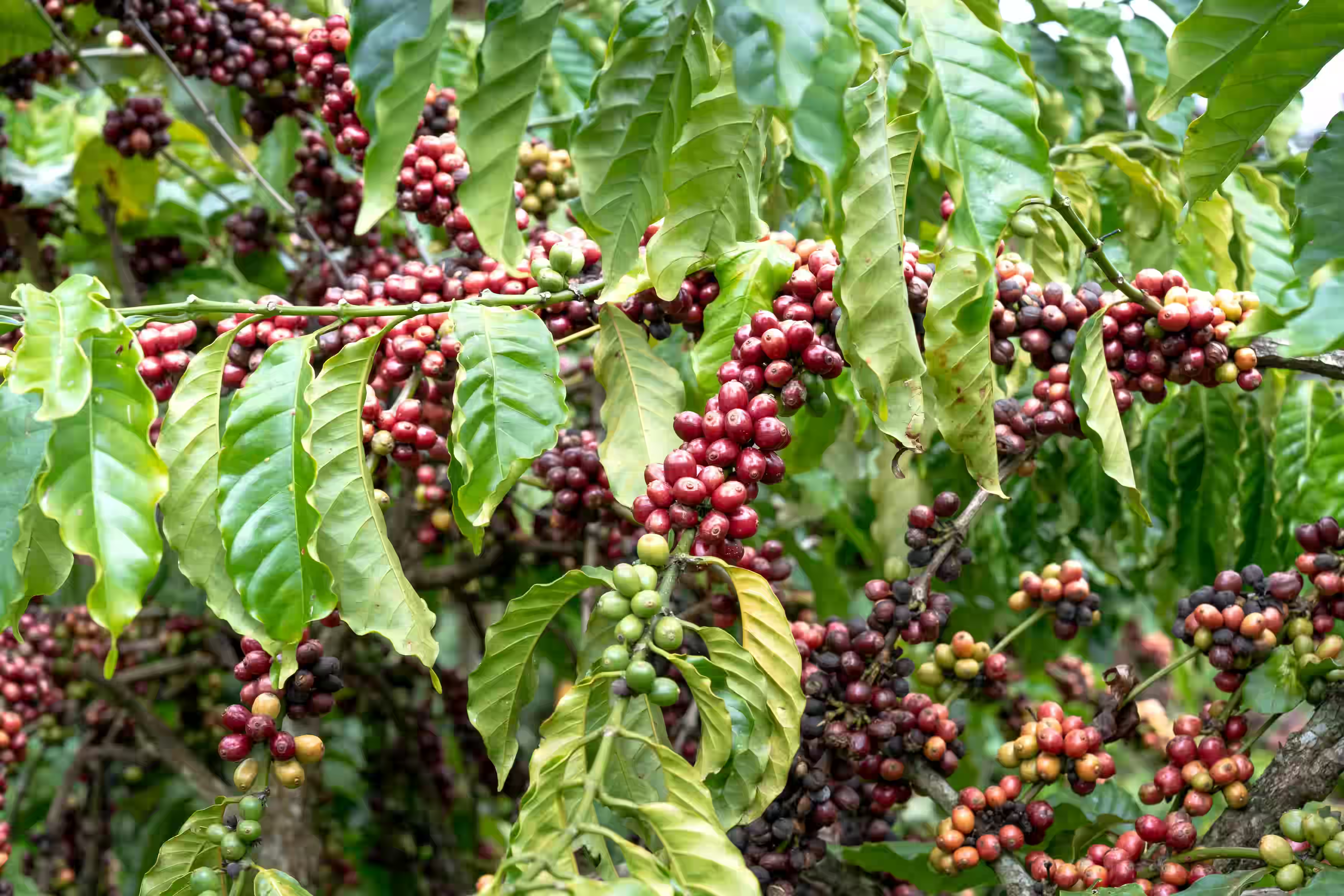
Best Baba Budangiri Coffee in India
One of India's most storied sub-regions: high altitude, heritage significance, and standout natural lots.
Explore the Terroir
About the Region
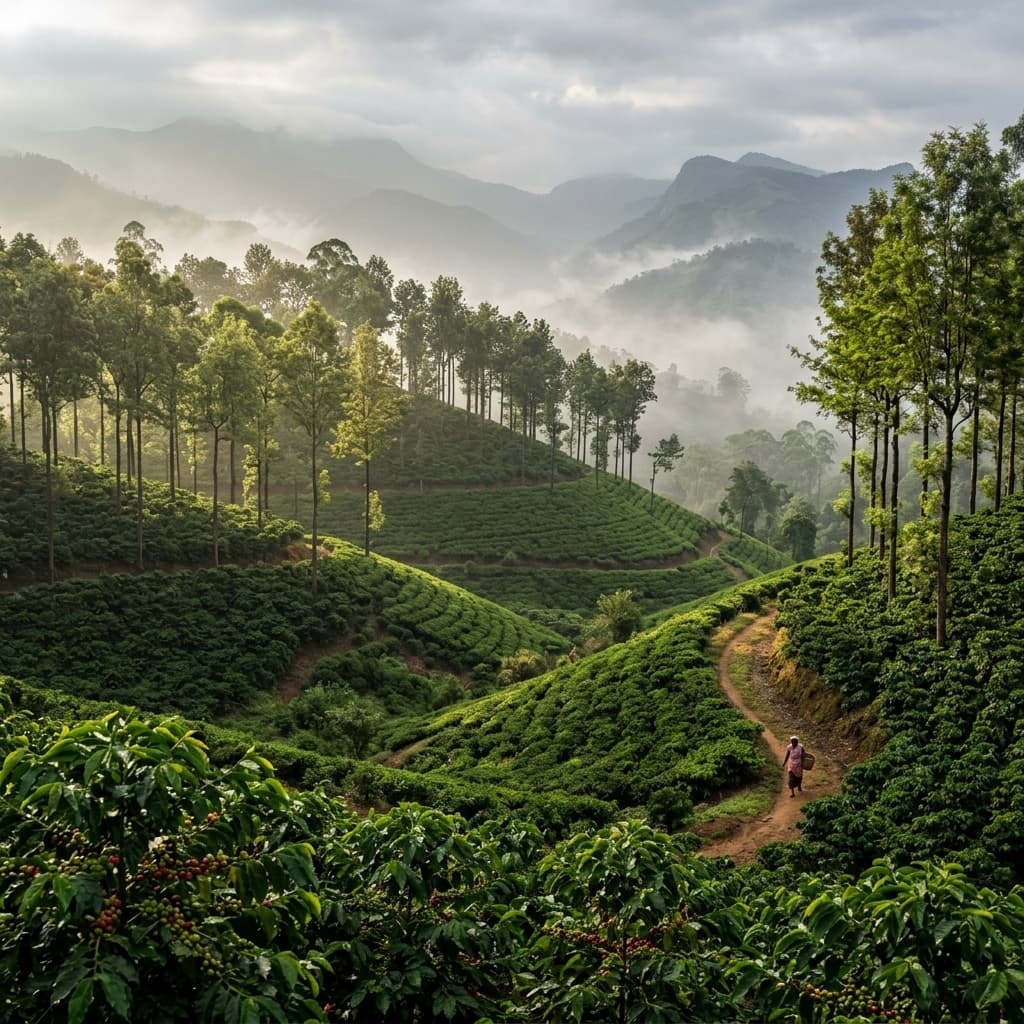
Baba Budangiri is where Indian coffee began. The range, named after the Sufi saint Baba Budan who is said to have brought seven coffee beans from Yemen in the 17th century, sits within Chikmagalur district at elevations reaching 1,800 metres. It's one of India's highest coffee-growing areas and a protected forest zone. Coffee here is grown on steep slopes under dense native shade, with the altitude and microclimate producing some of the most complex lots in the Indian catalogue. Despite being within Chikmagalur district, Baba Budangiri is distinct enough in character to warrant its own attention. The elevation difference alone produces noticeably different cups from lower-altitude Chikmagalur estates.
In the cup & on the map
Quick facts to anchor flavour expectations, paired with the coffees below.
State / area
Karnataka
Elevation
1,000–1,500m
Known for
India's coffee origin site, high-altitude naturals, the highest community ratings on ICB
Terroir & Growing Conditions
Climate
Cool, misty highland
Soil
Black soil (red soil further south in the taluk)
Altitude
1,000–1,500m
Varieties
SLN 795
Harvest
December–February
Intercrops
Black Pepper
Baba Budangiri coffees
Light natural and light-medium washed lots dominate the top ratings, so start there.






Catalogue last refreshed .
In the Cup
Typical notes
Process Variation
Natural and experimental lots dominate the specialty-grade production, since the cool, dry conditions during harvest season (November–February) make natural processing viable and the results back it up. Washed and honey lots are also well-represented. The DB shows 5 light natural lots, 5 medium-dark 'other' category lots (likely traditional blends), and a meaningful number of experimental and anaerobic lots. This is a region where producers are experimenting.
Roaster Sourcing
Baba Budangiri is sourced by more roasters in the ICB catalogue than Araku or Wayanad. Several of India's most respected specialty roasters specifically source Baba Budangiri as a distinct sub-origin rather than folding it into generic Chikmagalur listings. When you see it named explicitly on a roaster's bag, it signals a producer who understands altitude differentiation, which is worth paying attention to.
Indian Specialty Context
Baba Budangiri natural lots at light roast are among the most complex Indian coffees available, and the altitude drives intense aromatic development that you don't find in lower-elevation Karnataka naturals. Its community average rating across ICB reviews is the highest of any Indian region with meaningful rating data. Light natural lots dominate the top-rated coffees from this sub-region: blueberry, jasmine, and stone fruit at an intensity that rivals East African naturals. Washed lots at light-medium roast show jasmine and clean citrus, and the altitude clarity is obvious.
Brew Guidance
Light natural Baba Budangiri lots are best on V60, where the clean, paper-filtered pour-over preserves the jasmine and fruit intensity that defines the region's best lots. Use 90–93°C for naturals to balance the fruit without tipping into fermented heaviness. Washed lots suit both V60 and AeroPress. The altitude-driven complexity is most visible in clean brew methods, so avoid French Press for the top-tier lots.
Explore Nearby Regions


Sourcing from Baba Budangiri
Explore Indian coffee regions
Region guides and brewing tips on the learn hub.
Read the Context.
The background behind what you are tasting, from our writing on Indian coffee.
About Baba Budangiri coffee
Altitude, the origin story, and why the ratings run high here.
Explore More.
Discover other ways to find your perfect coffee.
Chikmagalur coffees
From classic washed estate lots to experimental microlots.
The *light* end of the spectrum
Bright, acidic, and complex coffees roasted to preserve origin characteristics.
Natural process picks
Lots where the fruit stayed on the bean longer for intense sweetness and complexity.
Made for the *V60*
Clarity, brightness, and origin character with nowhere to hide.