




Clean, balanced, highlighting origin characteristics
Flavour
Origin and production
As described by Araku Coffee
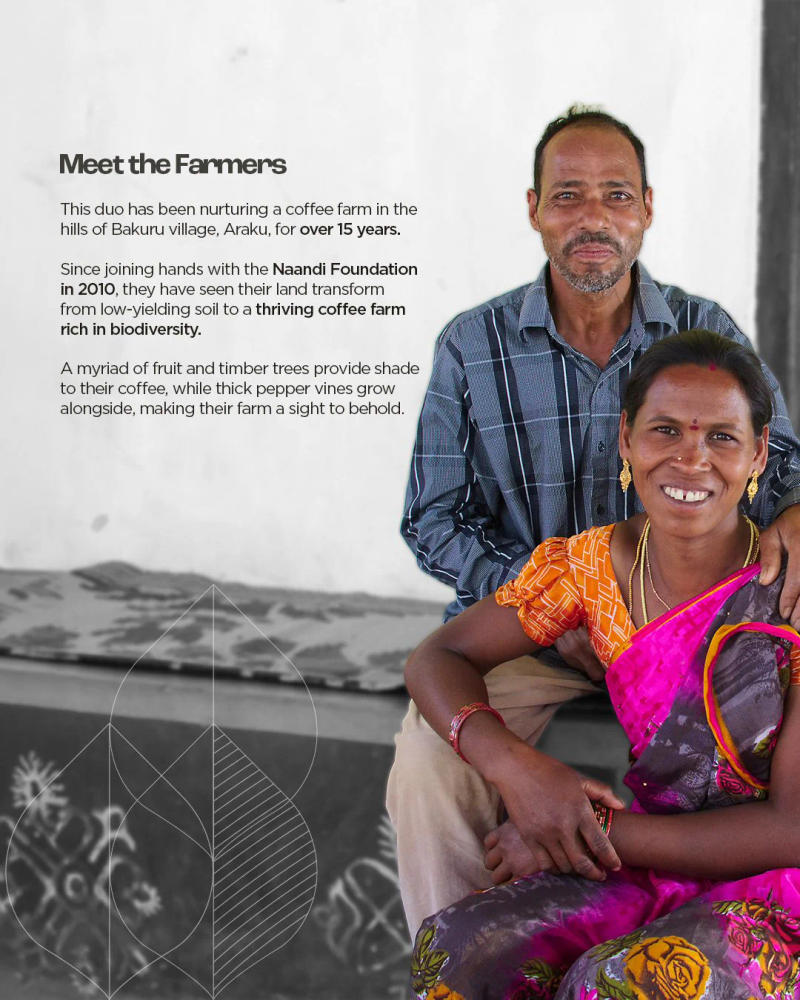
In Araku Valley’s Bakuru village, farmers Korra Chittibabu and Varalakshmi tend their coffee at elevations of 3,790 to 4,362 feet. Cool air, dark rocky soil, and a canopy of wild mango, jackfruit, and silver oak trees imbue this coffee with a quiet complexity. At this elevation, the coffee cherries ripen gradually, allowing sugars to concentrate and aromatic complexity to develop. The cherries are processed using the specialized black honey drying method, which preserves the natural sweetness of the bean, lending this coffee its rounded body and distinctive fruitiness. A medium roast coaxes out the full personality of the beans. The flavor opens with a gentle sweetness reminiscent of rose apple and buttercream cookies and is balanced by notes of caramel and baker's chocolate. Best enjoyed through slow brewing methods like pour-over or French press.
Brewing
Suggested for French Press, Pour Over.
Full-bodied, clean, minimal sediment
Ultra-clean, bright, tea-like clarity, no sediment
Pack sizes and price
Ratings
What drinkers say
With milk?
More from Araku Coffee


Read about this

Processing & Flavors
Honey Process Coffee in India: What the Colour Labels Actually Tell You
Honey process removes the cherry skin but leaves the sticky mucilage layer on the bean during drying. The colour label — yellow, red, black — indicates how much mucilage stayed on and how long it dried, which shapes sweetness, body, and fruit intensity. India's specialty estates have produced 81 honey-process coffees across 42 roasters, making it one of the more widely available processing categories in the Indian catalog.

Processing & Flavors
Washed vs Natural vs Honey: What Processing Means for Flavor
Coffee bags list 'washed' or 'natural' processing, but what do these terms actually mean for flavor? Processing method—how the fruit is removed from the seed—creates more flavor variation than origin alone. Here's what each method does, and what ICB's data shows about Indian coffees.

Processing & Flavors
How Processing Methods Affect Flavor in Indian Coffee
A field guide to how washed, natural, honey, anaerobic, and monsooned processing shape the flavor of Indian specialty coffee — with estate examples, tasting benchmarks, and buying guidance.
Questions about this coffee
Araku Coffee's tasting notes for High Altitude lean toward Baker's Chocolate, Buttercream Cookies, Caramel and Rose Apple. Flavor is subjective and shifts with roast freshness, grind size, and brew method, so your cup may vary.
High Altitude is a single-origin coffee, sourced from one origin rather than blended, so it reflects the character of that specific place.
High Altitude is suggested for French Press and Pour Over. As a rule of thumb: espresso needs a fine grind, pour-over and drip a medium grind, and French press or cold brew a coarse grind. Dial in from there to taste.