|
ICB Fortnight 13 · 26 Sep 2026
444,696 hectares.
Two-thirds in
three districts.
Hello,
This is issue 13, covering 12 to 26 September. The
regions page now carries a map of every district the
ISRO plantation atlas records coffee in, shaded by how
much land is under it.
Drawn to scale it rearranges the picture a bit. Indian
coffee is more concentrated than it sounds: three
districts hold two-thirds of the planted area, one of
them nearly a third by itself. Two roasters also joined
this fortnight. Both are below.
|
|
|
New on ICB
India's coffee,
mapped.
The map covers peninsular India. Each of the eighteen
districts the ISRO and NRSC plantation atlas records coffee in
is shaded by the area under it, 444,696 hectares as of
September 2024. The North East sits in a separate inset on its
own scale, where the Coffee Board counts 6,092 hectares
planted across seven states. The two figures measure different
things: the atlas maps only 674 hectares of canopy up there,
and registered planted area includes stock not yet bearing.
The page says as much.
The concentration is what stands out. Kodagu, Chikkamagaluru
and Hassan hold 67.5 percent of the mapped area between them.
Kodagu alone is 30.5 percent, nearly a third of India's coffee
land in a single district. The shading has to be log-scaled:
the range runs from 153 hectares in Shivamogga to 135,796 in
Kodagu, a factor of 888.
|
State
|
Hectares
|
Share
|
|
Karnataka
|
300,943
|
67.7%
|
|
Kerala
|
67,472
|
15.2%
|
|
Tamil Nadu
|
36,961
|
8.3%
|
|
Andhra Pradesh
|
35,423
|
8.0%
|
|
Odisha
|
3,897
|
0.9%
|
Araku is the counterweight. One Andhra district, Alluri
Sitharama Raju, carries 35,423 hectares by itself, more than
all of Tamil Nadu. The map sits directly above the region
index, so the geography and the catalogue finally line up in
one place.
Open the map →
|
|
Freshly Added
What's New on
ICB.
Two roasters joined, both on the same day.
Bare Bean Roastery
is a Surat micro-roastery working nano-lots from Chikmagalur,
the Pulney Hills, Koraput and Araku Valley, roasting to order
on an Aillio Bullet R2.
Mindful Coffee Roaster
runs out of Gurugram under a licensed Q Grader and
SCA-certified roaster, aiming at everyday balance rather than
trend profiles. They brought 18 coffees between them, 13 and
5.
|
116
Roasters
|
1,524
Coffees
|
325
Ratings
|
+28
This Fortnight
|
What roasters chose to add.
51 distinct coffees arrived across the fortnight, and 19 of
them are fermented or experimental lots: 8 logged as
experimental, 7 anaerobic, 4 carbonic maceration. Eight are
washed. Whatever roasters keep as their baseline, it is not
what they listed this fortnight.
Six are not arabica.
Three robusta, two excelsa, one liberica. Two of them carry
SCA scores above 87, and one is a 72 to 96 hour anaerobic
natural canephora from Bare Bean. Rossette Coffee added two
of the six by itself. Against 31 arabica arrivals that is a
small tail, but it keeps turning up at the scored end of the
catalogue rather than the commodity end.
Browse the catalogue →
|
|
Newly Listed
Coffee
Spotlight.

Sicc Community Excelsa CM Naturals
Rossette Coffee · New Delhi · SCA 87+
|
Excelsa
|
Carbonic maceration
|
Light roast
|
The species is what makes this one worth a look. Excelsa
barely registers in Indian specialty: 15 active listings
across the directory, against 1,039 arabica. This one
arrives carbonic-macerated, roasted light, and scored
above 87. Rossette, working out of New Delhi, added it
alongside a liberica in the same score band the same
fortnight, which is two of the six non-arabica arrivals
from a single roaster. It is newly listed, so nobody has
rated it yet.
See it and rate it →
|
|
|
Just Joined ICB
Roaster
Spotlight.

Bare Bean Roastery
Surat, Gujarat · 13 coffees listed
Bare Bean joined with 13 coffees, which is a lot for a
micro-roastery. It works nano-lots and single origins
from Chikmagalur, the Pulney Hills, Koraput and Araku
Valley, roasting to order on an Aillio Bullet R2 out of
Surat. Every lot is listed with its origin, altitude,
varietal and process. The roastery puts this down to
direct relationships with growers rather than scale,
which is what makes a thirteen-coffee catalogue from one
Bullet possible. All four sourcing regions are districts
on the new map: a Surat roastery, well outside the
growing belt, buying from four separate hill belts. It
is also the sixth Surat roaster on the directory, in a
state now at nine.
Explore their coffees →
|
|
|
r/IndiaCoffee
From the
Community.
A beginner's first bag arrived nine months after roast
A new home brewer ordered a French press grind through
Instamart and got a bag stamped 22 December 2025. Nine
months old, and pre-ground on top of that. The sub was close
to unanimous: order from the roaster's own site, because
mass retail and quick commerce do not rotate specialty stock
the way a roastery does. The order was refunded without a
return, which left the original question unanswered. Is it
still worth brewing?
Read the thread →
One dose of Gesha, ₹2,000 for 50 grams
Someone bought a single 50g dose of Gesha Dona Martha and
asked how to store and rest it before brewing. The replies
split: one reading is that single-dose retail is the only
way most people will ever taste a coffee at that price, the
other is that a format priced at ₹2,000 for 50 grams exists
because the full bag is unreachable. Both arguments ran in
the same thread without either winning.
Read the thread →
|
|
Curated Picks
Worth
Reading.
Indian Specialty Coffee Comes Full Circle at Pi's Coffee in
Richmond
Daily Coffee News · Howard Bryman · 21 Sep
2026
Piyush Jessani moved from Bengaluru to the United States at
seven and now runs an 1,800 square foot roastery cafe in
Richmond, Virginia. The entire menu is Indian coffee,
roasted on a 5kg machine at the back of the room, with South
Indian filter coffee replicated on an espresso machine. The
India-only constraint is a market position he chose rather
than a limit he ran into. r/IndiaCoffee spent the same
fortnight asking where to buy Indian beans in the US. The
demand and the supply turned up in the same two weeks.
Read it →
|
|
Off the Press
The regions,
in depth.
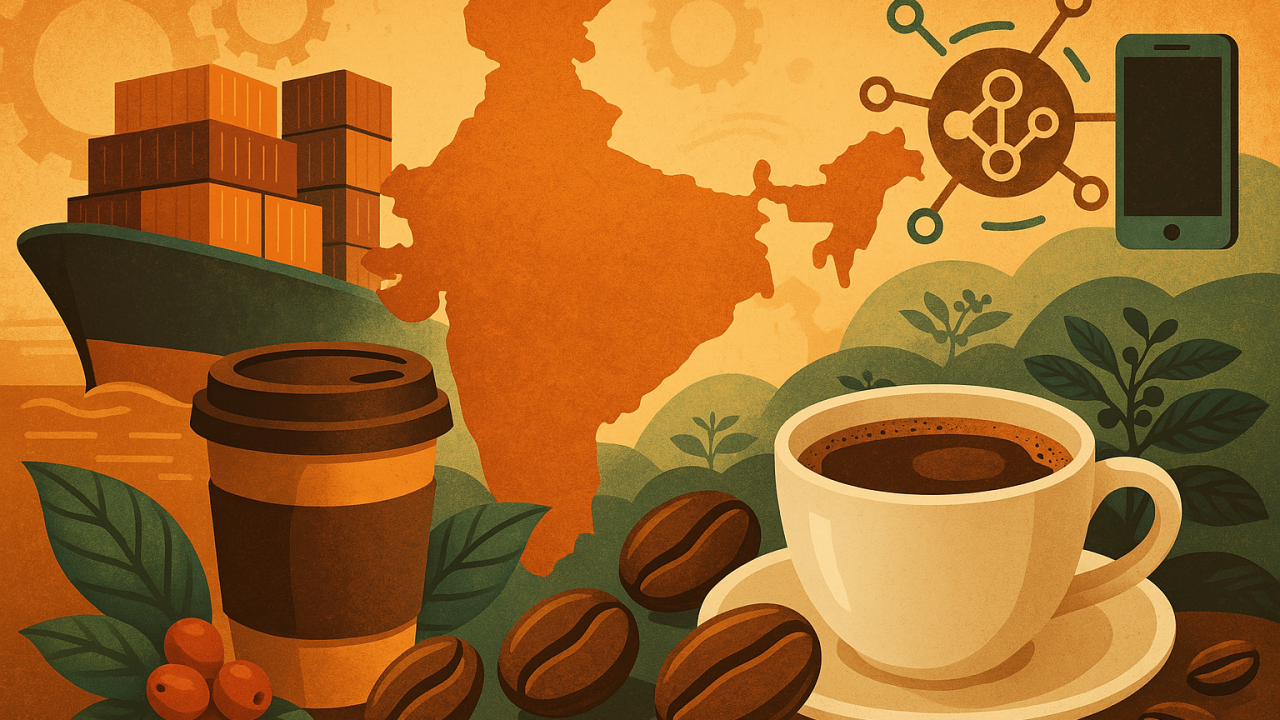
Origins & Estates
Coffee Regions of India: A Complete Guide
The written companion to the map. India grows coffee across
three geographic zones: the Western Ghats, the Eastern Ghats
and the northeastern hills. Each produces recognisably
different cups.
Read the guide →
|
Origins & Estates
Coorg vs Chikmagalur vs Araku: Flavor Differences
Explained
The three names you meet most on Indian bags, and the
flavour patterns that actually separate them.
Read it →
|
Origins & Estates
Coffee from Northeast India: An Emerging Map
What sits behind the inset: seven states, small volumes,
and profiles unlike anywhere else in the country.
Read it →
|
Also published since the last issue:
AeroPress Variables for Indian Washed vs Natural Coffees. Grind, temperature, time and ratio adjusted for Indian
washed against Indian natural.
|
|
Question for you
Which growing region do you find yourself reaching for, and
can you actually taste the difference?
Coorg and Chikmagalur dominate what most of us drink, but
Araku, the Shevaroys and Koraput all turn up on the map at
real scale. If one region has become your default, reply and
tell us which, and whether it was the flavour or just what
was in stock.
|
|
Share the Coffee
Love.
Know someone curious about Indian specialty coffee? Forward
this along.
|
|
Also on Instagram
The field guide, one card at a
time.
68 carousels published so far: how to read a roast date on an
Indian bag, what estate labels actually tell you, why
refrigerating beans works against you, and what chicory ratios
mean on a filter coffee pack.
Follow @indiancoffeebeans →
Brewing something you found through the directory? Post it and
tag us. We share the good ones, and the bad cups are usually
more instructive anyway.
|
|
|
|